World Wars: 1914–20XX
Second World War (1939–1945)
Germany's Unconditional Surrender and V-E Day (7–8 May 1945): Reims and Berlin
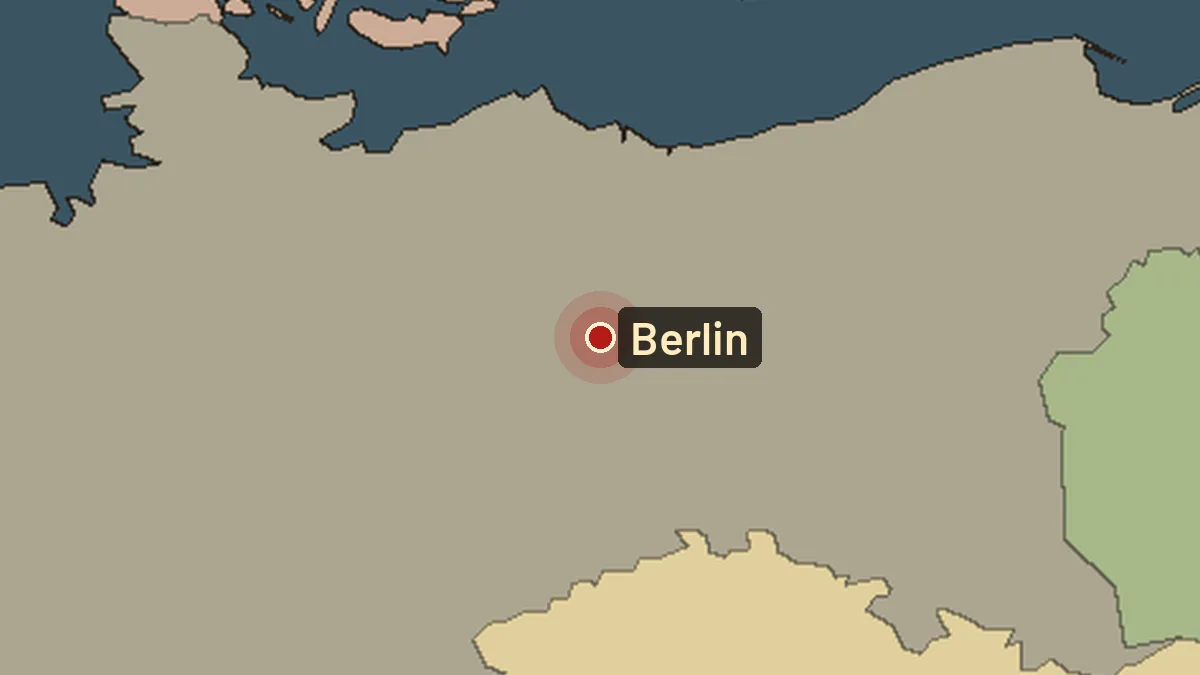
Just after midnight on 8 May 1945 Field Marshal Wilhelm Keitel, monocle in place and marshal's baton in hand, signed Germany's unconditional surrender in a former officers' mess in the Berlin suburb of Karlshorst. A day earlier General Alfred Jodl had signed a nearly identical document in a school building in Reims, France. After almost six years, the war in Europe was over. Millions celebrated in the streets of London, Paris, New York and Moscow, but the double ceremony also revealed the mistrust between the Allies that would soon shape the Cold War.
Why "unconditional"?
The demand for unconditional surrender went back to the Casablanca Conference of January 1943, where Franklin D. Roosevelt announced it with Winston Churchill at his side. The memory of 1918 played a large role. The First World War had ended with an armistice, not a surrender, while German armies still stood on foreign soil. That allowed nationalists, Hitler among them, to claim that the army had never been beaten but "stabbed in the back" by revolutionaries at home. The Allies were determined that this time no one could doubt that Germany had been defeated.
The demand also kept the alliance together, since none of the partners could make a separate peace. Critics argued that it stiffened German resistance; others note that Hitler had no intention of surrendering in any case.
The last days of the Reich
Hitler killed himself in Berlin on 30 April 1945, having named Grand Admiral Karl Dönitz as his successor. Dönitz set up a government in Flensburg, near the Danish border. His aim was to keep fighting the Soviets long enough to let as many soldiers and refugees as possible escape westwards, while surrendering to the Western Allies piece by piece.
Partial surrenders followed quickly. German forces in Italy surrendered at Caserta, effective 2 May. Berlin's garrison capitulated the same day. On 4 May Admiral Hans-Georg von Friedeburg signed the surrender of German forces in north-west Germany, the Netherlands and Denmark to Field Marshal Bernard Montgomery on Lüneburg Heath. Other surrenders took place in Bavaria and elsewhere.
Reims, 7 May
Dönitz then sent Jodl to General Dwight D. Eisenhower's headquarters in Reims, hoping to arrange a surrender to the West alone. Eisenhower refused and threatened to close the lines to German soldiers and refugees unless Germany surrendered on all fronts at once. At about 2:41 in the morning of 7 May Jodl signed the act of military surrender. Eisenhower's chief of staff, Walter Bedell Smith, signed for the Western Allies, General Ivan Susloparov for the Soviet Union, and the French general François Sevez as a witness. All hostilities were to cease at 23:01 Central European Time on 8 May.
Berlin-Karlshorst, 8 May
Stalin was not satisfied. Susloparov had signed without clear instructions, and Stalin insisted that the surrender be signed again in Berlin, the capital of the aggressor, before the supreme commanders of all the Allies, with the Soviet Union at the centre. The Western Allies agreed to treat Reims as a preliminary act.
Late on 8 May Keitel, von Friedeburg for the navy and General Hans-Jürgen Stumpff for the Luftwaffe signed the definitive act at Karlshorst. Marshal Georgy Zhukov signed for the Soviet High Command and the British Air Chief Marshal Arthur Tedder, Eisenhower's deputy, for the Western Allies, with the American general Carl Spaatz and the French general Jean de Lattre de Tassigny as witnesses. By the time the signing was complete it was already 9 May in Moscow, which is why Russia and several other former Soviet states still celebrate Victory Day on 9 May.
After the surrender
Fighting did not stop everywhere at once. In Prague an uprising against the German occupiers was still raging, and some German units fought on in Czechoslovakia and elsewhere until around 11 May. On 23 May British troops arrested the Dönitz government in Flensburg. On 5 June the four Allied powers declared that they had assumed supreme authority over Germany, which was divided into American, British, French and Soviet occupation zones, with Berlin likewise split into four sectors.
The war against Japan continued for three more months. In the Pacific and in Asia, V-E Day brought relief but not peace.
Did you know?
- 8 May 1945 was also the 61st birthday of the new American president, Harry S. Truman, who announced the victory in a radio address that morning.
- In London Churchill addressed the nation by radio in the afternoon of 8 May and then appeared before huge crowds in Whitehall and on the balcony of the Ministry of Health.
- The building in Karlshorst where the surrender was signed is now a museum dedicated to the German-Soviet war.
V-E Day in World Wars: 1914–20XX
World Wars: 1914–20XX currently covers the First World War, and the German surrender is part of the game's event database for the planned 1939 scenario. When it fires, Germany leaves the war after an unconditional surrender, it is divided into occupation zones, and the European theatre of the war comes to an end.
It is the ending that 1918 never had. In the Historical (1914) scenario you can lead Germany and try to avoid defeat altogether, or play Britain, France or Russia and decide how far you will go to make your victory complete, knowing how the peace of Versailles shaped the next war. Take command and write your own ending to the Great War.
▶ Play now Free in your browser, no download needed.
Further reading: Wikipedia (English)