World Wars: 1914–20XX
Second World War (1939–1945)
Germany declares war on the United States (11 December 1941): Hitler's choice
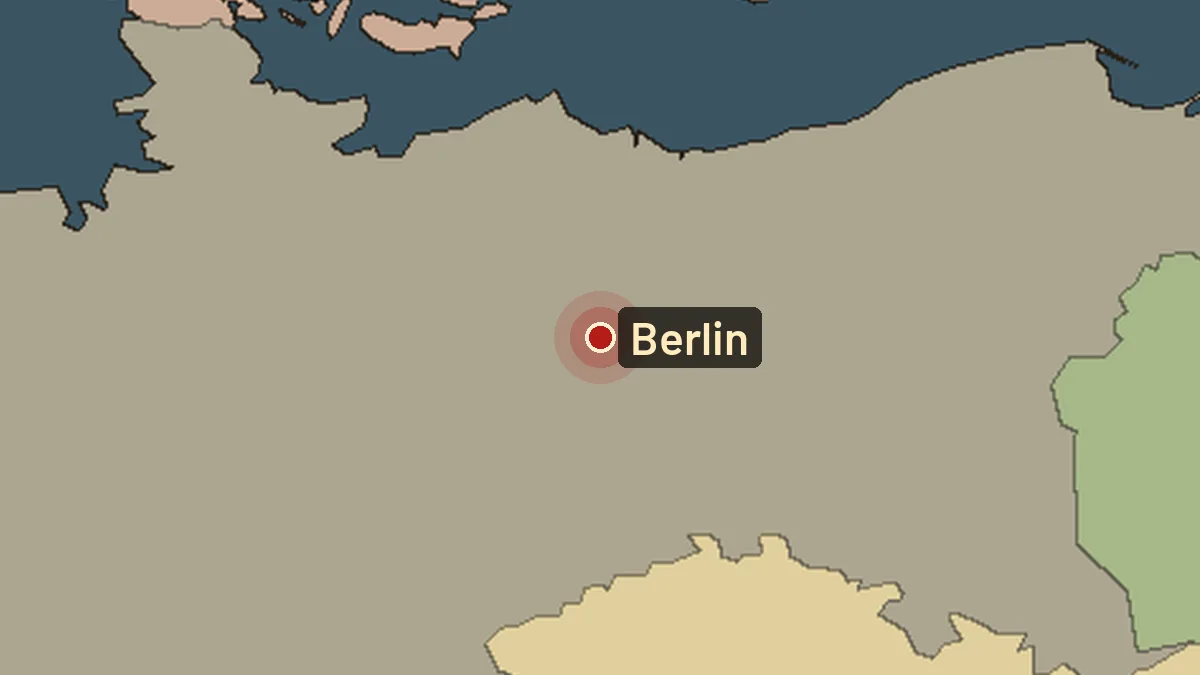
On the afternoon of 11 December 1941, Adolf Hitler stood before the Reichstag in Berlin and announced that Germany was at war with the United States. Hours later Fascist Italy did the same, and the US Congress answered with declarations of its own. Japan's attack on Pearl Harbor four days earlier had not obliged Hitler to do anything. By choosing war with America, he solved Franklin Roosevelt's greatest political problem and turned two regional wars into a single global one that Germany could not win.
An undeclared war in the Atlantic
By December 1941 the United States was neutral in name only. After the fall of France in 1940, Roosevelt had traded old destroyers to Britain for bases, and in March 1941 the Lend-Lease Act allowed America to supply Britain, and later the Soviet Union, with weapons and materials on a vast scale. In August Roosevelt and Winston Churchill met off Newfoundland and issued the Atlantic Charter, a statement of shared war aims by a country that was not at war.
The US Navy escorted convoys across much of the western Atlantic, and clashes with German U-boats followed. In September the destroyer USS Greer exchanged fire with a submarine, and Roosevelt ordered American warships to "shoot on sight". In October USS Kearny was torpedoed, and on 31 October USS Reuben James was sunk with the loss of more than 100 men. Hitler had so far kept his U-boat commanders on a tight leash to avoid giving Washington a pretext for war.
Yet Roosevelt could not bring Congress to declare war. Isolationist feeling remained strong, and most Americans wanted to help Britain without sending their sons to fight. Then, on 7 December, Japan struck Pearl Harbor. America was now at war in the Pacific, but not with Germany.
A treaty that did not require it
Germany, Italy and Japan had signed the Tripartite Pact in September 1940. Its key clause was defensive: the partners promised mutual help if one of them was attacked by a power not yet in the war. Japan had attacked the United States, not the other way round, so Germany had no legal obligation. Tokyo had not even told Berlin in advance about Pearl Harbor, although German leaders had assured Japanese diplomats in late November that Germany would join a war against America.
Why Hitler chose war
Historians have weighed several reasons. Hitler believed the United States was in effect already at war with Germany through Lend-Lease and the convoy battles, and that open war was coming in any case. A declaration would let his U-boats attack American shipping freely along the US east coast, where merchant ships still sailed unescorted and lit up at night. He also saw political value in it: standing by Japan would keep his new ally fighting and tie down American and British forces in the Pacific.
His view of America played a part too. Hitler regarded the United States as a divided, racially mixed society, weakened by the Depression and incapable of building a large army quickly. Japan's spectacular early success seemed to confirm that America would be busy in the Pacific for years. Days earlier, on 4 December, an American newspaper had published leaked details of a secret US contingency plan for a huge expeditionary force against Germany, which reinforced his conviction that war with Washington was inevitable.
Timing made the decision more striking still. On 5 December the Red Army had launched its counteroffensive before Moscow, and the German armies in the east were falling back for the first time. Hitler declared war on the world's largest economy just as his own campaign against the Soviet Union was stalling.
The declaration
On the morning of 11 December Foreign Minister Joachim von Ribbentrop handed the declaration to the American chargé d'affaires in Berlin. In his long speech to the Reichstag that afternoon, Hitler blamed Roosevelt personally for the war. In Rome, Mussolini announced Italy's declaration from the balcony of the Palazzo Venezia. Washington responded the same day: Congress declared war on Germany and Italy without a single vote against. Within days Germany's other allies, Hungary, Romania and Bulgaria, also declared war on the United States.
Consequences
Roosevelt was now free to fight the war he considered most important. At the Arcadia Conference in Washington from late December 1941, American and British leaders confirmed a "Germany first" strategy: defeat Germany, the stronger enemy, while holding Japan, then turn to the Pacific. American troops would land in North Africa in November 1942, in Italy in 1943 and in Normandy in 1944, and American bombers joined the air offensive over Germany.
In the short term Hitler's U-boats did well. In the first half of 1942 they sank hundreds of ships off the American coast and in the Caribbean in what German crews called a second "happy time". But in the long run the decision ensured that American industrial power, which would outproduce Germany several times over in aircraft, tanks and ships, was thrown fully against the Reich. Many historians count it, with the invasion of the Soviet Union, as one of the two decisions that sealed Germany's defeat.
Did you know?
- In Congress the pacifist representative Jeannette Rankin, who had cast the only vote against war with Japan on 8 December, voted "present" on 11 December rather than oppose the declarations against Germany and Italy.
- The United States waited until June 1942 before formally declaring war on Hungary, Romania and Bulgaria.
- It was the second time in a generation that Germany and the United States went to war. In 1917 unrestricted submarine warfare and the Zimmermann Telegram had brought America into the First World War against Germany.
Germany's declaration in World Wars: 1914–20XX
World Wars: 1914–20XX currently covers the First World War; a 1939 scenario is planned, and Germany's declaration of war on the United States is part of its event database. It is one of the events that put the decision in the player's hands: as Germany you can declare war on America, as Hitler did, or refrain, which leaves the United States out of the European war but strains relations with Japan. Italy declares war alongside Germany.
In today's 1914 game you can already lead Germany, and the United States is not on the map: it enters the war through an event, much as unrestricted submarine warfare drew it in during 1917. Whether you can keep America out of your war is one of the most interesting questions the game asks. Take command and find out.
▶ Play now Free in your browser, no download needed.
Further reading: Wikipedia (English)