World Wars: 1914–20XX
First World War (1914–1918)
Assassination of Franz Ferdinand (1914): the Sarajevo shots that started a war
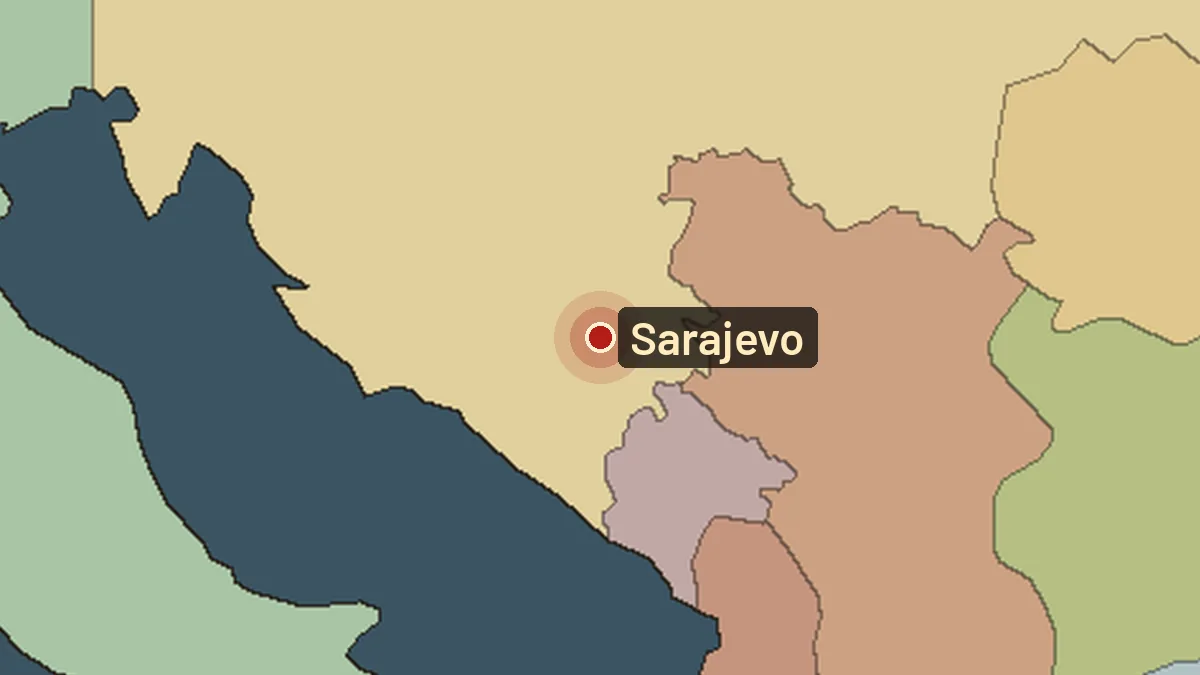
On a sunny Sunday morning in June 1914, a 19-year-old student stepped off the pavement in Sarajevo and fired two shots into an open car. Within minutes the heir to the throne of Austria-Hungary and his wife were dead. The assassination of Archduke Franz Ferdinand was not the deep cause of the First World War, but it was the spark: in the five weeks that followed, a regional quarrel between Vienna and Belgrade pulled in every great power in Europe.
Bosnia, Serbia and an unpopular heir
Bosnia-Herzegovina had been an Ottoman province until 1878, when the Congress of Berlin placed it under Austro-Hungarian administration. In 1908 Vienna annexed it outright, to the fury of neighbouring Serbia, which hoped one day to unite the South Slavs, including the many Serbs of Bosnia, in a single state. Serbia had doubled its territory in the Balkan Wars of 1912–13 and its nationalists were confident. In Vienna, many saw Serbia as a mortal threat to a multinational empire held together by the Habsburg dynasty.
Franz Ferdinand, nephew of the aged Emperor Franz Joseph, became heir in 1896. He was blunt, short-tempered and not well liked at court, partly because he had married for love: Countess Sophie Chotek was not of royal rank, and the marriage was allowed only as a morganatic one, so their children could never inherit the throne. Politically, the archduke was cautious about war with Serbia and was thought to favour giving the empire's Slavs more weight, an idea that worried Serbian nationalists, who feared reform could make Habsburg rule more attractive.
In June 1914 Franz Ferdinand, as inspector general of the armed forces, went to Bosnia to watch army manoeuvres. The visit to Sarajevo was set for Sunday 28 June. It was Vidovdan, St Vitus's Day, the anniversary of the Battle of Kosovo in 1389, a date of deep meaning in Serbian national memory. To many young nationalists, a Habsburg parade on that day looked like a provocation.
The conspirators
The assassins were young Bosnians, most of them Serbs, linked to the loose revolutionary movement later called Young Bosnia. Three of them, Gavrilo Princip, Nedeljko Čabrinović and Trifko Grabež, had been living in Belgrade. There they obtained pistols, bombs and cyanide capsules through members of Unification or Death, better known as the Black Hand, a secret society of Serbian army officers led by the head of Serbian military intelligence, Colonel Dragutin Dimitrijević, known as Apis. The group was smuggled back across the border into Bosnia, where local organiser Danilo Ilić recruited more men. On the morning of 28 June, six or seven conspirators were posted along the riverside Appel Quay, the motorcade's route.
How much the Serbian government knew remains debated. Prime Minister Nikola Pašić appears to have heard of a plot, and some historians believe a vague warning reached Vienna, but there is no proof that the Serbian state ordered the killing.
A failed bomb and a wrong turn
Shortly after 10 a.m. the motorcade drove along the quay. The first conspirators did nothing. Then Čabrinović threw a bomb at the archduke's car. It bounced off the folded roof and exploded under the following vehicle, wounding officers and bystanders. Čabrinović swallowed his cyanide and jumped into the river, but the poison only made him sick and the river was shallow; he was quickly caught. The procession sped on to City Hall, past the other assassins.
After an angry exchange with the mayor at the reception, Franz Ferdinand decided to visit the wounded in hospital. The changed route was not properly explained to the drivers. When the leading cars turned off the quay into a side street near the Latin Bridge, the archduke's driver followed, was told he was going the wrong way, and stopped to reverse. Princip, who happened to be standing at that very corner, near a delicatessen, stepped forward and fired twice from close range with a Belgian-made pistol. One bullet hit Franz Ferdinand in the neck; the other struck Sophie in the abdomen. Both died within a short time. Princip tried to turn the pistol on himself but was seized by the crowd.
From murder to world war
In Vienna, the murders gave the war party around the chief of the general staff, Franz Conrad von Hötzendorf, the argument it wanted: Serbia had to be crushed before it destroyed the empire. On 5 and 6 July Germany promised Austria-Hungary its unconditional support, the so-called blank cheque. On 23 July Vienna sent Belgrade an ultimatum written to be hard to accept. Serbia's reply accepted most of it but not all, and on 28 July, exactly one month after the shots in Sarajevo, Austria-Hungary declared war. Russia mobilised to protect Serbia, Germany declared war on Russia and France, and Britain entered after the invasion of Belgium.
Princip and his companions were tried in Sarajevo in October 1914. Because he was under 20 at the time of the crime, Princip could not be sentenced to death under Austrian law; he received 20 years. Several of the older accomplices, including Ilić, were hanged. Princip died of tuberculosis in the fortress prison of Theresienstadt (Terezín) on 28 April 1918, a few months before the empire he had struck at collapsed. In 1917 Apis himself was executed in Serbia after a trial on unrelated charges.
Did you know?
- The car in which Franz Ferdinand was shot, along with his bloodstained uniform, is preserved in the Museum of Military History in Vienna.
- Franz Ferdinand and Sophie were married on 1 July 1900 and had three children. Because of Sophie's rank, they were buried not in the Habsburg crypt in Vienna but at their castle of Artstetten in Lower Austria.
- Princip's view of himself is still disputed: in parts of the former Yugoslavia he is remembered as a freedom fighter, elsewhere as a terrorist.
Sarajevo in World Wars: 1914–20XX
The game begins on 28 June 1914, and the Sarajevo assassination is the first event of the Historical (1914) scenario. Tension between Austria-Hungary and Serbia jumps sharply, tension between Russia and Austria-Hungary rises as well, and Austria-Hungary's internal stability takes a hit. From that moment the clock of the July Crisis is running, and the declarations of war follow on their real dates unless the players change course.
In the Parallel Fronts scenario the same shots fire the same crisis, but the armies waiting for the order already have tanks, radios and aircraft. Whichever country you lead, this is where your war starts: can you steer Europe through the summer of 1914 better than its statesmen did?
▶ Play now Free in your browser, no download needed.
Further reading: Wikipedia (English)