World Wars: 1914–20XX
First World War (1914–1918)
Germany Declares War on Russia and France (1914): the war goes continental
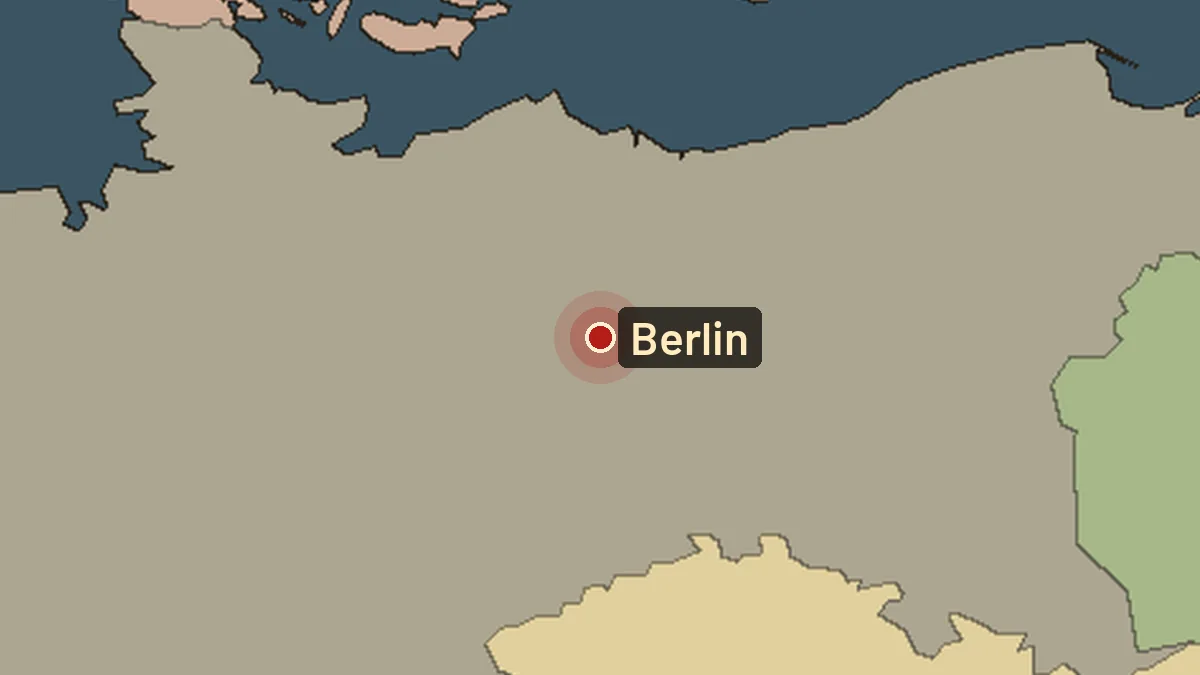
At the end of July 1914 the war between Austria-Hungary and Serbia was only a few days old. In the first week of August it became a war between the great powers of Europe. The decisive steps were taken in Berlin: on 1 August Germany declared war on Russia, and on 3 August on France. To understand why Germany moved so fast, and why it declared war on France, which had nothing directly to do with Serbia, one has to look at the alliance system and at the timetables of mobilisation.
Two blocs and a railway timetable
Before 1914 Europe's great powers were divided into two groups. Germany and Austria-Hungary were bound by the Dual Alliance of 1879, joined by Italy in the Triple Alliance. France and Russia had been allies since the early 1890s, and Britain had settled its old disputes with both, forming the looser Triple Entente. A conflict involving Russia was therefore very likely to involve France as well.
German military planning drew a hard conclusion from this. Facing enemies on two sides, the General Staff under Helmuth von Moltke the Younger planned to throw almost the whole army against France first, through Belgium, and defeat it within about six weeks, before Russia's huge but slower army could be fully mobilised. Then the troops would be moved east by rail. Germany had no separate plan for a war against Russia alone. Any mobilisation against Russia meant an attack in the west, and every day that Russia mobilised without a German response was seen as time lost.
Russia mobilises
After Austria-Hungary declared war on Serbia on 28 July, Russia felt it could not stand aside. Russian leaders remembered the humiliation of the Bosnian crisis of 1908–09, when they had been forced to accept Austria's annexation of Bosnia under German pressure, and the foreign minister, Sergei Sazonov, was determined not to retreat again. On 29 July Tsar Nicholas II approved partial mobilisation against Austria-Hungary. His generals told him that a partial mobilisation was technically unworkable and would leave Russia exposed to Germany. After much hesitation, the Tsar ordered general mobilisation on 30 July.
In those days the two emperors exchanged a series of telegrams, written in English and signed "Willy" and "Nicky". Wilhelm II and Nicholas II were related, and both seem to have genuinely wished to avoid a general war. But the telegrams could not stop the machinery. On 29 July the Tsar had briefly cancelled a general mobilisation order after a message from Wilhelm; the next day his ministers and generals persuaded him again.
The declarations
News of Russia's general mobilisation reached Berlin on 31 July. Germany proclaimed a "state of imminent danger of war" and sent two ultimatums. Russia was given 12 hours to stop all war measures against Germany and Austria-Hungary. France was asked to declare within 18 hours whether it would stay neutral in a Russo-German war. Secret instructions to the German ambassador in Paris went further: if France promised neutrality, it was to be asked to hand over the fortresses of Toul and Verdun as a pledge, a demand no French government could accept.
Russia did not reply. In the early evening of 1 August, the German ambassador in St Petersburg, Count Friedrich Pourtalès, handed Sazonov Germany's declaration of war; by several accounts the ambassador was in tears. The French government answered only that France would act in accordance with its interests, and ordered general mobilisation on the afternoon of 1 August, the same day as Germany.
On 2 August German troops occupied Luxembourg, and that evening Germany demanded free passage through Belgium. On 3 August the German ambassador in Paris, Baron Wilhelm von Schoen, delivered the declaration of war on France. It justified the step by claiming that French aircraft had violated German territory and even bombed the area near Nuremberg; these reports were false. Germany's invasion of Belgium the next morning brought Britain into the war on 4 August.
Consequences
Within days, a crisis that had begun with a political murder in Bosnia had become a war between Germany and Austria-Hungary on one side and Russia, France, Serbia, Belgium and Britain on the other. Austria-Hungary itself declared war on Russia only on 6 August. Italy, despite its membership of the Triple Alliance, declared itself neutral, arguing that its alliance was defensive and that Austria-Hungary had started the war.
The order in which the declarations came later weighed heavily in debates on war guilt. Germany was formally the power that declared war on both Russia and France, and the Treaty of Versailles of 1919 placed responsibility on Germany and its allies. Historians have since given a more complex picture, in which Russia's early mobilisation, Austria-Hungary's determination to fight Serbia and Germany's support for it and its inflexible war plan all played a part.
Did you know?
- On 30 July France pulled its covering troops back about 10 kilometres from the German border, so that no border incident could be blamed on France.
- On 31 July, the day before Germany declared war on Russia, the French socialist leader Jean Jaurès, who had campaigned to prevent the war, was shot dead in a Paris café by a nationalist.
The declarations in World Wars: 1914–20XX
In the Historical (1914) scenario this event covers 1 to 3 August 1914. Germany declares war on Russia and on France, and the alliance system takes shape on the map: Germany and Austria-Hungary form the Central Powers, while Russia, France and Serbia join the Entente. From now on the war is no longer a Balkan affair but a struggle between two armed blocs.
In the Parallel Fronts scenario the same alliances go to war, but with armoured divisions and aircraft instead of marching columns, so the race between German speed and Russian numbers is very different. Whether you lead the Kaiser's Germany, the Tsar's Russia or the French Republic, the first week of August is where the real test begins.
▶ Play now Free in your browser, no download needed.
Further reading: Wikipedia (English)