World Wars: 1914–20XX
First World War (1914–1918)
The Ottoman Empire Enters World War I (1914): Goeben and the Black Sea Raid
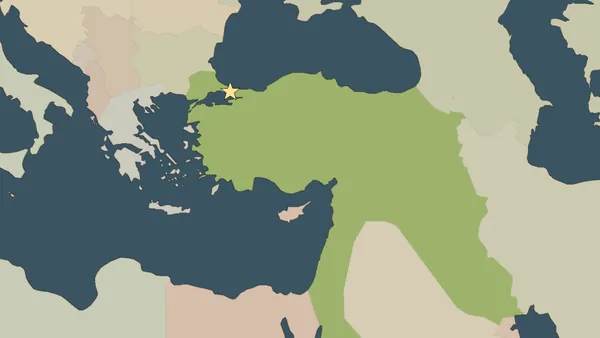
In August 1914 the Ottoman Empire was exhausted. It had lost Libya to Italy in 1911–12 and almost all its European provinces in the Balkan Wars of 1912–13. Few expected it to join a great-power war. Yet by November it was fighting Russia, Britain and France as an ally of Germany. The road there ran through a secret treaty, two confiscated battleships, two German warships that slipped through the Mediterranean, and a naval raid that left little room to turn back.
A secret alliance
Since the coup of January 1913, the empire had been governed in practice by the Committee of Union and Progress (CUP), dominated by three men: Enver Pasha, minister of war; Talat Pasha, minister of the interior; and Cemal Pasha, minister of the navy. They feared that, without a great-power ally, the empire would be partitioned. Approaches to Britain and France had produced little, and Russia, which coveted the Straits, was seen as the main threat.
Germany had cultivated the Ottomans for years, sending military advisers and financing the Baghdad Railway. In the summer crisis of 1914, Enver, with the grand vizier Said Halim Pasha and Talat, negotiated quickly with the German ambassador, Hans von Wangenheim. On 2 August 1914 they signed a secret alliance directed against Russia. The same day the empire ordered general mobilisation, but it officially declared armed neutrality. Much of the cabinet did not know about the treaty, and the government was itself divided on whether to fight.
The battleships and the Goeben
Two events in early August pushed opinion towards Germany. Britain had built two modern battleships for the Ottoman navy, Sultan Osman I and Reşadiye. Their cost had been partly covered by a public subscription, with ordinary people giving money across the empire. On the eve of war the British Admiralty, under Winston Churchill, took both ships over for the Royal Navy. The seizure caused great anger in Istanbul.
At the same time, the German battlecruiser Goeben and the light cruiser Breslau, commanded by Rear Admiral Wilhelm Souchon, escaped British squadrons in the Mediterranean and reached the Dardanelles on 10 August. The Ottoman government let them in and announced that it had bought them. They were renamed Yavuz Sultan Selim and Midilli and raised the Ottoman flag, but kept their German crews, now wearing fezzes. Souchon was appointed commander of the Ottoman fleet.
Through September and October the empire moved further from neutrality. It abolished the capitulations, the old privileges of foreigners, closed the Dardanelles to merchant shipping at the end of September, and received German gold to fund its war effort, which Germany tied to an early entry into the war.
The raid of 29 October
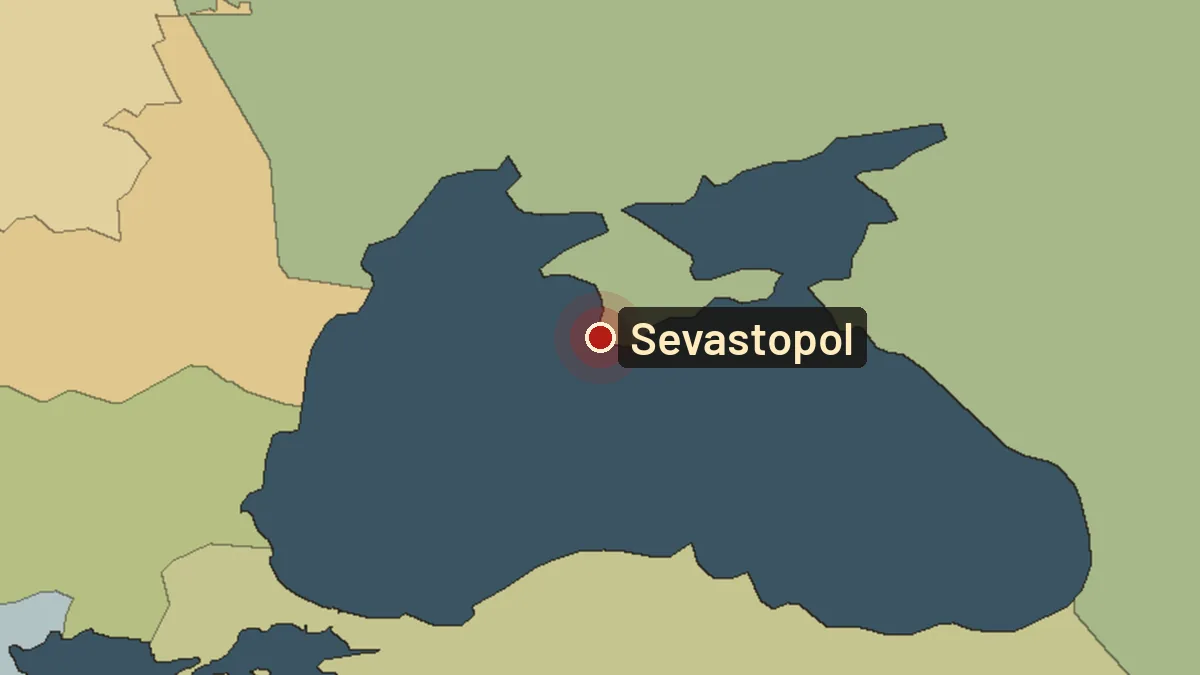
Enver and the German side wanted a fact that could not be undone. With Enver's approval, Souchon took the fleet into the Black Sea. On 29 October 1914 Ottoman ships, most of them under German command, shelled Odessa, Sevastopol, Novorossiysk and Feodosia, sank a Russian gunboat and a minelayer, and damaged harbour installations. The government in Istanbul presented the attack as a response to Russian provocation, but several ministers who had opposed war resigned.
Russia declared war on 2 November. British and French warships bombarded the outer forts of the Dardanelles on 3 November, and on 5 November Britain and France declared war; Britain annexed Cyprus the same day. On 11 November the Ottoman Empire formally declared war, and on 14 November the Sheikh ul-Islam proclaimed a jihad, calling on Muslims, including those under British, French and Russian rule, to rise against the Entente. The call produced no general uprising.
Consequences
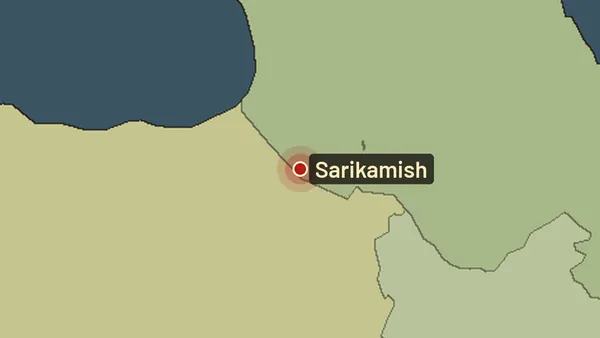
The decision changed the shape of the war. British and Indian troops landed at the head of the Persian Gulf in early November to protect oil installations, opening the Mesopotamian front. On the Caucasus front, Enver launched the Sarıkamış offensive in December. The closure of the Straits cut Russia's main sea route to its allies, which led to the Allied attack at Gallipoli in 1915. Later the empire also fought in Sinai and Palestine, in Arabia against the Arab Revolt, and on European fronts.
For the empire's population the war was catastrophic. Military and civilian deaths from fighting, famine and disease ran into the millions. The war ended with the Armistice of Mudros in October 1918 and the eventual dissolution of the empire.
Did you know?
- After their seizure, Sultan Osman I and Reşadiye served in the Royal Navy as HMS Agincourt and HMS Erin, and both fought at Jutland in 1916.
- Yavuz remained in the Turkish navy long after the war and was finally scrapped in the 1970s, making her one of the longest-serving warships of her era.
The Ottoman entry in World Wars: 1914–20XX
In the Historical (1914) scenario this event arrives on 29 October 1914, and the game pauses for a decision. The Ottoman Empire can enter the war on the side of the Central Powers, as Enver did, or keep to armed neutrality, which brings more stability at home but raises tension with Germany. If the empire joins the war, Russia, Britain and France declare war, the Caucasus and Mesopotamian fronts open, and the Dardanelles close. The Enver Pasha entry unlocks in the in-game encyclopedia.
Staying neutral creates an alternate history in which there may be no Sarıkamış, no Gallipoli and no Kut. In the Parallel Fronts scenario the same decision faces an empire whose rivals have aircraft carriers and armoured divisions. Lead the Ottoman Empire and decide whether 1914 is the moment to fight or to wait.
▶ Play now Free in your browser, no download needed.
Further reading: Wikipedia (English)
 Enver Pasha