World Wars: 1914–20XX
First World War (1914–1918)
Italy Enters World War I (1915): the Treaty of London and the war on Austria
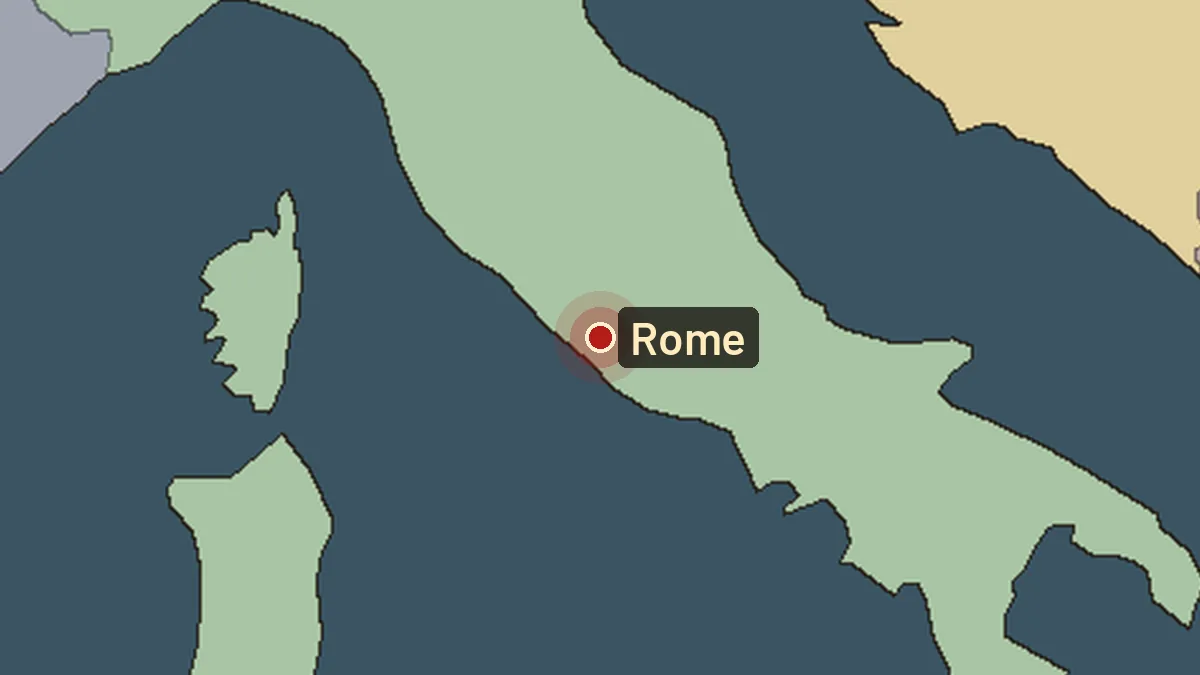
When war broke out in August 1914, Italy had been an ally of Germany and Austria-Hungary for more than thirty years. Yet it did not join them. For nine months its leaders bargained with both camps, and in May 1915 Italy went to war on the other side. Its entry opened a long, bitter front in the Alps, and the promises made to win it over shaped the peace settlement and Italian politics for a generation.
An awkward alliance
Italy had joined Germany and Austria-Hungary in the Triple Alliance in 1882, largely out of anger at France, which had taken Tunisia, a territory Italy wanted. But relations with Austria-Hungary were never easy. Austria still ruled lands with large Italian-speaking populations, above all Trentino and the port city of Trieste, which Italian nationalists called the "unredeemed lands" (terre irredente). The two countries were also rivals in the Adriatic and the Balkans.
In July 1914 Austria-Hungary went to war against Serbia without consulting Rome. The Italian government argued that the alliance was defensive, that Austria was the aggressor, and that the treaty entitled Italy to compensation for any Austrian gains in the Balkans. On 2 August 1914 it declared neutrality. The decision was popular: the army was weak after the war in Libya of 1911–12, and much of the country did not want war at all.
Bargaining with both sides
Prime Minister Antonio Salandra openly said that Italy's policy would be guided by "sacred egoism" (sacro egoismo): it would join whichever side offered the most. After the death of the foreign minister, the Marquis di San Giuliano, in October 1914, the post went to Sidney Sonnino, who negotiated hard with both camps.
Germany sent the former chancellor Bernhard von Bülow to Rome to persuade Austria-Hungary to give up territory and keep Italy neutral. Vienna, reluctant to hand over its own provinces, eventually offered part of Trentino, but only to be transferred after the war. The Entente could be more generous, because it was offering land that belonged to its enemies. On 26 April 1915 Italy signed the secret Treaty of London with Britain, France and Russia. In return for entering the war within a month, Italy was promised Trentino and South Tyrol up to the Brenner Pass, Trieste, Istria, much of the Dalmatian coast and its islands, the port of Vlorë in Albania, the Dodecanese islands it had occupied since 1912, and a share of any division of the Ottoman Empire and of German colonies.
The "Radiant May"
The treaty was secret, and most members of parliament were still neutralist. The leading politician of the age, the former prime minister Giovanni Giolitti, believed Italy could gain much through negotiation without fighting. In early May, as Italy renounced the Triple Alliance, the streets filled with interventionist demonstrations. The poet Gabriele D'Annunzio gave fiery speeches, and a former socialist journalist, Benito Mussolini, who had been expelled from his party for supporting the war, campaigned for intervention in his new newspaper.
When it became clear that a majority of deputies backed Giolitti, Salandra offered his resignation on 13 May. King Victor Emmanuel III refused to accept it, and no alternative government could be formed. Under pressure from the crowds and the crown, parliament voted the government full powers on 20 May. On 23 May 1915 Italy declared war on Austria-Hungary, and fighting began the next day. Supporters later called these weeks the "Radiant May" (maggio radioso); critics saw it as a small minority forcing war on a reluctant country.
A hard war in the mountains
The chief of staff, General Luigi Cadorna, planned to attack across the Isonzo river towards Trieste. The Austro-Hungarians held the high ground along almost the whole frontier, and the war became a series of costly offensives against mountain positions. Between 1915 and 1917 Italy fought eleven battles on the Isonzo, gaining only a few kilometres. In October 1917 an Austro-German offensive at Caporetto broke the Italian line and drove the army back to the Piave river, where it held. In late October 1918 the Italians won the Battle of Vittorio Veneto, and Austria-Hungary signed an armistice on 3 November.
Italy declared war on the Ottoman Empire in August 1915 and on Bulgaria in October, but on Germany only on 28 August 1916. By the end of the war more than half a million Italian soldiers had died, according to most estimates.
At the peace conference Italy received Trentino, South Tyrol, Trieste and Istria, but not most of Dalmatia, and the city of Fiume became a bitter dispute. D'Annunzio spoke of a "mutilated victory", a resentment that Mussolini's fascist movement exploited on its way to power in 1922.
Did you know?
- The terms of the Treaty of London became public in late 1917, when the new Bolshevik government in Russia published the Tsar's secret treaties.
- Much of the Italian Front ran through high mountains, where both sides fought from positions dug into rock and ice, and avalanches killed many thousands of soldiers.
Italy's entry in World Wars: 1914–20XX
In the Historical (1914) scenario this event covers the spring of 1915, from the Treaty of London on 26 April to the declaration of war on 23 May. It is a decision: Italy can sign the treaty and join the Entente, declaring war on Austria-Hungary as it did in history; it can stay loyal to the Triple Alliance and join the Central Powers, declaring war on France; or it can remain neutral, which gives a small boost to stability. On the historical path, the Italian Front opens along the Alps.
Italy is one of the playable states on the 1914 map, so you can play Salandra's game of sacred egoism yourself and see what an Italy on the side of the Central Powers would change. In the Parallel Fronts scenario the Alps are no friendlier to armoured divisions, but air power can reach over them. Which side will Rome choose this time?
▶ Play now Free in your browser, no download needed.
Further reading: Wikipedia (English)