World Wars: 1914–20XX
First World War (1914–1918)
Bulgaria Joins the Central Powers (1915): Macedonia and the fall of Serbia
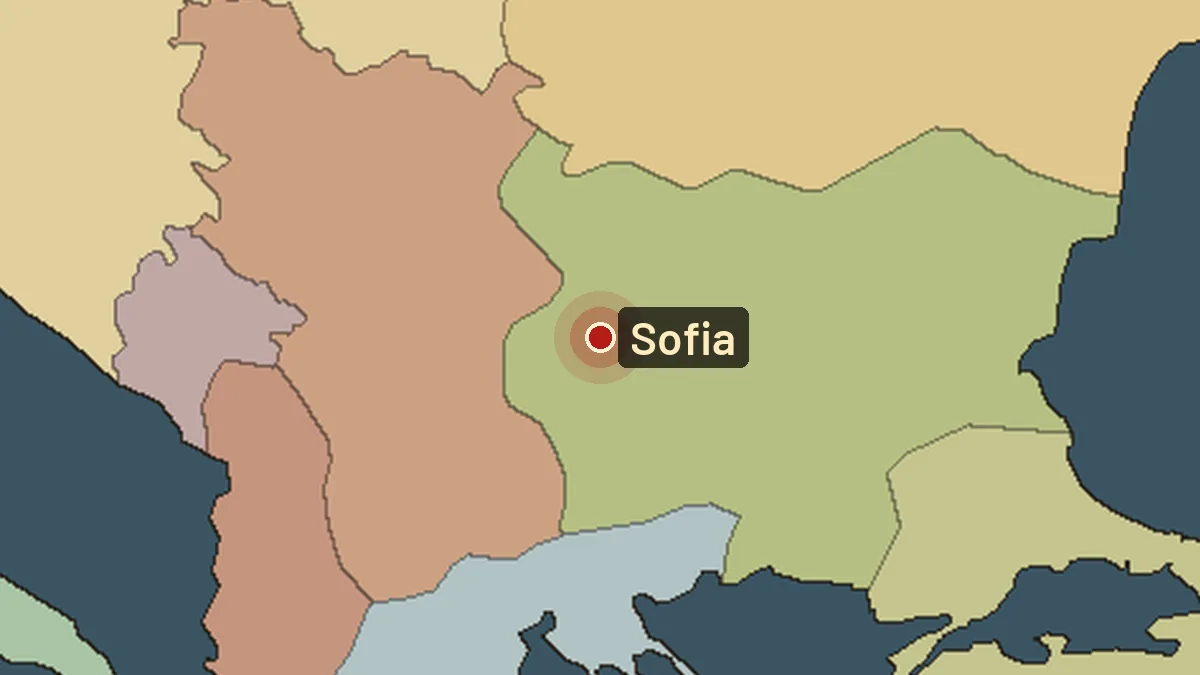
In the autumn of 1915 the Central Powers needed a breakthrough in the Balkans. Their Ottoman ally was cut off from German supplies, and Allied troops were still fighting at Gallipoli. Bulgaria, which had stayed neutral for a year, held the key. When it joined Germany and Austria-Hungary in October and attacked Serbia from the east, the Serbian army was crushed between two fronts, and trains could at last run from Berlin to Constantinople. For Bulgaria itself the decision was a gamble to undo a recent national humiliation.
The wound of 1913
Bulgaria had been the strongest army of the Balkan League that defeated the Ottoman Empire in the First Balkan War of 1912–13. But the victors quarrelled over the spoils, especially the region of Macedonia, which Bulgarians regarded as theirs by language and history. In June 1913 Bulgaria attacked its former allies Serbia and Greece, and lost. Romania and the Ottoman Empire joined against it. By the Treaty of Bucharest in August 1913 Bulgaria lost most of Macedonia to Serbia and Greece and southern Dobruja to Romania, and had to return Edirne (Adrianople) to the Ottomans. Bulgarians called this the first national catastrophe.
The country was ruled by Tsar Ferdinand I, a German prince who had been elected to the throne in 1887 and had proclaimed full independence from the Ottoman Empire in 1908. He was clever, ambitious and distrusted by almost everyone. His prime minister from 1913, Vasil Radoslavov, leaned towards Germany. When war broke out in 1914, Bulgaria declared neutrality and waited.
An auction for Bulgaria
Both sides wanted Bulgaria. Its army was battle-hardened, and its position, between Serbia, Romania, Greece and the Ottoman Empire, was strategically vital. The Entente had a problem: what Bulgaria wanted most was Macedonia, which belonged to their ally Serbia, and to Greece, whose support they also sought. Serbia refused to give up land it had won only two years earlier, so the Entente's offers remained conditional and vague.
The Central Powers could offer what Bulgaria wanted at Serbia's expense: all of Serbian Macedonia, plus further gains from Greece and Romania if those countries joined the Entente. The military situation in 1915 also favoured them. The Allies were stuck at Gallipoli, and in the summer the German and Austro-Hungarian armies drove the Russians out of Poland. On 6 September 1915 Bulgaria signed a treaty of alliance with Germany and a military convention with Germany and Austria-Hungary. The Ottoman Empire, keen to secure its supply line, agreed to cede a strip of land along the Maritsa river near Edirne. Bulgaria mobilised later that month.
The fall of Serbia
Serbia had defeated three Austro-Hungarian invasions in 1914, but it was exhausted by typhus and losses. On 6 October 1915 German and Austro-Hungarian armies under Field Marshal August von Mackensen crossed the Danube and Sava, and Belgrade fell within days. On 14 October Bulgaria declared war on Serbia, and two Bulgarian armies struck from the east, cutting the railway in the Morava and Vardar valleys and blocking the Serbian retreat to the south.
An Anglo-French force had begun landing at Salonika (Thessaloniki) in neutral Greece in early October to help Serbia, but it arrived too late and was pushed back by the Bulgarians. Britain, France, Russia and Italy declared war on Bulgaria in the days that followed. Facing encirclement, the Serbian high command, with the aged King Peter I and the elderly commander Radomir Putnik, decided to retreat across the mountains of Montenegro and Albania to the Adriatic coast in the middle of winter. Tens of thousands of soldiers and civilians died of cold, hunger and disease on the march. The survivors were taken by Allied ships to the Greek island of Corfu to recover, and later returned to fight on the Salonika front.
Consequences
Bulgaria's entry achieved what Germany had wanted: a continuous route from Central Europe to Constantinople. In January 1916 a regular through train, the Balkan train, began running between Berlin and Constantinople, carrying munitions, officers and supplies to the Ottomans. Bulgaria occupied most of Macedonia and parts of eastern Serbia and held a long front against the Allied army at Salonika. In 1916 it also helped to defeat Romania and recovered southern Dobruja.
The gamble ended badly. In September 1918 the Allies broke through the Bulgarian line at Dobro Pole, and the army, short of food and tired of war, collapsed. On 29 September 1918 Bulgaria signed an armistice in Salonika, becoming the first of the Central Powers to leave the war. Ferdinand abdicated in favour of his son Boris III. By the Treaty of Neuilly in 1919 Bulgaria lost its access to the Aegean Sea and some border districts in the west. Bulgarians would call this the second national catastrophe.
Did you know?
- Bulgaria's army was one of the largest in Europe relative to its population: in the course of the war it mobilised a very high share of its adult men, among the highest of any country involved.
- Thanks to the Salonika front, Allied soldiers from France, Britain, Serbia, Italy, Russia and Greece, along with French colonial troops, fought side by side in Macedonia for almost three years.
Bulgaria's entry in World Wars: 1914–20XX
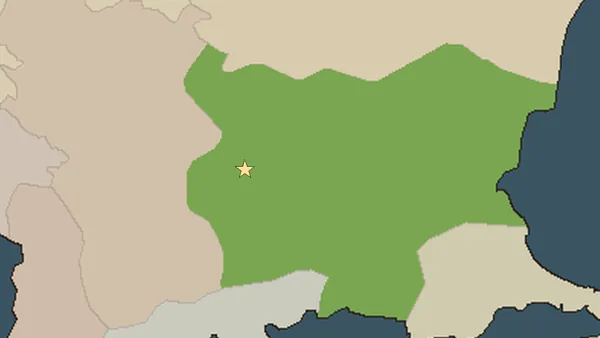
In the Historical (1914) scenario this event arrives on 14 October 1915. Bulgaria joins the Central Powers and declares war on Serbia, and a supply route opens from Germany to the Ottoman Empire along the Berlin–Istanbul railway. The Bulgaria entry unlocks in the in-game encyclopedia.
Bulgaria is one of the 26 playable states on the 1914 map. Leading Bulgaria, you can try to win Macedonia and hold the Salonika front better than Ferdinand's generals did, or play Serbia and try to survive the blow from the east. In the Parallel Fronts scenario a motorised invasion of Serbia moves faster still, and air power can cover a retreat or cut it off. How will you settle the Macedonian question?
▶ Play now Free in your browser, no download needed.
Further reading: Wikipedia (English)
 Bulgaria in World War I