World Wars: 1914–20XX
First World War (1914–1918)
Siege of Kut (1915–16): Townshend's surrender in Mesopotamia
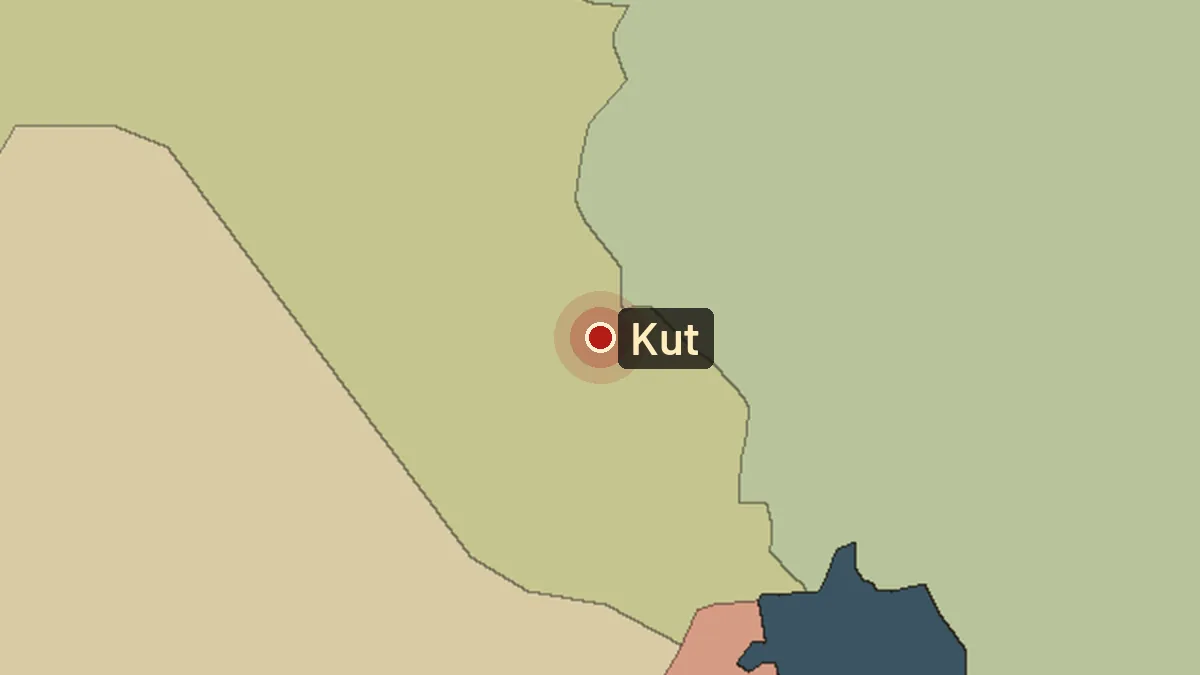
On 29 April 1916, after a siege of 147 days, the British and Indian garrison of the town of Kut al-Amara on the Tigris laid down its arms. Some 13,000 soldiers went into Ottoman captivity. It was one of the largest surrenders in the history of the British Army up to that time, and, coming a few months after the evacuation of Gallipoli, it was a second great Ottoman victory over Britain. In Turkey it is remembered as the victory of Kûtülamare.
The road to Baghdad
When the Ottoman Empire entered the war in November 1914, Britain sent troops from India to the head of the Persian Gulf to protect the oil installations of the Anglo-Persian Oil Company and the port of Basra, which they took within weeks. Easy early successes encouraged the commanders in Mesopotamia and the government of India to push further up the rivers. In 1915 the 6th (Poona) Division under Major General Charles Townshend advanced up the Tigris, defeated Ottoman forces and took Kut at the end of September.
Townshend himself warned that his force was too small and his supply line too long for a further advance; everything had to come up the winding river in a small number of boats. But Baghdad, with its prestige, seemed within reach, and London, looking for a success to balance the failure at Gallipoli, approved the attempt.
Ctesiphon and the retreat
In late November 1915 Townshend's division attacked the Ottoman positions at Ctesiphon (Selman-ı Pak), a short distance south of Baghdad, held by troops under Nureddin Pasha (then still Nureddin Bey). After several days of heavy fighting both sides had lost heavily. Townshend, who had lost a large part of his force and faced fresh Ottoman reinforcements, retreated. Pursued down the river, the exhausted division reached Kut in early December. Townshend decided to hold the town, which lay in a loop of the Tigris, and wait for relief. By 7 December the Ottomans had surrounded it.
The Ottoman Sixth Army in Mesopotamia was under the overall command of the elderly German field marshal Colmar von der Goltz, a long-time adviser to the Ottoman army. Halil Bey (later Halil Pasha), an uncle of Enver Pasha, took a growing role and became commander of the Sixth Army. After early assaults on the town's defences failed with heavy losses, the Ottomans settled down to starve the garrison out while blocking the river below Kut.
The siege and the failed relief
A new British force, the Tigris Corps, was assembled to break through, first under Lieutenant General Fenton Aylmer and later under Lieutenant General George Gorringe. Between January and April 1916 it attacked the Ottoman lines downstream at Sheikh Sa'ad, the Wadi, Hanna, Dujaila and Sannaiyat. The Ottoman defenders, dug in on narrow fronts between the river and the marshes, beat off every attempt. Floods, rain and mud made the fighting worse, and the relief force lost more than 20,000 men, more than the garrison it was trying to save.
Inside Kut, rations were cut again and again. The troops ate their horses and mules; many Indian soldiers at first refused horsemeat for religious reasons until their leaders permitted it. Scurvy, dysentery and starvation spread. British aircraft dropped supplies into the town, one of the first attempts at supply from the air, but they could carry far too little. In a last effort on 24 April, the river steamer Julnar tried to run the blockade with food, but was caught by a cable across the river and captured.
London even tried to buy the garrison's freedom. Two officers, Aubrey Herbert and T. E. Lawrence, later famous as "Lawrence of Arabia", took part in negotiations in which Halil was offered a large sum of money in exchange for letting the troops go. He refused. On 29 April 1916 Townshend surrendered unconditionally. Von der Goltz did not see the victory: he had died of typhus in Baghdad on 19 April.
Captivity and consequences
The fate of the prisoners was grim. Townshend and many senior officers were held in relative comfort, Townshend himself on the island of Büyükada near Istanbul. The ordinary soldiers, already weakened by the siege, were marched hundreds of kilometres north through desert and mountains and put to work on the Baghdad Railway. Thousands died of disease, hunger and harsh treatment; estimates suggest that a large share of the British rank and file and many Indian soldiers did not survive captivity.
In Britain the surrender was a national humiliation. A parliamentary commission later condemned the planning of the campaign and the medical arrangements. London took over direct control of the Mesopotamian campaign from the government of India, sent more troops and better river transport, and under General Frederick Maude recaptured Kut in February 1917 and took Baghdad on 11 March 1917. Halil Pasha later took the surname Kut, under the Turkish surname law of 1934.
Did you know?
- Townshend was admired by some for his earlier defence of Chitral on India's frontier in 1895, and he hoped Kut would bring him the same fame. Instead, his comfortable captivity while his men suffered damaged his reputation for good.
- The 6th (Poona) Division took its name from the Indian city of Poona (Pune), where it was based before the war. Most of its infantry battalions were Indian, each brigade including one British battalion.
Kut in World Wars: 1914–20XX
In the Historical (1914) scenario the surrender of Kut arrives on 29 April 1916. Britain suffers heavy manpower losses and its war support falls slightly, while Ottoman morale rises for about four months and Ottoman war support grows. The Siege of Kut entry unlocks in the in-game encyclopedia.
On the Mesopotamian front the player can avoid Townshend's mistake, or exploit it. Playing Britain, you can decide whether Baghdad is worth an overstretched advance; playing the Ottoman Empire, you can try to repeat Halil's victory. In the Parallel Fronts scenario aircraft and motor transport change the logistics of the river war, but the distances remain vast. Will you take Baghdad, or hold the Tigris?
▶ Play now Free in your browser, no download needed.
Further reading: Wikipedia (English)