World Wars: 1914–20XX
First World War (1914–1918)
The Brusilov Offensive (1916): Russia's greatest victory of the war
On 4 June 1916 Russian guns opened fire along hundreds of kilometres of the Austro-Hungarian front in what is now western Ukraine. Within days the defending armies were broken, tens of thousands of men had surrendered, and Russian troops were pouring through the gaps. The Brusilov Offensive was the most successful Allied attack of the war up to that point. It drew German troops away from Verdun, brought Romania into the war and left the Habsburg army dependent on German support for the rest of the conflict. It also cost Russia losses it could not replace.
Russia after the Great Retreat
The year 1915 had been a disaster for Russia. The German-Austrian breakthrough at Gorlice-Tarnów in May 1915 drove the Russian armies out of Poland, Galicia and Lithuania in a long retreat. Shortages of rifles and shells were severe, and in September Tsar Nicholas II took personal command of the army, a decision that tied the monarchy's reputation to every defeat.
By the spring of 1916 the Russian army had recovered surprisingly well. Factories were producing far more shells, and fresh conscripts had filled the ranks. At the Chantilly conference in December 1915 the Allies agreed to launch coordinated offensives in 1916 so that the Central Powers could not shift reserves from one front to another. Then events forced the timetable. In February the Germans attacked at Verdun, and in May Austria-Hungary launched a heavy offensive against Italy in the Trentino. Both France and Italy asked Russia to attack as soon as possible.
A different way to attack
Russia's main effort was meant to come further north, by the Western Front of General Alexei Evert towards Vilna. The Southwestern Front, commanded since March 1916 by General Aleksei Brusilov, was expected only to support it. Brusilov, a cavalryman in his early sixties, insisted on attacking anyway, and he planned it very differently from the costly offensives of 1915.
Instead of massing his strength at one obvious point, Brusilov ordered all four of his armies to prepare attacks on many sectors at once, so the enemy could not tell where the main blow would fall or rush reserves to it. His troops dug their trenches forward until they were often only a short distance from the Austro-Hungarian wire, and built large underground shelters to hide the assault troops. Aerial photographs and patrols mapped the enemy positions, and artillery was registered on specific targets. When the attack came, the bombardment was short and accurate rather than days long, and the infantry went forward immediately.
The breakthrough
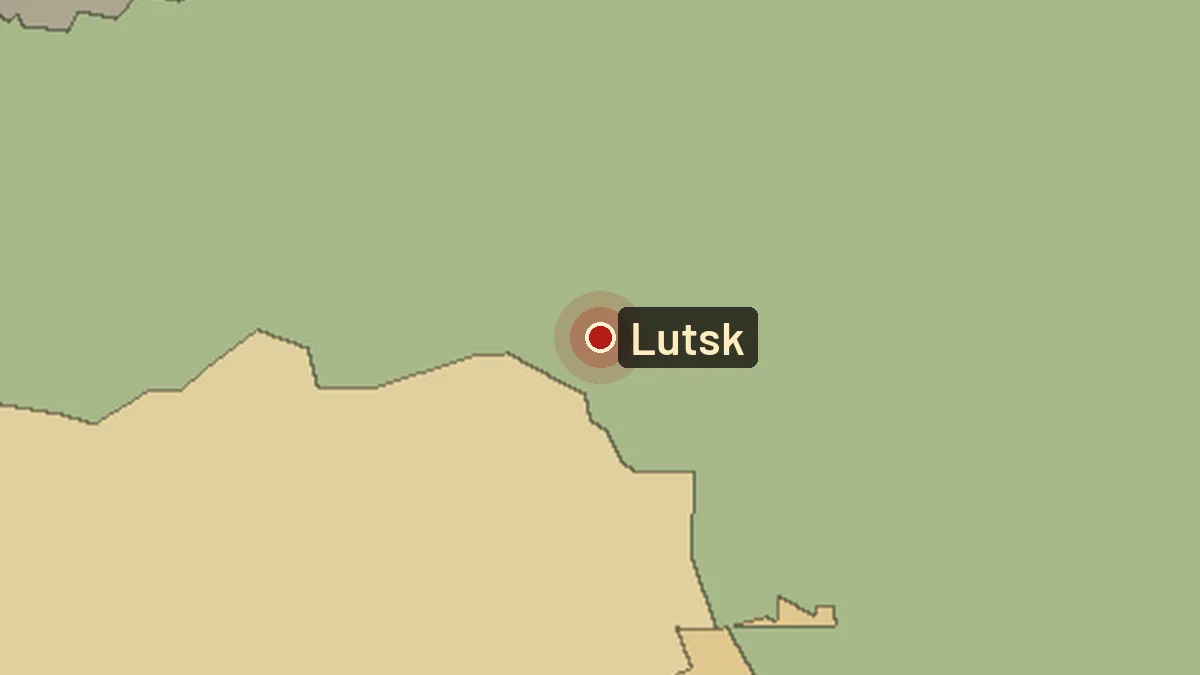
The offensive began on 4 June 1916 (22 May in the Russian calendar). The Eighth Army under General Aleksei Kaledin smashed the Austro-Hungarian Fourth Army of Archduke Joseph Ferdinand and took the fortress town of Lutsk within a few days. In the far south, General Platon Lechitsky's Ninth Army broke through on the Dniester, took Czernowitz (Chernivtsi) in the middle of June and overran most of Bukovina, reaching the foothills of the Carpathians.
The defenders had believed their deep trench lines were safe. Many of their best units had been sent to the Italian front, and whole formations collapsed or surrendered, including regiments of Czech and Ukrainian soldiers with little loyalty to the Habsburg state. Austria-Hungary had to stop its Trentino offensive and send troops back east, and the German chief of staff, Erich von Falkenhayn, was forced to transfer divisions from the west, weakening his effort at Verdun.
Stalled before Kovel
The weakness of the offensive was that nobody exploited it. Evert's attack in the north was postponed, and when it finally came at Baranovichi in early July it failed with heavy losses. The Russian high command then sent its reserves, including the elite Guards, to Brusilov, but by now German reinforcements under General Alexander von Linsingen had arrived. Through July and August the Russians attacked again and again towards the railway junction of Kovel, across the marshes of the Stokhid river, against well-prepared German defences. These attacks were among the bloodiest of the war on the Eastern Front, and gained little. By late September the offensive had petered out.
A victory with a high price
On the map the result was impressive: the Russians had advanced up to roughly 100 kilometres in places and recovered much of what they had lost in 1915. Austria-Hungary's army never fully recovered. From September 1916 the Central Powers placed their armies under a joint command headed by the German Kaiser, which in practice meant German control. Encouraged by the Russian success, Romania joined the Allies at the end of August, and Falkenhayn, blamed for Verdun and for the crisis in the east, was replaced by Paul von Hindenburg and Erich Ludendorff.
Yet the losses were staggering. Estimates vary widely, but the Central Powers lost well over a million men killed, wounded and captured, and Russian casualties were also somewhere between half a million and more than a million. The failed attacks at Kovel in particular deepened war-weariness in the Russian army. Within a year of Brusilov's triumph, the Tsar had abdicated and the army was beginning to dissolve.
Did you know?
- The Brusilov Offensive is one of the very few First World War battles named after a commander. In Russia it is also known as the Lutsk Breakthrough.
- Brusilov's method of short, surprise attacks on a wide front influenced later tactics, including the German infiltration attacks of 1917 and 1918.
- Brusilov remained in Russia after the revolution, and in 1920 he volunteered to serve the Red Army during the war with Poland.
The Brusilov Offensive in World Wars: 1914–20XX
In the Historical (1914) scenario the Brusilov Offensive arrives on 4 June 1916. Austria-Hungary suffers very heavy manpower losses, and its war support and stability fall. Russia also loses many men, but its morale rises for about three months, even as its stability slips a little. The Brusilov Offensive and Aleksei Brusilov entries unlock in the in-game encyclopedia.
If you lead Russia, you can try to do what the Stavka never managed and follow up the breakthrough before German reserves arrive. As Austria-Hungary, your challenge is to keep the eastern front from cracking at all. In the Parallel Fronts scenario, armoured divisions and bombers can turn a breach like Lutsk into a deep advance. Can you make Brusilov's victory decisive?
▶ Play now Free in your browser, no download needed.
Further reading: Wikipedia (English)
 Aleksei Brusilov