World Wars: 1914–20XX
First World War (1914–1918)
Aleksei Brusilov (1853–1926): the general behind the 1916 offensive
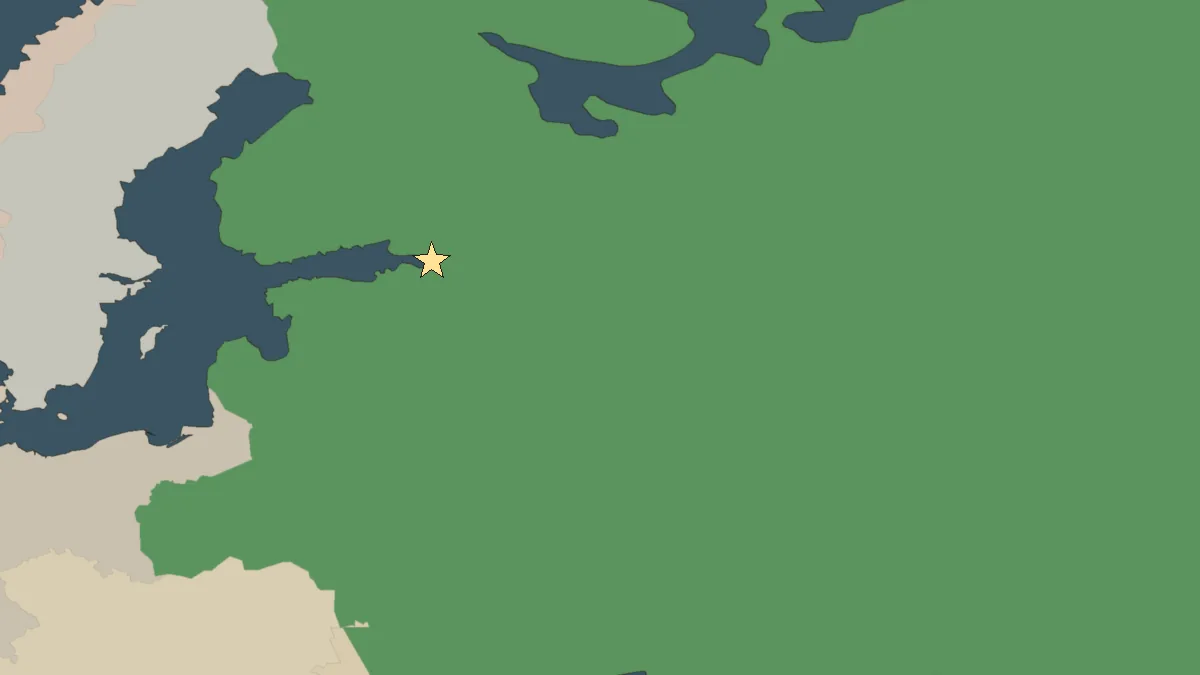
In the summer of 1916 the Russian army, which had lost Poland and hundreds of thousands of men the year before, suddenly broke through the Austro-Hungarian lines on a front of hundreds of kilometres. The man behind this success was General Aleksei Brusilov, a cavalry officer in his sixties who had thought harder than most generals about why attacks failed. His offensive came close to knocking Austria-Hungary out of the war, forced Germany to send help from the west and brought Romania into the conflict. It was also the last great success of the imperial Russian army.
A cavalryman from the Caucasus
Brusilov was born in Tiflis in 1853, the son of a Russian general serving in the Caucasus. He was educated at the elite Corps of Pages in St Petersburg and joined a dragoon regiment. In the Russo-Turkish War of 1877–78 he fought on the Caucasus front against the Ottoman army, in the campaigns around Ardahan and Kars. For many years afterwards he served at the Officers' Cavalry School in St Petersburg, eventually as its head, and gained a reputation as a thoughtful trainer of officers. Unlike many Russian generals, he took training, reconnaissance and preparation very seriously.
Galicia, 1914–1915
When war came in 1914, Brusilov commanded the Eighth Army on the Southwestern Front facing Austria-Hungary. In August and September his army took part in the great Russian victories in Galicia, which drove the Austro-Hungarians back from Lemberg (Lviv) to the Carpathian mountains. Through the winter of 1914–15 his troops fought bitterly in the Carpathian passes.
In May 1915 the German and Austro-Hungarian breakthrough at Gorlice-Tarnów forced the whole Russian army into a long retreat. Brusilov's Eighth Army withdrew in good order, but by the end of the year Russia had lost Galicia, Poland and huge numbers of men and guns. In March 1916 Brusilov was appointed commander of the whole Southwestern Front, with four armies under him.
A new way to attack
The Allies had agreed to attack together in 1916, and Russia's main effort was meant to come further north, against the Germans. Brusilov's front was expected to play a minor role. He insisted on attacking anyway, and he did it differently.
Instead of massing everything against one point, which warned the enemy where to send reserves, Brusilov ordered all four of his armies to attack at several places along a broad front at the same time. Each attack was prepared in great detail. Aerial photographs were used to map the enemy's positions. Troops dug saps and assembly trenches close to the Austro-Hungarian lines so that they would have less open ground to cross, and rehearsed on full-size copies of the enemy trenches. The artillery fired a short, carefully aimed bombardment instead of a long one that would ruin the element of surprise.
The Brusilov Offensive
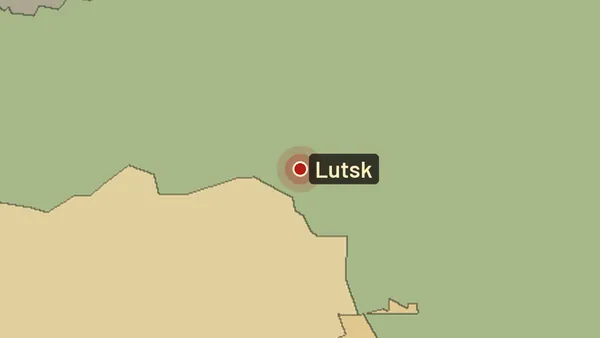
The attack began on 4 June 1916. In many places the Austro-Hungarian defences collapsed within hours. The Eighth Army broke through near Lutsk, which fell within days, and in the south the Ninth Army overran Bukovina and took Czernowitz. Hundreds of thousands of Austro-Hungarian soldiers were captured, many of them from national minorities with little will to fight for the Habsburg empire.
The shock was felt across Europe. Austria-Hungary had to halt its offensive against Italy in the Trentino and move divisions east. Germany sent reinforcements from the west while the battle of Verdun was still raging, and from then on German generals took a much larger role in commanding the Austro-Hungarian armies. Encouraged by the Russian success, Romania declared war on Austria-Hungary on 27 August 1916.
But the breakthrough could not be turned into victory. The neighbouring Russian fronts were slow to attack, so the Central Powers could move reserves against Brusilov. Russian attacks towards the railway junction of Kovel, through marshes and against German troops, cost enormous losses. By the time the offensive ended in September, Russian casualties may have reached half a million or more, while the Central Powers had lost over a million men, including prisoners. Estimates vary widely.
Revolution and the Red Army
The losses of 1916 added to the exhaustion that helped bring down the Tsar in March 1917. In late spring the Provisional Government made Brusilov supreme commander of the Russian army. He led the last Russian offensive of the war in July 1917, ordered by the war minister Alexander Kerensky, but his troops, affected by revolutionary propaganda and war-weariness, would no longer fight, and the offensive collapsed. He was replaced within weeks.
Brusilov stayed in Russia after the Bolshevik revolution. In 1920, during the war between Soviet Russia and Poland, he publicly called on former officers to serve in the Red Army in defence of the country, and he served in advisory and inspecting roles himself. Many White émigrés never forgave him. He died in Moscow in 1926.
Did you know?
- The Brusilov Offensive is one of very few First World War operations named after the general who commanded it.
- Brusilov's methods of preparation, careful reconnaissance and attacking on a broad front influenced later thinking about how to break a fortified front.
Brusilov in World Wars: 1914–20XX
In the Historical (1914) scenario the Brusilov Offensive arrives on 4 June 1916. Austria-Hungary suffers very heavy manpower losses, and its war support and stability fall. Russia loses many men as well; its morale rises for about three months, but its stability falls, a sign of the strain building towards revolution. Brusilov's entry unlocks in the in-game encyclopedia that day, together with the entry on the offensive.
You can lead the Russian Empire from 28 June 1914 and try to turn Brusilov's breakthrough into the victory it never became. In the Parallel Fronts scenario, armoured divisions and air wings could exploit a gap of the kind he opened in 1916. Can you finish what he started?
▶ Play now Free in your browser, no download needed.
Further reading: Wikipedia (English)