World Wars: 1914–20XX
First World War (1914–1918)
Battle of Jutland (1916): the great clash of British and German dreadnoughts
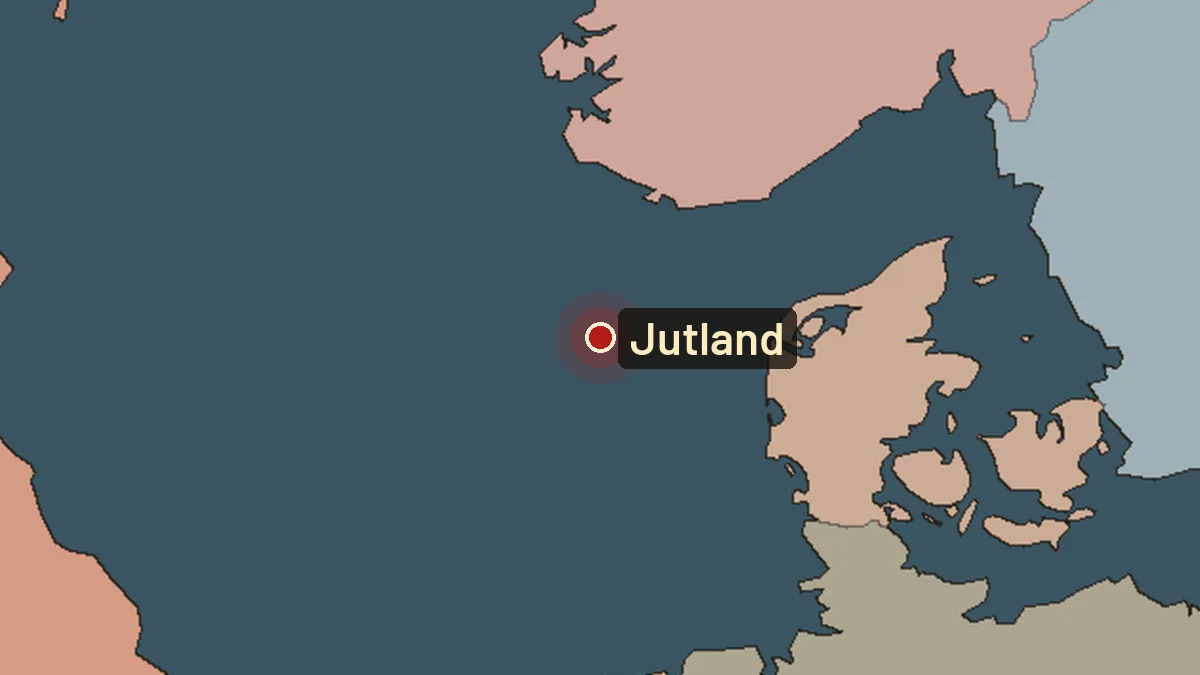
For years before 1914, Britain and Germany had raced to build ever larger battleships, and both nations expected a great sea battle to decide the war. It came only once. On the afternoon of 31 May 1916, around 250 warships met in the North Sea off Denmark. In a few hours of confused fighting, three British battlecruisers blew up and more than 8,000 sailors died. Germany sank more ships and celebrated a victory; Britain kept command of the sea. The Battle of Jutland is still debated today, but its strategic outcome is clear: the German fleet never again seriously challenged the British blockade.
Two fleets, one sea
Britain's Grand Fleet, commanded by Admiral Sir John Jellicoe, was based at Scapa Flow in the Orkney Islands and other northern harbours. Its job was to keep the German navy bottled up in the North Sea and to enforce the blockade that was slowly strangling the German economy. Jellicoe knew the weight of his responsibility; Winston Churchill later described him as the only man on either side who could lose the war in an afternoon.
The German High Seas Fleet was smaller. Its commander from early 1916, Vice Admiral Reinhard Scheer, wanted to use it more actively: by luring part of the British fleet out and destroying it, he hoped to even the balance. His plan for late May was to send the fast battlecruisers of Vice Admiral Franz Hipper towards the Skagerrak as bait, with the main German battle fleet following behind.
The British, however, had an advantage Scheer did not know about. The intelligence centre known as Room 40 at the Admiralty was reading German naval signals, and it warned that the High Seas Fleet was preparing to sail. The Grand Fleet put to sea on the evening of 30 May, before the Germans had even left harbour, with Vice Admiral Sir David Beatty's battlecruisers leading from Rosyth.
The battlecruiser action
In the afternoon of 31 May the scouting forces of Beatty and Hipper made contact. The battlecruisers raced south in parallel, firing at long range. German gunnery was accurate, and British ships proved dangerously vulnerable. HMS Indefatigable was hit, exploded and sank, followed soon afterwards by HMS Queen Mary; only a handful of men survived from each. Watching the second explosion, Beatty is reported to have remarked that there seemed to be something wrong with "our bloody ships" that day. Weak armour, poor handling of propellant charges and open magazine doors are thought to have contributed.
When Beatty sighted the main German fleet coming up behind Hipper, he turned north and led the Germans towards Jellicoe, who was approaching with the British battle fleet, still unseen.
The main fleets meet
At around 6 p.m., with visibility poor in haze and smoke, Jellicoe deployed his 24 dreadnoughts into a single line across the path of the German fleet. Scheer suddenly found the horizon in front of him lit by the flashes of British guns: the British had "crossed his T", the classic position in which a whole line can fire at the head of an enemy column. In this phase the British battlecruiser HMS Invincible was also hit and blew up, killing Rear Admiral Horace Hood and almost all of her crew.
Scheer ordered a simultaneous turn-away, and his fleet disappeared into the mist. Shortly afterwards he turned back east, perhaps hoping to slip past the British, and ran into Jellicoe's line a second time. Again he turned away, this time covering his retreat with a mass torpedo attack by destroyers and a desperate charge by his battlecruisers. Jellicoe, unwilling to risk his battleships against torpedoes, turned away from the attack, and contact was lost.
During the night the German fleet forced its way through the light forces at the rear of the British fleet in a series of savage close-range fights and reached the safety of Horns Reef and its home ports by the morning of 1 June. The old German battleship Pommern was torpedoed and sank with all hands, and the damaged battlecruiser Lützow had to be scuttled.
Who won?
In numbers, Germany came out ahead. Britain lost three battlecruisers, three armoured cruisers and eight destroyers, about 6,100 men; Germany lost one battlecruiser, one pre-dreadnought battleship, four light cruisers and five torpedo boats, about 2,550 men. Germany announced a victory at the Skagerrak, and the British public, expecting a new Trafalgar, was disappointed. Jellicoe was criticised for caution, and arguments between supporters of Jellicoe and of Beatty went on for decades.
Strategically, however, little had changed. Within two days Jellicoe reported his fleet ready for action again, while many German ships needed months of repair. The High Seas Fleet came out a few more times, but never again sought a full battle. Scheer himself reported that a fleet action could not force Britain to make peace and urged unrestricted submarine warfare instead, a decision that would eventually bring the United States into the war. As one American newspaper is said to have put it, the German fleet had assaulted its jailer, but was still in jail.
Did you know?
- Jutland was one of the first naval battles in which an aircraft took part. A seaplane from the carrier HMS Engadine spotted and reported German ships before the main action.
- Among the British dead was Boy First Class Jack Cornwell, aged 16, who stayed at his gun on HMS Chester though mortally wounded. He was awarded the Victoria Cross after his death.
Jutland in World Wars: 1914–20XX
In the Historical (1914) scenario the Battle of Jutland arrives on 31 May 1916. Both navies lose ships, the British lose more, but the British blockade of Germany stays in force. For Germany a new policy becomes available: unrestricted submarine warfare. The Jutland entry unlocks in the in-game encyclopedia.
In the Parallel Fronts scenario there are aircraft above the fleets, and at sea the side with aircraft carriers can see much further than its enemy. Whether you command the Grand Fleet or the High Seas Fleet, can you win the battle that Jellicoe and Scheer could not decide?
▶ Play now Free in your browser, no download needed.
Further reading: Wikipedia (English)