World Wars: 1914–20XX
First World War (1914–1918)
Battle of Sarikamish (1914–15): Enver Pasha's winter offensive in the Caucasus
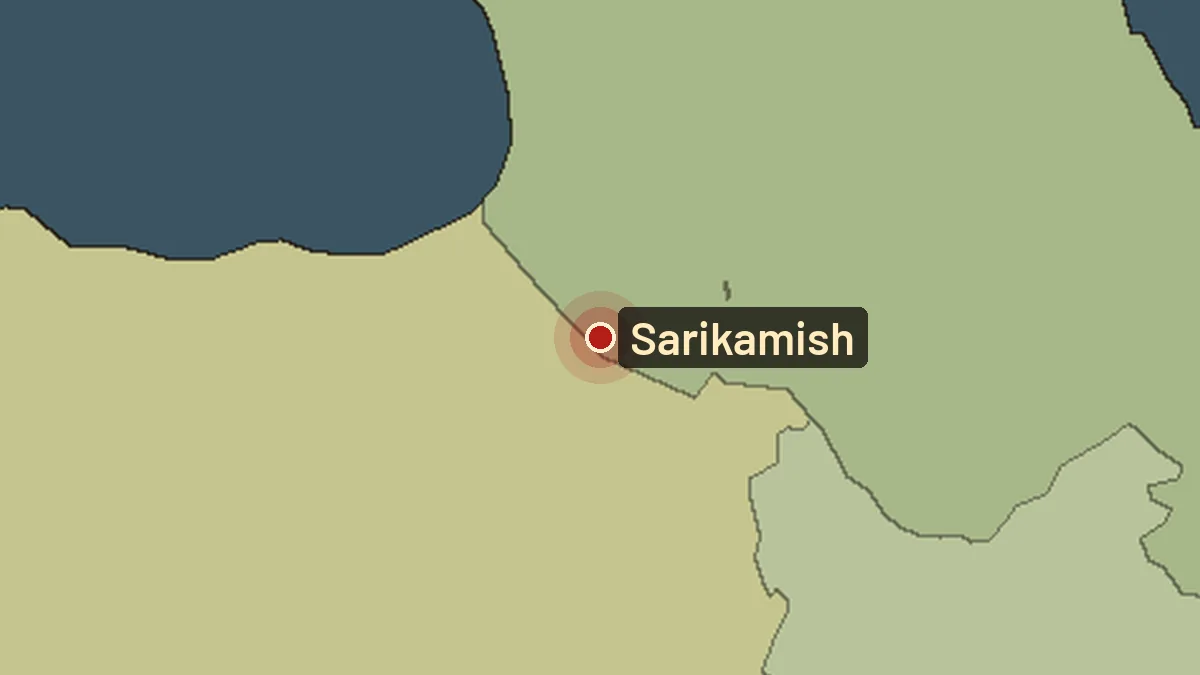
In the last days of 1914, tens of thousands of Ottoman soldiers marched through waist-deep snow over mountains more than 3,000 metres high, many without winter coats or proper boots. Their goal was the small railway town of Sarıkamış, the key to the Russian position in the Caucasus. The plan, devised by the minister of war Enver Pasha himself, was bold. The result was one of the worst disasters in Ottoman military history, and Sarıkamış is still remembered in Turkey as a national tragedy.
The Caucasus front
The Ottoman Empire entered the First World War at the start of November 1914. Its border with Russia ran through the high plateau of eastern Anatolia, where Russia had held the fortress city of Kars and its region since the war of 1877–78. Recovering these lost provinces was a cherished goal in Istanbul. A railway linked Kars and Sarıkamış to the Russian network, while the Ottoman side had no railway anywhere near the front, so every bullet and sack of flour had to come by road or on pack animals.
In early November a Russian force crossed the border in what became known as the Bergmann Offensive, named after its commander, General Georgy Bergmann. The Ottoman Third Army threw it back in fighting around Köprüköy. Encouraged, Enver wanted a decisive blow. He had become a hero in 1913 by recapturing Edirne, and he admired the German victory at Tannenberg in East Prussia that August, where a Russian army had been surrounded and destroyed.
Enver's plan
Enver travelled to Erzurum and took personal command of the Third Army, whose commander, Hasan İzzet Pasha, had warned against a winter offensive and resigned. The army had roughly 90,000 to 100,000 men, though estimates differ. Enver's plan was to pin down the Russians at the front with the XI Corps while the IX and X Corps marched north and east through the mountains, cut the railway at Sarıkamış and trap the Russian army against the border. If it worked, the road to Kars, and perhaps further into the Caucasus, would lie open.
The plan depended on speed and on the weather. The flanking corps had to cross the Allahuekber range on narrow tracks in December, carrying little food and few tents, because supply columns could not follow. Many soldiers came from the warmer provinces of the empire and were dressed for a very different climate.
Snow, frost and failure
The offensive began on 22 December 1914. At first it caught the Russians by surprise, and their field commander, General Alexander Myshlayevsky, considered retreating. But on the mountain paths the Ottoman columns were struck by blizzards and temperatures far below freezing. Units lost their way, frostbite crippled thousands, and soldiers who sat down to rest in the snow often did not get up again. The X Corps also lost precious days by detouring towards Oltu.
By the time the exhausted vanguard reached Sarıkamış around 25 and 26 December, the town was held only by a small garrison. A determined attack might have taken it, but the Ottoman divisions arrived piecemeal, hungry and frozen. The Russians rushed in reinforcements by rail, and General Nikolai Yudenich, the chief of staff of the Caucasus Army, took charge of the defence and decided to stand and fight. Ottoman assaults on the town between 26 and 29 December failed, some troops briefly fighting their way into the streets before being driven out.
The Russians then counter-attacked. On 4 January 1915 the remains of the IX Corps, cut off near Sarıkamış, surrendered together with its commander, İhsan Pasha. The X Corps retreated through the same mountains it had crossed, losing many more men to cold. Enver left the front and returned to Istanbul. By mid-January the fighting was over.
The cost and the consequences
How many Ottoman soldiers died at Sarıkamış is still debated, and figures in different works range widely. What is certain is that the Third Army was largely destroyed, losing most of its men to death, frostbite, capture and desertion, and that far more died of cold, hunger and disease than of Russian bullets. A typhus epidemic that followed spread through the army and the towns behind the front, including Erzurum. Russian losses were also significant, many of them to frostbite and sickness.
The defeat left the Caucasus front weak for the rest of the war. In early 1916 Yudenich captured Erzurum, and later Trabzon and Erzincan, and the Ottomans recovered the lost ground only after Russia collapsed in revolution in 1917–18.
Did you know?
- News of the disaster was largely suppressed in Istanbul at the time, and for decades it was little discussed in public. Today thousands of people walk the route over the Allahuekber mountains each January in memory of the soldiers.
- Sarıkamış is now a ski resort, known for its fine powder snow, and its forests of Scots pine are among the largest in eastern Turkey.
Sarıkamış in World Wars: 1914–20XX
In the Historical (1914) scenario the offensive arrives on 22 December 1914. The Ottoman Empire suffers very heavy manpower losses and its morale falls for about three months, while Russian morale rises for around two. The Sarıkamış entry unlocks in the in-game encyclopedia.
If you lead the Ottoman Empire, the Caucasus front is yours to plan: you can try to do better than Enver, or simply refuse to fight the mountains in winter. In the Parallel Fronts scenario motor transport and aircraft change the supply problem that doomed the Third Army, but the mountains and the snow remain. Can you take Kars, or at least keep your army alive until spring?
▶ Play now Free in your browser, no download needed.
Further reading: Wikipedia (English)