World Wars: 1914–20XX
First World War (1914–1918)
The July Crisis (1914): the ultimatum and Austria-Hungary's war on Serbia
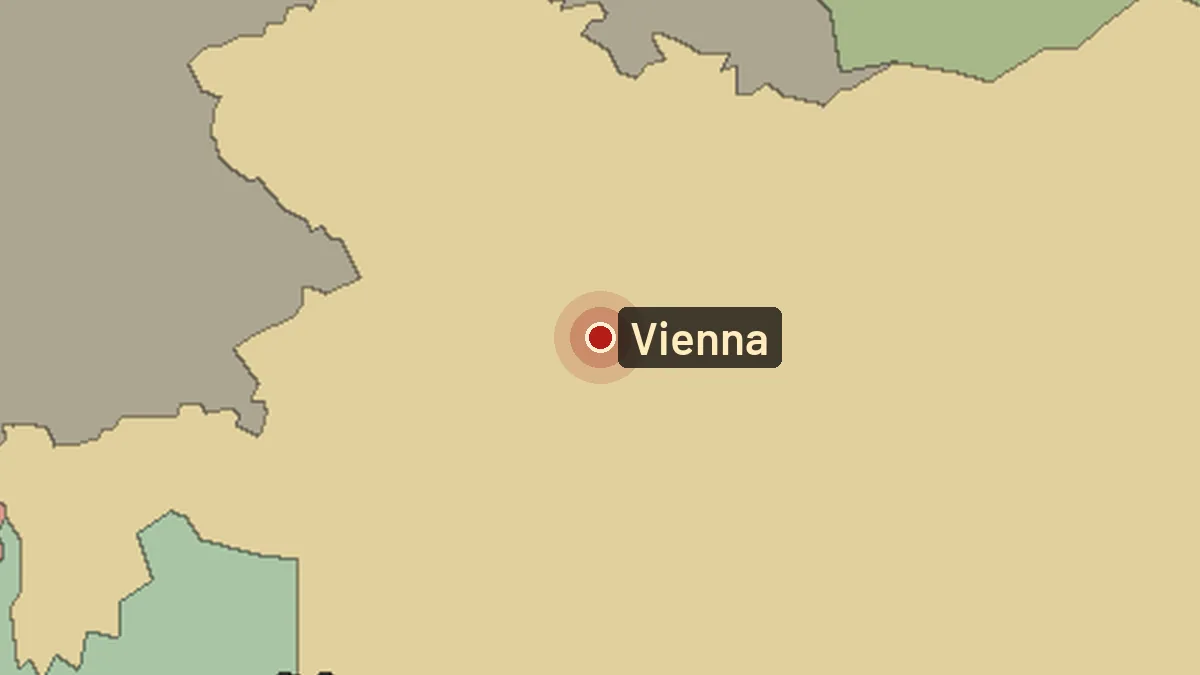
The month after the Sarajevo assassination is the most closely studied month in modern diplomatic history. In those weeks, Austria-Hungary decided to settle accounts with Serbia by force, Germany promised to stand behind it, and Russia decided it could not let Serbia be crushed. On 28 July 1914 Vienna declared war on Belgrade. It was the first declaration of the First World War, and within a week the conflict had spread to all the great powers of Europe.
Vienna decides
The killing of Archduke Franz Ferdinand on 28 June shocked Vienna, but it also offered an opportunity. The foreign minister, Count Leopold Berchtold, and the chief of the general staff, Franz Conrad von Hötzendorf, had long believed that Serbian nationalism threatened the survival of the multinational Habsburg Empire. Conrad had urged war against Serbia many times before. Now even the cautious were tempted to act, because a punitive war could be presented as a response to a crime.
Austria-Hungary could not move without Germany, because a war with Serbia might bring in Russia, Serbia's protector. On 5 July Berchtold's chief of cabinet, Count Alexander Hoyos, brought a letter from Emperor Franz Joseph to Berlin. Kaiser Wilhelm II and, the next day, Chancellor Theobald von Bethmann Hollweg assured the Austrians that Germany would support them whatever they decided, and encouraged them to act quickly. This promise is known as the "blank cheque". German leaders seem to have hoped the war could stay local, or that if Russia did intervene, it was better to fight now than later when Russia's army had grown stronger.
The main brake in Vienna was the Hungarian prime minister, Count István Tisza, who at first opposed a surprise attack. By mid-July he had been won over, on condition that Austria-Hungary would not annex Serbian territory. Military planning moved slowly, partly because many soldiers were on harvest leave, and Vienna also waited until the French president, Raymond Poincaré, and prime minister, René Viviani, had finished a state visit to St Petersburg, so that the two allies could not easily coordinate their answer.
The ultimatum
At 6 p.m. on 23 July the Austro-Hungarian minister in Belgrade, Baron Wladimir Giesl, handed the Serbian government a note with ten demands and a deadline of 48 hours. Serbia was to suppress anti-Austrian publications and organisations, purge officers and officials named by Vienna, arrest suspects and stop arms smuggling across the border. Most controversially, Austro-Hungarian officials were to take part in suppressing the subversive movement and in the inquiry inside Serbia. The note had been written to be rejected: Berchtold wanted war, not a diplomatic success.
Europe was stunned. The British foreign secretary, Sir Edward Grey, called it the most formidable document he had ever seen one state address to another. In St Petersburg the foreign minister, Sergei Sazonov, reacted with alarm, and on 24 and 25 July the Russian government decided to begin preparing for war and to support Serbia.
Serbia's answer and the declaration
Serbia, exhausted by the Balkan Wars, had no wish to fight a great power. Prime Minister Nikola Pašić's government drafted a skilful reply, delivered shortly before the deadline on 25 July. It accepted most of the demands, some with reservations, but refused to let Austro-Hungarian officials carry out investigations on Serbian soil, which it said would violate its constitution. Serbia had already ordered mobilisation earlier that afternoon. Giesl glanced at the reply, declared it unsatisfactory and left Belgrade by train within the hour.
Even in Berlin the reply made an impression. When Wilhelm II read it on the morning of 28 July, he noted that it removed every reason for war and suggested that Austria-Hungary should only occupy Belgrade as a guarantee. His advice reached Vienna too late or too weakly to matter. Grey's proposal of a conference of the uninvolved powers was turned down by Germany. On 28 July Austria-Hungary declared war on Serbia, in a telegram sent to the Serbian government. That night Austro-Hungarian river monitors and artillery began shelling Belgrade across the Danube and Sava.
From a local war to a world war
What Vienna had hoped would be a short Balkan war immediately became a European crisis. Russia announced partial mobilisation against Austria-Hungary on 29 July and general mobilisation on 30 July. To German planners, Russian mobilisation was a deadly danger, because their war plan depended on defeating France before Russia's slow-moving army was ready. Germany declared war on Russia on 1 August and on France on 3 August, and its invasion of Belgium brought Britain in on 4 August.
Who bears most responsibility for the July Crisis is still debated. Historians have stressed Austria-Hungary's determination to wage war, Germany's blank cheque and its rigid military planning, Russia's early mobilisation and the failure of Britain to make its position clear sooner. Most agree that no single government planned a world war, but that several took enormous risks in the belief that their opponents would back down.
Did you know?
- The Austro-Hungarian army was not ready to fight when war was declared: mobilisation against Serbia had only been ordered on 25 July, and the first major invasion of Serbia did not begin until mid-August.
- Serbia's chief of staff, Radomir Putnik, was taking the waters at a spa in Austria-Hungary when the crisis broke. He was briefly detained in Budapest, but Franz Joseph allowed him to go home, and he led the Serbian army that defeated the first invasion.
The July Crisis in World Wars: 1914–20XX
In the Historical (1914) scenario this event arrives on 28 July 1914, and it is one of the moments where the game pauses and the player decides. Austria-Hungary can send the ultimatum and declare war on Serbia, as Vienna did, or accept international mediation, which lowers tension with Serbia but costs the empire internal stability. If war is declared, tension between Russia and Austria-Hungary rises sharply, and war support grows both in Austria-Hungary and in Serbia.
Choosing mediation creates an alternate history from the very first weeks of the game: the chain of declarations that followed in real life may never start. In the Parallel Fronts scenario the dilemma is the same, but the armies are mechanised, and a war that begins can move far faster. Will you risk the empire on a punitive war, or try to keep the peace that the statesmen of 1914 lost?
▶ Play now Free in your browser, no download needed.
Further reading: Wikipedia (English)