World Wars: 1914–20XX
Second World War (1939–1945)
The Battle of Britain (1940): radar, the RAF and the Luftwaffe's defeat
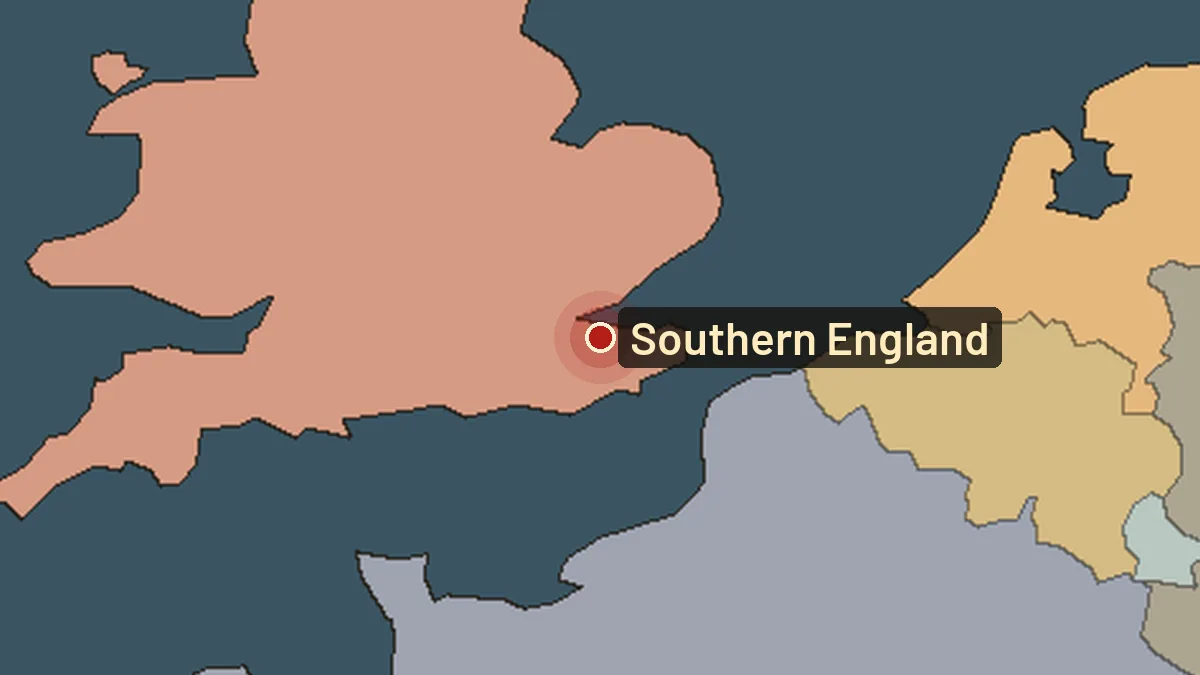
In the summer of 1940, with France defeated and the British army back home without its heavy weapons, Hitler expected Britain to make peace. When it refused, he ordered preparations for an invasion. First, though, the Luftwaffe had to win control of the air over the Channel and southern England. For almost four months German bombers and fighters fought the Royal Air Force in the first great campaign decided entirely in the air. They failed, and the invasion never came.
Alone after France
Winston Churchill, prime minister since 10 May, rejected all suggestions of a negotiated peace. On 16 July Hitler issued a directive for a landing in southern England, code-named Operation Sea Lion. The German navy, badly weakened in Norway, could only hope to cross the Channel if the Royal Navy was kept away and the RAF was destroyed or driven from the skies above the beaches.
The Luftwaffe, led by Reichsmarschall Hermann Göring, had about 2,500 serviceable aircraft in France, Belgium, the Netherlands and Norway, organised in air fleets under Albert Kesselring and Hugo Sperrle. RAF Fighter Command, under Air Chief Marshal Sir Hugh Dowding, had some 600 to 700 serviceable fighters at the start, mainly Hawker Hurricanes and Supermarine Spitfires.
The Dowding system
Britain's great advantage was not its aircraft but the way it used them. Before the war Dowding had built an integrated air defence network. A chain of radar stations along the coast, known as Chain Home, could detect incoming formations far out over the sea. The Royal Observer Corps tracked them once they crossed the coast. Reports flowed by telephone to filter rooms and operations rooms, where controllers plotted the raids on large map tables and sent fighter squadrons to meet them by radio. The defenders could thus keep their fighters on the ground until they were needed and avoid wasting fuel and pilots on patrols.
Fighting over home ground also mattered. A German pilot shot down over England was lost for good; a British pilot who baled out might be flying again the same day. The German Messerschmitt Bf 109 fighter, a match for the Spitfire, could stay over London only for a few minutes before it ran short of fuel.
The battle in phases
The British date the battle from 10 July, when the Luftwaffe began heavy attacks on Channel convoys and ports. The main assault, which the Germans called Adlertag (Eagle Day), opened on 13 August with raids on RAF airfields and radar stations. Fighting peaked from late August to early September, when Keith Park's No. 11 Group, defending London and the south-east, came under relentless attack on its sector airfields. Pilot losses and exhaustion were severe, and many historians believe this was the most dangerous phase for Britain.
Then the Germans changed course. After British bombers raided Berlin in late August, partly in response to bombs dropped on London, Hitler ordered attacks on the British capital. On 7 September hundreds of bombers struck London's docks, the start of the Blitz. The switch gave the battered airfields time to recover. On 15 September, now remembered as Battle of Britain Day, two large German raids on London were met by massed RAF fighters and broken up. Two days later Hitler postponed Sea Lion indefinitely. Daylight raids tapered off in October, and the Luftwaffe turned to night bombing of British cities, which continued until May 1941.
Why it mattered
The Battle of Britain was not won by a huge margin. Fighter Command lost around a thousand aircraft and roughly 500 pilots and aircrew killed; the Luftwaffe lost well over 1,600 aircraft and several thousand aircrew killed or captured. Exaggerated claims on both sides distorted the picture at the time. But the result was decisive: Germany could not invade, and Britain remained in the war as an unsinkable base from which the United States and its allies would eventually return to Europe.
On 20 August, in the middle of the battle, Churchill told the House of Commons: "Never in the field of human conflict was so much owed by so many to so few." The pilots of Fighter Command, fewer than 3,000 men, have been known as "the Few" ever since. About one in five came from outside Britain, including Polish, Czechoslovak, New Zealand, Canadian and Australian pilots. The Polish No. 303 Squadron became one of the most successful units of the battle.
Did you know?
- The Hurricane, slower and less famous than the Spitfire, actually shot down more German aircraft during the battle because there were many more of them.
- There was also a dispute among RAF commanders: Trafford Leigh-Mallory of No. 12 Group favoured large "Big Wing" formations, while Park preferred to meet raids quickly with smaller groups. The argument contributed to Dowding's and Park's replacement in late 1940.
The Battle of Britain in World Wars: 1914–20XX
World Wars: 1914–20XX currently covers the First World War; a 1939 scenario is planned, and the Battle of Britain is already part of the game's event database for it. There it is designed so that both air forces suffer heavy aircraft losses, British support for the war rises, and Germany's invasion plan, Operation Sea Lion, is cancelled.
The roots of the battle lie in the First World War, when German Zeppelins and Gotha bombers raided London and Britain created the Royal Air Force in April 1918. In the Parallel Fronts scenario, where flight matured a generation early, fighter and bomber wings fly from the very first day of 1914, and the struggle for the skies over the Channel can begin decades before 1940. Lead Britain or Germany and see who wins the air.
▶ Play now Free in your browser, no download needed.
Further reading: Wikipedia (English)