World Wars: 1914–20XX
Second World War (1939–1945)
The Tripartite Pact (1940): Germany, Italy and Japan form the Axis
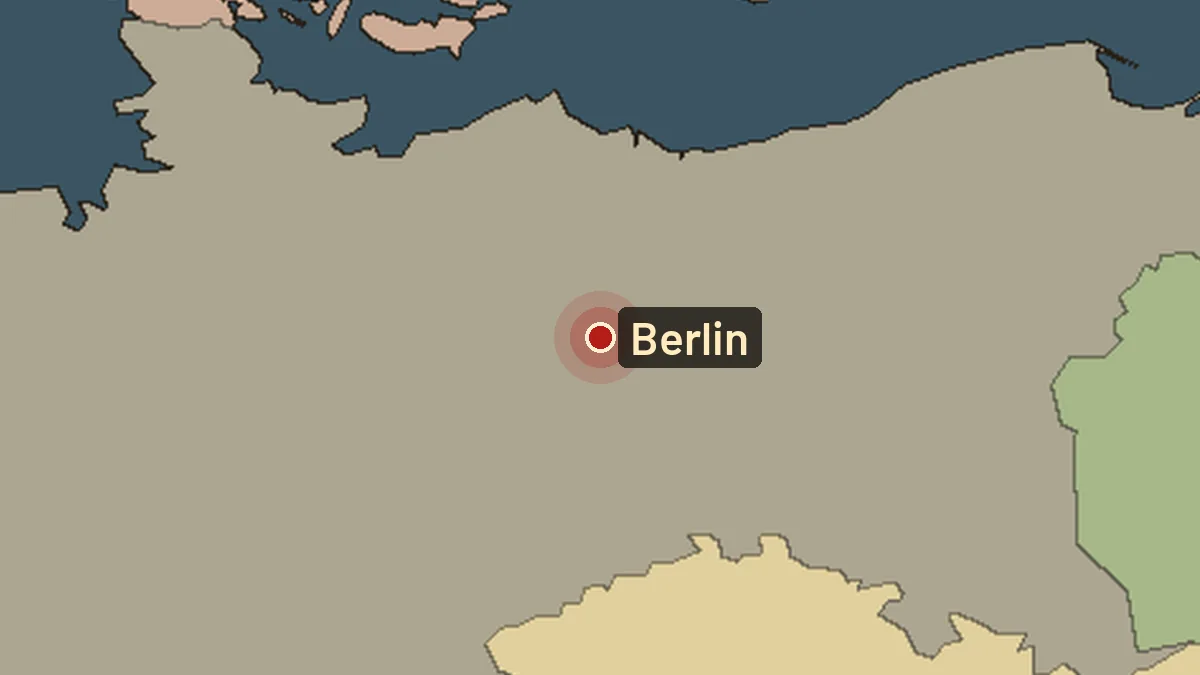
On 27 September 1940, in the new Reich Chancellery in Berlin, the foreign ministers of Germany and Italy and the Japanese ambassador signed a short treaty of six articles. The Tripartite Pact turned a loose association of like-minded dictatorships into a formal alliance, and it gave the "Axis" its familiar shape: Germany and Italy in Europe, Japan in Asia. Its real target was a country that was not yet at war, the United States.
From Anti-Comintern to Axis
The three powers had been drawing together for years. Germany and Japan signed the Anti-Comintern Pact against the Communist International in 1936, and Italy joined in 1937. Mussolini had already spoken of a Rome-Berlin "axis" in 1936, and in May 1939 Germany and Italy concluded the Pact of Steel, a full military alliance.
Japan's relationship with Germany was more complicated. In the First World War Japan had been an ally of Britain, seized Germany's colony at Tsingtao in China and its Pacific islands, and sent destroyers to the Mediterranean. In the 1930s, however, its war in China and its ambitions in Asia set it against Britain and the United States. The Nazi-Soviet pact of August 1939 shocked Tokyo, since Japan's army had just been fighting the Soviets in Mongolia, and the Japanese government fell.
The German victories of 1940 changed the picture again. With France and the Netherlands defeated and Britain under siege, their rich colonies in South-East Asia suddenly seemed open. A new Japanese cabinet under Prince Fumimaro Konoe, with the forceful Yōsuke Matsuoka as foreign minister, sought a firm alliance with the winners. In September 1940 Japanese troops entered northern French Indochina, and the United States responded with an embargo on scrap iron and steel exports to Japan.
What the pact said
The text was short. Japan recognised the leadership of Germany and Italy in establishing a "new order" in Europe, and Germany and Italy recognised Japan's leadership in a new order in "Greater East Asia". The key clause, Article 3, bound the three powers to assist one another with all political, economic and military means if one of them was attacked by a power not then involved in the European war or the Sino-Japanese conflict.
That description fitted only two great powers: the United States and the Soviet Union. Article 5, however, stated that the pact did not affect the existing relations of the three with the Soviet Union. The message was therefore aimed at Washington: if America entered the war against Germany, it might face a war in the Pacific as well, and if it moved against Japan, Germany and Italy would stand behind Tokyo.
New members and an empty promise
Germany used the pact to bind its smaller partners in Europe. Hungary joined on 20 November 1940, Romania on 23 November and Slovakia on 24 November. Bulgaria signed on 1 March 1941, opening the way for German troops to move against Greece. Yugoslavia joined on 25 March 1941, but two days later officers in Belgrade overthrew the government that had signed. Hitler responded with an invasion in April, and after the country was dismembered the new Independent State of Croatia joined in June.
The Soviet Union even discussed joining. When Molotov visited Berlin in November 1940, the Germans offered a share of the British Empire's spoils, but Stalin's conditions, including Finland, Bulgaria and the Turkish Straits, were unacceptable to Hitler, who had already decided on war in the east.
In practice, the pact never created a coordinated alliance. Germany attacked the Soviet Union in June 1941 without consulting Japan, and Japan, which had signed a neutrality pact with Moscow in April 1941, stayed out of that war. Japan in turn attacked Pearl Harbor in December 1941 without coordinating with Berlin. Germany and Italy did declare war on the United States a few days later, although the pact did not strictly require it, since Japan had been the attacker. The deterrent the pact was meant to provide had failed: instead of keeping America out, it helped to bring America into a single global war.
Did you know?
- Both Japan and Italy had fought on the side of Britain and France in the First World War, and both felt poorly rewarded at Versailles, which helps explain their turn towards Germany in the 1930s.
- In the First World War Bulgaria had joined the Central Powers in 1915; with the Tripartite Pact it once again sided with Germany.
The Tripartite Pact in World Wars: 1914–20XX
World Wars: 1914–20XX currently covers the First World War; a 1939 scenario is planned, and the Tripartite Pact is already part of the game's event database for it. There it is designed so that Japan joins the Axis and tension between the United States and Japan rises.
The alliances of 1940 look very different from the 1914 world you meet in the game today. In 1914 Italy is still formally tied to Germany and Austria-Hungary, Japan (which is not on the game's map) is Britain's ally, and Bulgaria and Romania are neutrals that both sides hope to win over. Lead Italy, Bulgaria or Romania in the Historical (1914) or Parallel Fronts scenario, and see whether your war ends on the side that history chose.
▶ Play now Free in your browser, no download needed.
Further reading: Wikipedia (English)