World Wars: 1914–20XX
First World War (1914–1918)
The Fall of Baghdad (1917): Britain's revenge for Kut in Mesopotamia
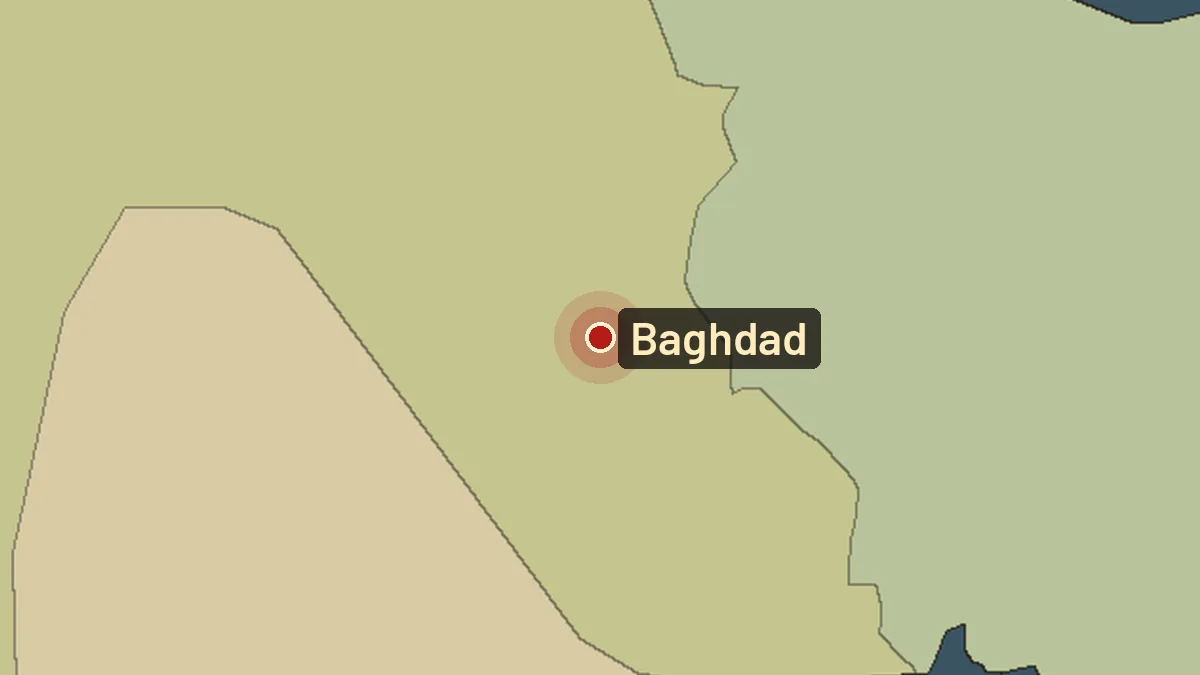
On 11 March 1917 British and Indian troops marched into Baghdad, the city of the caliphs and the Ottoman Empire's most important centre in Iraq. Less than a year earlier a British army had surrendered at Kut, a hundred and sixty kilometres downstream, in one of the worst humiliations in British military history. The fall of Baghdad showed how far Britain had learned from that defeat, lifted Allied spirits in a grim year and marked the beginning of the end of Ottoman rule in Mesopotamia.
From Basra to the siege of Kut
British and Indian troops had landed at the head of the Persian Gulf in November 1914, soon after the Ottoman Empire entered the war, and captured Basra. Their original task was limited: to protect the oil installations of the Anglo-Persian Oil Company and British influence in the Gulf. Easy early successes encouraged the commanders to push further up the Tigris.
In 1915 General Charles Townshend's division advanced towards Baghdad with too few men and very poor supply lines. At Ctesiphon (Selman-ı Pak), in November 1915, Ottoman forces stopped him, and he fell back to Kut al-Amara, where he was surrounded. Several relief attempts failed with heavy losses. On 29 April 1916, starving, the garrison of some 13,000 British and Indian troops surrendered to the Ottoman army commanded by Halil Pasha. Many of the prisoners later died in captivity. In Turkey the victory is remembered as the triumph of Kut (Kûtülamare).
Maude rebuilds the army
The disaster led to a complete overhaul. The War Office in London took control of the campaign from the government of India, and in August 1916 General Sir Frederick Stanley Maude became commander. Maude was a careful, hard-working organiser. Before attacking he made sure his army would never again be starved of supplies: river steamers and barges were brought in, the port of Basra was enlarged, light railways were laid, and hospitals and medical services were greatly improved. By the end of 1916 he commanded a far larger and better-equipped force than Townshend ever had.
London at first wanted only a cautious defence. But Maude was allowed to advance step by step, and he did so methodically.
Back up the Tigris
Maude's offensive began on 13 December 1916. Through January and February 1917 his troops ground their way forward through the Ottoman trench lines along both banks of the Tigris below Kut. On 23 February British troops forced a crossing of the river at the Shumran bend, upstream of the town, threatening to cut off the defenders. The Ottoman Sixth Army abandoned Kut and retreated towards Baghdad, harried by British gunboats and cavalry.
The Ottoman commanders tried to make a stand on the Diyala river, a tributary of the Tigris just south-east of Baghdad, and held up the crossing for several days. But with British forces working round their flank on the other bank, they could not hold the city. On the night of 10–11 March they withdrew north, and on the morning of 11 March 1917 Maude's troops entered Baghdad. Thousands of Ottoman soldiers were taken prisoner during the advance.
A week later Maude issued a proclamation to the people of Baghdad, declaring that his armies had come "not as conquerors or enemies, but as liberators". It promised a future of freedom and prosperity for the Arab population, though Britain intended to keep Iraq under its own control.
What the capture meant
Baghdad had been in Ottoman hands, with a short break in the seventeenth century, since the reign of Süleyman the Magnificent in 1534. Its loss was a heavy blow to Ottoman prestige and to German hopes of influence in the Middle East, symbolised by the unfinished Berlin–Baghdad railway. Coming at the same moment as the revolution in Russia, it gave the Allies welcome good news.
The Ottoman high command, with German help, formed a new army group, the Yıldırım (Thunderbolt) Group under Erich von Falkenhayn, partly to retake Baghdad. In the end it was sent to Palestine instead, where the British threat had become more urgent. Maude pushed north to Samarra in April 1917, but in November he died of cholera in Baghdad, apparently after drinking contaminated milk. British forces reached Mosul only after the Armistice of Mudros in 1918, and after the war Iraq became a British mandate.
Did you know?
- Halil Pasha, the Ottoman commander who took the surrender at Kut, was the uncle of War Minister Enver Pasha. Under the Turkish Republic he took the surname Kut in memory of the victory.
- Maude was buried in Baghdad, and his grave can still be found in the city's British war cemetery.
The fall of Baghdad in World Wars: 1914–20XX
In the Historical (1914) scenario Baghdad falls to the British on 11 March 1917. Ottoman war support and stability fall, while British morale rises for about two months.
As the Ottoman Empire, you can try to repeat Kut and keep the British pinned in the south, or shift troops to wherever the danger is greater. As Britain, Mesopotamia is a long road up the river, but a rewarding one. In the Parallel Fronts scenario, motorised columns and aircraft make the desert flanks of the Tigris far more important. Will Baghdad fall on your watch?
▶ Play now Free in your browser, no download needed.
Further reading: Wikipedia (English)