World Wars: 1914–20XX
First World War (1914–1918)
The Kerensky Offensive (1917): Russia's last attack of the First World War
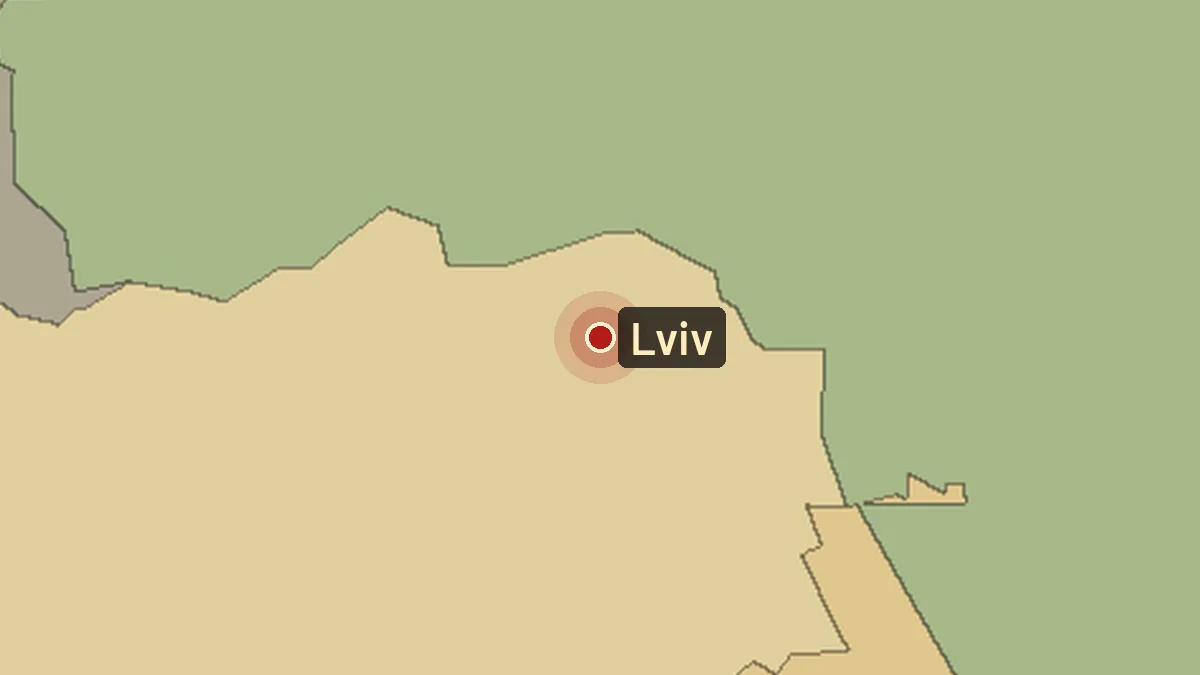
On 1 July 1917, four months after the fall of the Tsar, the guns of the new Russian Republic opened fire in Galicia. The war minister, Alexander Kerensky, hoped that a victorious offensive would restore the army's discipline, honour Russia's promises to its allies and rally the nation behind the revolution. For a few days it seemed to work. Then the attack stalled, the Germans struck back, and whole regiments simply walked away from the front. The Kerensky Offensive was Russia's last major attack of the war, and its failure helped bring Lenin to power.
An army after the revolution
The February Revolution of March 1917 transformed the Russian army. The Petrograd Soviet's Order No. 1 told soldiers to elect committees, and in many units orders were now debated before they were obeyed, or not obeyed at all. Officers lost authority, desertion rose, and along parts of the front Russian and German soldiers fraternised in no man's land. Most soldiers wanted peace, and many listened to the Bolsheviks, who called for an immediate end to the war.
The Provisional Government took a different view. It wanted a peace "without annexations or indemnities", but believed Russia could not simply abandon its allies, and that a separate peace would leave the country at Germany's mercy. Britain and France pressed for an attack to stop the Germans moving troops west. In May Kerensky, a lawyer and gifted speaker, became minister of war and navy. He toured the front making passionate speeches to the troops, so many that soldiers nicknamed him the "persuader-in-chief". General Aleksei Brusilov, the hero of 1916, was appointed commander-in-chief.
The attack in Galicia
The main blow fell in eastern Galicia, where the Russian Eleventh and Seventh Armies attacked towards Lemberg (Lviv) on 1 July 1917 after a heavy two-day bombardment. The Russians had more guns and shells than at any earlier point of the war. On the first days they took several lines of trenches, and on 2 July a brigade of Czech and Slovak volunteers serving in the Russian army won a notable success at Zborov against Austro-Hungarian regiments, a battle still remembered in Czechia and Slovakia.
Further south, the Eighth Army under General Lavr Kornilov broke through the Austro-Hungarian Third Army near Stanislau (Ivano-Frankivsk) on 6 July and pushed forward some 30 kilometres, taking Halicz and Kalusz. Attacks on the northern and western fronts, including one near Smorgon in which a women's "Battalion of Death" fought, achieved little.
Collapse
The success did not last. After the first days, many units refused to go forward again. Soldiers' committees held meetings to discuss whether to obey, and reserve units declined to relieve those in the front line. Kornilov's troops, meanwhile, lost cohesion as they advanced, and some looted the towns they took.
The Germans had seen the attack coming and brought reinforcements from the west. On 19 July, under the planning of General Max Hoffmann, they launched a counter-offensive near Zloczow (Zolochiv). The Russian line broke almost at once. Whole divisions fled or abandoned their positions, and the retreat turned into a rout. Tarnopol (Ternopil) fell within days, and by early August the Central Powers had not only won back everything lost in July but also retaken Czernowitz and most of Bukovina, which had been in Russian hands since the Brusilov Offensive.
The political fallout
The offensive failed at the worst possible moment for the government. In Petrograd, armed demonstrations by soldiers and workers in mid-July, the "July Days", were put down, and Lenin fled to Finland accused of being a German agent. Kerensky became prime minister later that month. The death penalty at the front, abolished after the revolution, was restored, as Kornilov had demanded, and Kornilov replaced Brusilov as commander-in-chief.
But the army never recovered. In September the Germans took Riga with new infiltration tactics, and Kornilov's own move against the capital the same month split the government from its officers. Millions of soldiers who had seen the offensive fail no longer believed the war could be won or that the Provisional Government would ever end it. In November the Bolsheviks seized power promising immediate peace, and within weeks Russia had signed an armistice.
Did you know?
- The offensive is also called the July Offensive or, in Russian sources, the June Offensive, because it began on 18 June by the old Russian calendar.
- The Czechoslovak Legion, whose brigade fought at Zborov, later became famous for its journey along the Trans-Siberian Railway during the Russian Civil War.
The Kerensky Offensive in World Wars: 1914–20XX
In the Historical (1914) scenario the Kerensky Offensive arrives on 1 July 1917. Russia suffers heavy manpower losses, and its war support and stability fall further, deepening the crisis that began with the February Revolution.
If you lead Russia in 1917, you face Kerensky's dilemma: an army that will not fight and allies who need it to. Keep your forces on the defensive and your country steady, and you may hold out longer than history did. As Germany or Austria-Hungary, a Russian collapse is your chance to end the war in the east. In the Parallel Fronts scenario, armoured counter-attacks can turn a failing offensive into a rout even faster. Will your Russia attack, or hold?
▶ Play now Free in your browser, no download needed.
Further reading: Wikipedia (English)