World Wars: 1914–20XX
First World War (1914–1918)
The Russian Revolutions of 1917: from the fall of the Tsar to Lenin's coup
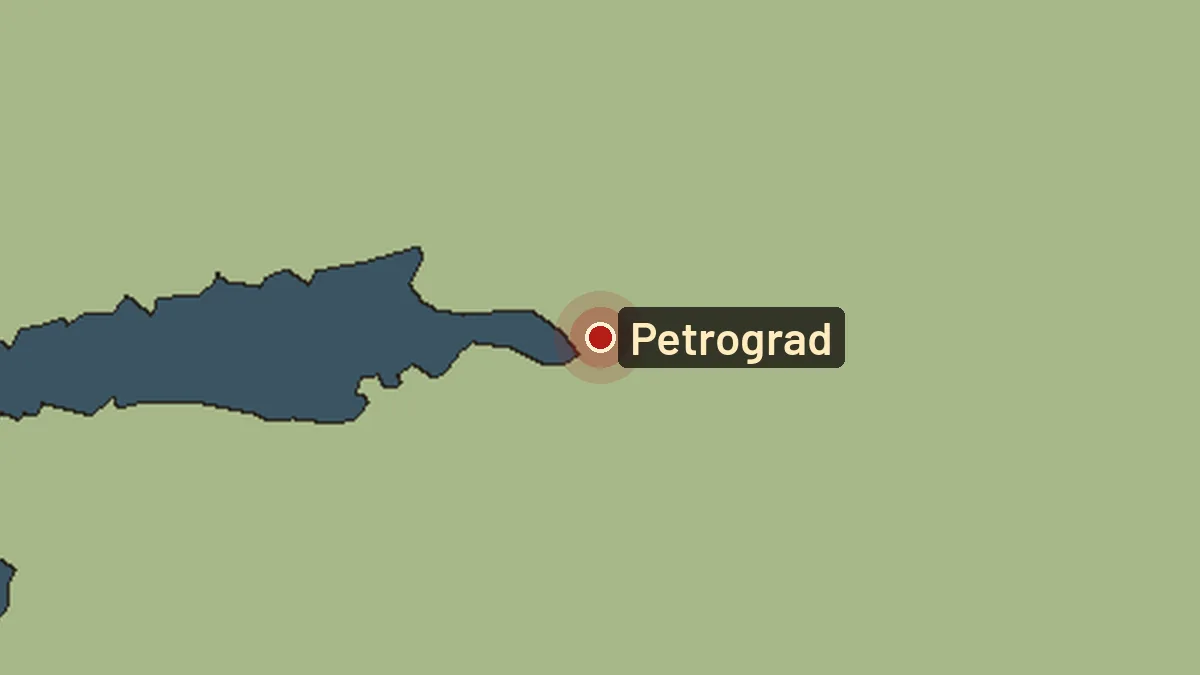
In March 1917 the Russian Empire, which had fought Germany, Austria-Hungary and the Ottoman Empire for two and a half years, collapsed in a matter of days. Strikes and bread queues in the capital turned into a mutiny of the garrison, and Tsar Nicholas II gave up the throne his family had held for three centuries. Eight months later a small radical party, the Bolsheviks led by Vladimir Lenin, seized power and set out to take Russia out of the war. The two revolutions of 1917 transformed the Eastern Front and the whole twentieth century.
An empire at breaking point
By the winter of 1916–17 Russia had lost millions of men killed, wounded and captured. Even the great victory of the Brusilov Offensive had been followed by costly and fruitless attacks. The railways could not carry enough food and fuel to the cities, prices had soared, and in Petrograd workers queued for hours for bread in temperatures far below freezing. Since 1915 Nicholas had been at army headquarters in Mogilev, leaving the government to the unpopular Empress Alexandra. The murder of Rasputin in December 1916 showed that even the aristocracy had lost faith in the court.
February: the Tsar falls
On 8 March 1917 (23 February in the Russian calendar), International Women's Day, women textile workers in Petrograd walked out and called on the men of the nearby factories to join them. Within two days the strike had become general, and crowds filled the centre of the city with demands for bread and an end to the war and the autocracy.
The decisive moment came on 12 March, when soldiers of the Petrograd garrison, many of them young reservists, refused to fire on the crowds and joined them. The same day two rival centres of power appeared in the Tauride Palace: a committee of the Duma, the elected parliament, and the Petrograd Soviet of Workers' and Soldiers' Deputies, elected in factories and barracks.
Nicholas tried to return to the capital, but his train was stopped. His generals told him that only his abdication could save the army and the war effort. On 15 March, at Pskov, he abdicated for himself and his son in favour of his brother, Grand Duke Michael, who declined the next day. The monarchy was over.
Dual power and the war
A Provisional Government under Prince Georgy Lvov took office, with the socialist lawyer Alexander Kerensky as its only member from the Soviet. It introduced civil liberties and promised elections to a Constituent Assembly. But real authority was shared with the Soviet, whose famous Order No. 1 told soldiers to elect committees and to obey only those orders that the Soviet approved. This "dual power" weakened discipline in the army just as the government decided to keep fighting alongside its allies.
Germany saw its opportunity. In April it allowed Lenin, exiled in Switzerland, and a group of other revolutionaries to cross Germany by train to Sweden and then to Russia. Lenin arrived at Petrograd's Finland Station on 16 April and at once called for no support for the Provisional Government, all power to the soviets and an immediate end to the war. His slogan "Peace, land and bread" spoke to soldiers, peasants and workers alike.
Summer of crisis
In July the government, with Kerensky now war minister, launched a new offensive in Galicia. After early gains it collapsed in the face of German counter-attacks and mass desertion. In Petrograd armed demonstrations in mid-July, the "July Days", were put down, and Lenin fled to Finland, accused of being a German agent. Kerensky became prime minister.
In September the commander-in-chief, General Lavr Kornilov, moved troops towards the capital in what Kerensky regarded as an attempted coup. To defend the city Kerensky turned to the left, including the Bolsheviks, and the attempt fell apart. The affair destroyed Kerensky's standing with the officers and greatly boosted the Bolsheviks, who won majorities in the Petrograd and Moscow soviets. Leon Trotsky became chairman of the Petrograd Soviet.
October: the Bolsheviks take power
Lenin returned secretly and pressed his party to strike. On 7 November (25 October in the Russian calendar) the Soviet's Military Revolutionary Committee, led by Trotsky, occupied bridges, telegraph offices and railway stations in Petrograd almost without bloodshed. That night the Winter Palace, seat of the Provisional Government, was taken. Kerensky had already left the city to look for loyal troops and never regained power.
The new government, the Council of People's Commissars headed by Lenin, immediately issued a Decree on Peace calling for an end to the war and a Decree on Land handing the estates to the peasants. Elections to the Constituent Assembly gave the Bolsheviks only about a quarter of the votes, and when the assembly met in January 1918 they dissolved it. An armistice with the Central Powers was signed in December 1917, followed by the Treaty of Brest-Litovsk in March 1918, in which Russia gave up vast territories. A civil war followed, and in July 1918 the former Tsar and his family were killed by the Bolsheviks at Yekaterinburg.
For the war, the result was decisive: Germany could move dozens of divisions to the Western Front for its great offensive of spring 1918.
Did you know?
- Russia switched from the Julian to the Western calendar only in February 1918. That is why the "February" and "October" revolutions took place in March and November by the Western calendar.
- The storming of the Winter Palace, famous from Soviet films, was in reality far less dramatic, and the defenders, including a women's battalion, were few.
The Russian Revolutions in World Wars: 1914–20XX
In the Historical (1914) scenario the February Revolution arrives on 8 March 1917. Russia's government becomes the Provisional Government, its stability falls steeply and its war support collapses. About eight months later the Bolsheviks take over, as they did in November 1917. The Vladimir Lenin entry unlocks in the in-game encyclopedia.
Playing Russia, you face the hardest test of the war: holding a crumbling front and a restless home front at once. Playing Germany, a Russian collapse is your chance to turn west with everything you have. In the Parallel Fronts scenario the war is faster and the cities hungrier. Can you keep Russia in the war, or will it be 1917 all over again?
▶ Play now Free in your browser, no download needed.
Further reading: Wikipedia (English)
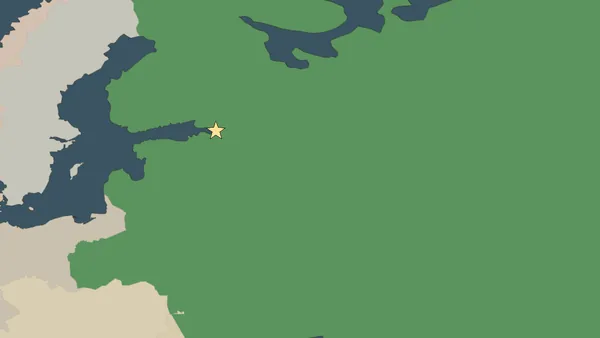 Vladimir Lenin (1917)