World Wars: 1914–20XX
First World War (1914–1918)
Vladimir Lenin in 1917: the sealed train, the October Revolution and peace
In January 1917 Vladimir Lenin was a 46-year-old exile in Zurich, leader of a small and divided party, who told an audience of young Swiss socialists that his generation might not live to see the revolution. Ten months later he was ruling Russia. His return home in April 1917, made possible by Germany, and his seizure of power in November changed the course of the First World War and of the whole twentieth century.
A professional revolutionary
Vladimir Ilyich Ulyanov was born in 1870 in Simbirsk on the Volga, the son of a school inspector. In 1887 his elder brother Alexander was hanged for taking part in a plot to kill Tsar Alexander III, an event that marked the family deeply. Vladimir turned to Marxism, was arrested and exiled to Siberia in the 1890s, and around 1901 began to use the pen name "Lenin".
In 1903 the Russian Social Democratic party split. Lenin's faction, the Bolsheviks ("majority"), wanted a tightly organised party of professional revolutionaries; their rivals, the Mensheviks ("minority"), favoured a broader movement. Lenin spent most of the next fourteen years abroad, in Switzerland, France, London and Austrian Poland, writing, arguing and running his faction from a distance.
Against the war
When war broke out in 1914, most European socialist parties supported their own governments. Lenin was disgusted. He called the conflict an "imperialist war" fought for profits and colonies, and argued that socialists should work for the defeat of their own government and turn the war between nations into a civil war between classes. At socialist conferences at Zimmerwald (1915) and Kienthal (1916) in Switzerland he led a small radical minority. Few people outside his circle took him seriously.
The sealed train
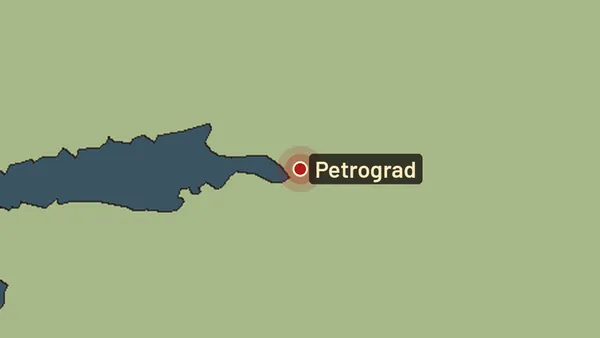
In March 1917 (February in the old Russian calendar), strikes and bread riots in Petrograd turned into revolution when soldiers joined the crowds. Tsar Nicholas II abdicated on 15 March. A Provisional Government took power, but it decided to keep fighting the war, while workers' and soldiers' councils, the soviets, formed a rival centre of authority.
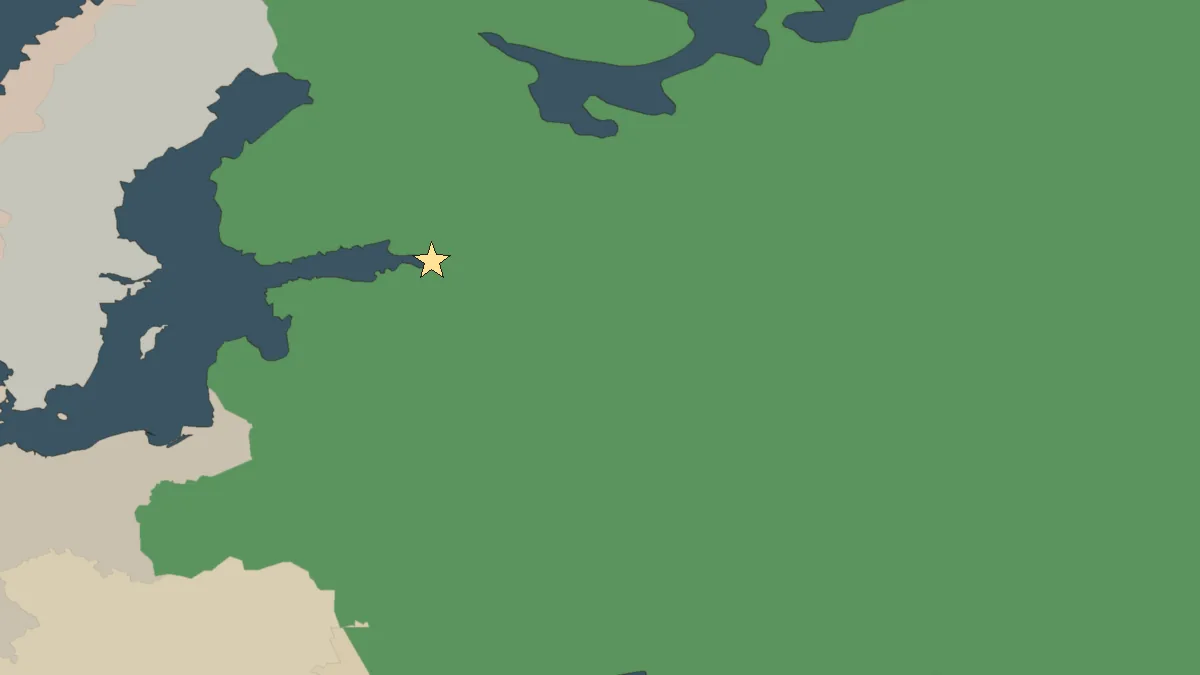
Lenin was desperate to get home, but the only route from Switzerland ran through enemy Germany. The German government saw an opportunity: an anti-war revolutionary might weaken Russia's war effort. It agreed to let Lenin and about thirty other exiles cross Germany in a railway carriage treated as sealed, with no contact with Germans on the way. They left Zurich on 9 April, crossed to Sweden and Finland, and arrived at the Finland Station in Petrograd late on 16 April 1917. How much money Germany later passed to the Bolsheviks is still debated by historians; that it helped Lenin's journey is not.
The next day Lenin presented his "April Theses": no support for the Provisional Government, an end to the war, and "all power to the soviets". Even many Bolsheviks thought him reckless at first.
Seizing power
The summer brought setbacks. The Kerensky Offensive against Austria-Hungary in July collapsed, and after armed demonstrations in Petrograd, the "July Days", the government accused Lenin of being a German agent. He fled to Finland in disguise. But in September a failed move by the army commander General Lavr Kornilov against the capital discredited the government and helped the Bolsheviks win majorities in the Petrograd and Moscow soviets.
With slogans like "Peace, land and bread", the Bolsheviks spoke to exhausted soldiers, hungry workers and land-hungry peasants. Lenin pressed his reluctant comrades to act at once. On 7 November 1917 (25 October in the old calendar), forces organised by Leon Trotsky's Military Revolutionary Committee took over Petrograd's key points, and that night the Winter Palace, seat of the Provisional Government, was taken with little bloodshed.
Peace at any price
The new government immediately issued a Decree on Peace, calling for an end to the war without annexations, and a Decree on Land, handing estates to the peasants. It also published the Allies' secret treaties found in the foreign ministry archives, including the plans to divide the Ottoman Empire, embarrassing Britain and France.
An armistice with the Central Powers followed in December. Germany's terms were brutal, and many Bolsheviks wanted to keep fighting a "revolutionary war". Lenin insisted that the revolution needed peace to survive. After a new German advance in February 1918, the Treaty of Brest-Litovsk was signed on 3 March 1918, giving up Poland, the Baltic lands, Finland and Ukraine, and returning Kars, Ardahan and Batum to the Ottoman Empire. Lenin had already dissolved the elected Constituent Assembly in January 1918, and Russia was sliding into a civil war that would last until 1921 and bring mass repression on all sides.
Did you know?
- "Lenin" was one of many pseudonyms. Its origin is uncertain; a common theory links it to the Lena river in Siberia.
- In 1920 and 1921 Lenin's Soviet government sent money and weapons to the Turkish nationalist movement in Ankara, and the two sides signed the Treaty of Moscow in March 1921.
Lenin in World Wars: 1914–20XX
In the Historical (1914) scenario the Russian Revolutions event begins on 8 March 1917. Russia's government changes to the Provisional Government, and its stability and support for the war fall sharply. About eight months later a delayed effect hands power to the Bolsheviks, just as in November 1917. Lenin's entry unlocks in the in-game encyclopedia with this event.
If you lead Russia, the challenge is to keep the army and the home front together long enough that 1917 never arrives. If you lead Germany, Russia's collapse can free your eastern armies for one last blow in the west. In the Parallel Fronts scenario the same strains hit an empire fighting with tanks and aircraft from the start. Can your Russia avoid revolution?
▶ Play now Free in your browser, no download needed.
Further reading: Wikipedia (English)