World Wars: 1914–20XX
First World War (1914–1918)
The first tanks in battle: Flers–Courcelette, 15 September 1916
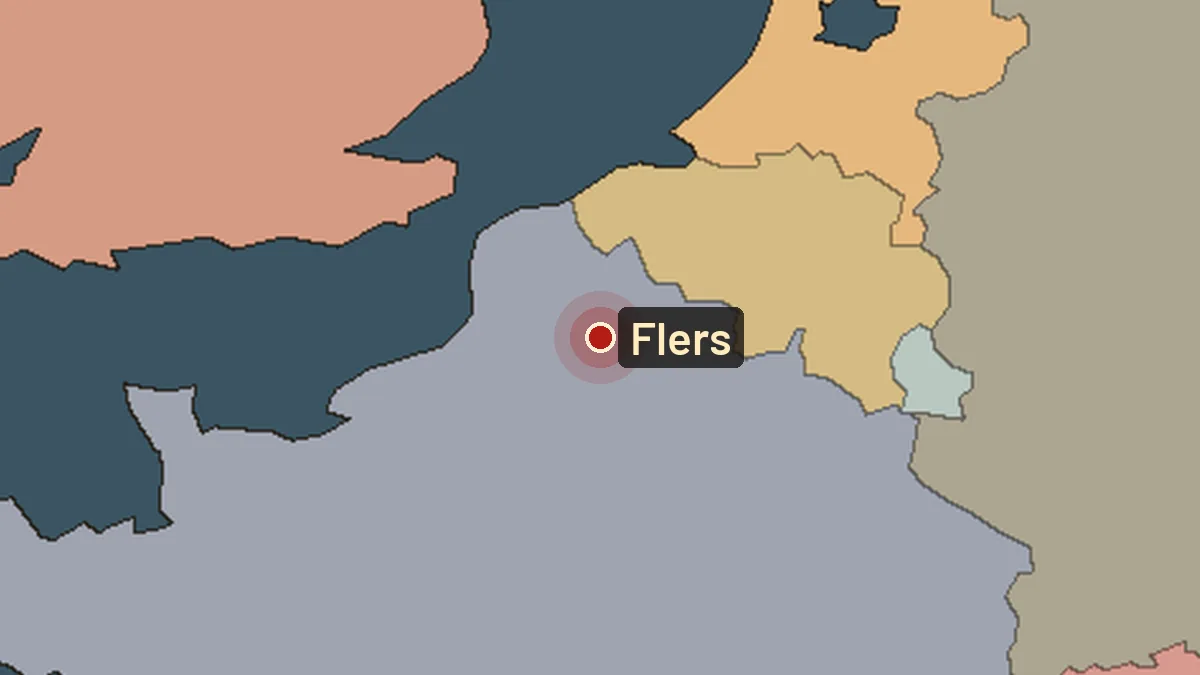
At dawn on 15 September 1916, German soldiers on the Somme saw something no army had faced before: steel boxes on caterpillar tracks crawling across no man's land, crushing barbed wire and firing as they came. The tank had entered the war. On that first day most of them broke down or got stuck, but within two years tanks would help break the deadlock of the Western Front.
The problem: trenches, wire and machine guns
By 1915 the war in the west had become a siege. Attacking infantry had to cross open ground under machine-gun and artillery fire, through belts of barbed wire, against trenches that the enemy could reinforce faster than attackers could advance. Several inventors and officers on the Allied side came to the same idea: an armoured vehicle that could cross trenches, flatten wire and protect its crew from bullets.
From "landship" to tank
In Britain the idea was taken up first by the navy. In February 1915 Winston Churchill, then First Lord of the Admiralty, set up the Landships Committee to develop "landships". The army officer Ernest Swinton had been pressing for armoured tracked vehicles since late 1914, and the design work was done by William Tritton of the agricultural machinery firm Foster's of Lincoln and the engineer Walter Gordon Wilson.
Their first prototype, "Little Willie", could not cross a wide enough trench. The second, nicknamed "Mother", had the rhomboid shape with tracks running all the way round the hull that became the Mark I. To keep the project secret, workers were told they were building mobile water tanks for the Middle East or Russia. The name "tank" stuck.
The Mark I came in two versions: the "male", armed with two 6-pounder naval guns in side sponsons, and the "female", armed only with machine guns, to deal with enemy infantry. Inside, eight men shared a cramped steel box with an unshielded engine. Heat, noise and fumes were overwhelming, and crews communicated by hand signals and banging on the engine cover.
15 September 1916
The Battle of the Somme had begun on 1 July 1916 with the bloodiest day in British military history. By September the British commander, General Sir Douglas Haig, wanted a breakthrough before the autumn rains and decided to use the few tanks that were ready, although their designers had hoped to keep them secret until they could be used in large numbers.
Of 49 tanks assigned to the attack, only about 32 reached their starting points; others broke down, got stuck or were hit during the day. Where they did get forward, they had a strong effect. One tank, D17, led the infantry into the village of Flers, and a British newspaper reported that "a tank is walking up the High Street of Flers with the British Army cheering behind". Canadian troops took Courcelette, and the British advanced two to three kilometres on part of the front, a large gain by the standards of the Somme. But there was no breakthrough, and the battle settled back into attrition until November.
What happened next
The first action convinced Haig to order many more tanks, while German commanders, after studying captured machines, at first doubted their value. The French developed their own tanks, the Schneider CA1 and the Saint-Chamond, first used in the spring of 1917, and then the light Renault FT, the first tank with a fully rotating turret, the layout of almost every tank since.
At Cambrai on 20 November 1917 the British used more than 400 tanks together, and broke through the German line on the first day. The first tank-against-tank battle took place at Villers-Bretonneux on 24 April 1918, between British Mark IVs and German A7Vs; Germany built only about 20 A7Vs during the whole war. At Amiens on 8 August 1918 several hundred Allied tanks led the attack that the German commander Erich Ludendorff called "the black day of the German army". The tank had become the weapon that would dominate the next world war.
Did you know?
- A Mark I tank's top speed was about 6 km/h, barely faster than a soldier walking on good ground; on the cratered Somme battlefield it was often much slower.
- Many early tanks carried a wooden frame on the roof covered in wire netting, to make grenades thrown onto them roll off.
Tanks in World Wars: 1914–20XX
In the Historical (1914) scenario tanks follow real history: the first tank attack arrives on 15 September 1916, and only from that day can tank divisions be built. British morale rises a little and German morale falls, and the Tank entry unlocks in the in-game encyclopedia.
In the Parallel Fronts scenario, the alternative world of the game, engines matured in the 1880s and armoured divisions have been at the front since 1914. There, 15 September 1916 is only a reminder of how late the tank came in our own history. Try both scenarios and see how differently the same war unfolds.
▶ Play now Free in your browser, no download needed.
Further reading: Wikipedia (English)