World Wars: 1914–20XX
Second World War (1939–1945)
Invasion of Sicily and the Italian armistice (1943): how Italy left the Axis
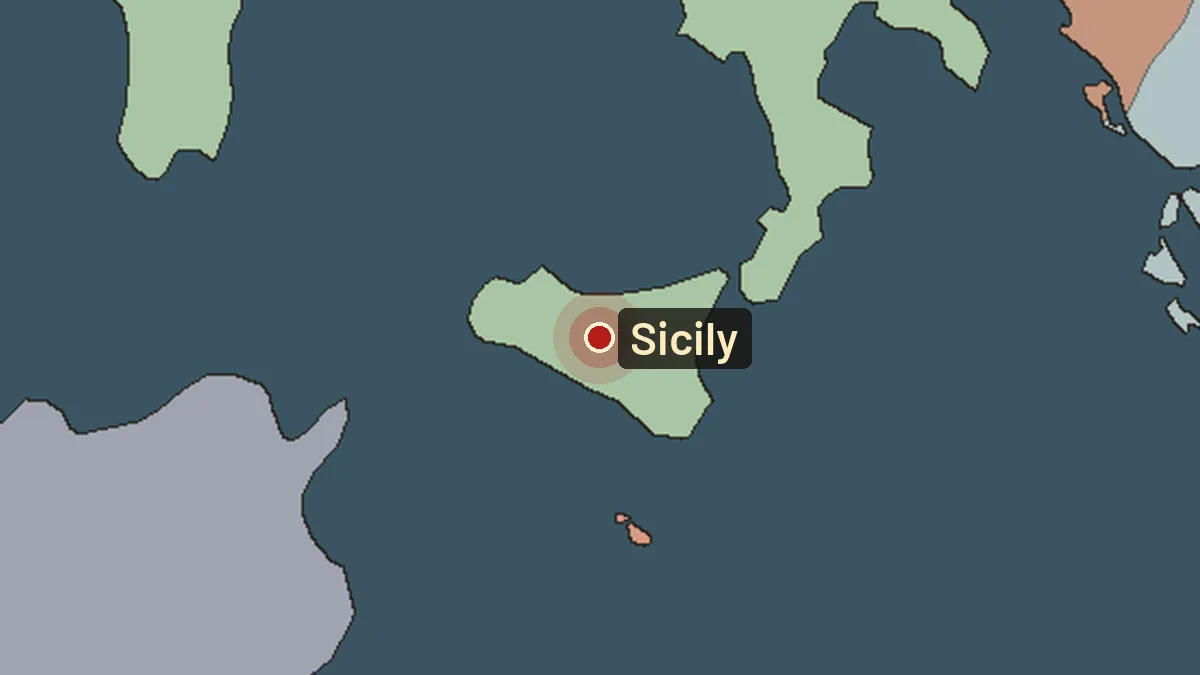
In the summer of 1943 Italy collapsed as an Axis power in less than two months. On 10 July American, British and Canadian troops landed in Sicily. On 25 July, after his own Fascist leaders turned against him, Benito Mussolini was dismissed by the king and arrested. On 8 September the new government announced that Italy had signed an armistice with the Allies. But the country did not leave the war. German troops seized most of Italy within days, and the Italian peninsula became a battlefield until 1945.
Why Sicily
After the Axis surrender in Tunisia in May 1943, the Western Allies had large armies in North Africa and needed a next step. The Americans wanted to concentrate on an invasion of France, which could not happen before 1944; the British argued for pressing on in the Mediterranean. At the Casablanca Conference in January 1943 they agreed on Sicily: taking it would secure the Mediterranean sea route, draw German forces away from Russia and, they hoped, knock Italy out of the war.
An elaborate British deception, Operation Mincemeat, helped. A corpse dressed as a Royal Marines officer, carrying false documents suggesting landings in Greece and Sardinia, was released off the coast of Spain, and the papers reached German intelligence.
Operation Husky
The invasion, commanded overall by General Dwight D. Eisenhower with General Harold Alexander in charge of the land forces, was the largest amphibious assault of the war up to that point, measured by the number of divisions landed on the first day. Montgomery's British Eighth Army, including a Canadian division, landed on the southeastern coast; General George Patton's US Seventh Army came ashore in the south. Airborne drops the night before were scattered by high winds, and many gliders came down in the sea, but the paratroopers who landed caused confusion behind the lines.
The island was defended by around 200,000 Italian troops and some 40,000 to 60,000 Germans, rising as reinforcements arrived. Many Italian coastal units, poorly equipped and tired of the war, gave up quickly, though others fought hard. The German divisions, notably the Hermann Göring Panzer Division, counterattacked at Gela and then conducted a skilful fighting withdrawal towards the northeast.
Montgomery's advance up the east coast was blocked below Mount Etna, while Patton swept west and took Palermo on 22 July, then raced along the north coast. American troops entered Messina on 17 August, just ahead of the British. By then the Germans and Italians had ferried more than 100,000 men, with many vehicles and guns, across the narrow Strait of Messina to the mainland.
The fall of Mussolini
The landings broke the Fascist regime. On the night of 24–25 July the Grand Council of Fascism, which had not met since 1939, voted in favour of a motion by Dino Grandi asking the king to resume command of the armed forces. The next afternoon King Victor Emmanuel III received Mussolini, told him he was dismissed and had him arrested as he left. Marshal Pietro Badoglio became prime minister. Crowds celebrated in the streets, but Badoglio announced that the war would go on at Germany's side.
In secret his government sent envoys to the Allies. The armistice was signed at Cassibile in Sicily on 3 September, the same day British troops crossed to Calabria. Its announcement was held back until the evening of 8 September, on the eve of the American landing at Salerno. Eisenhower broadcast it first, and Badoglio confirmed it on Italian radio an hour later.
Germany strikes back
Germany had expected the betrayal and prepared Operation Achse. As soon as the armistice was announced, German forces disarmed the Italian army in Italy, France, Yugoslavia and Greece. Left without clear orders, most units dissolved. Several hundred thousand Italian soldiers were deported to Germany as forced labourers, and some who resisted were killed, most notoriously on the Greek island of Cephalonia, where thousands of men of the Acqui Division died in the fighting or were executed after surrendering.
The king and Badoglio fled Rome for Brindisi in the south, and German troops occupied the capital. On 12 September German paratroopers freed Mussolini from his mountain prison at Gran Sasso, and Hitler installed him at the head of a puppet state in the north, the Italian Social Republic, often called the Republic of Salò. The royal government declared war on Germany on 13 October 1943. For the rest of the war Italy was split: Allied and royal forces in the south, Germans and Fascists in the north, and a growing partisan movement fighting them both.
Did you know?
- Italy had switched sides once before. A member of the Triple Alliance with Germany and Austria-Hungary in 1914, it stayed neutral when the war began and joined the Entente in May 1915 after the secret Treaty of London.
- The Allied campaign up the Italian peninsula after the armistice lasted until the German surrender in Italy in May 1945.
Sicily and the armistice in World Wars: 1914–20XX
World Wars: 1914–20XX currently covers the First World War; a 1939 scenario is planned, and the invasion of Sicily and the Italian armistice form one event in its database. In that event Italy changes government to Badoglio, leaves the war through an armistice, a new state, the Italian Social Republic, is created, Germany occupies northern Italy, and a new Italian front opens.
Italy is one of the playable states of the 1914 map, and its choice between its Triple Alliance partners and the Entente is one of the great questions of the First World War: in the spring of 1915 the game lets the player sign the Treaty of London and join the Entente, stay loyal to the Triple Alliance, or remain neutral. Lead Italy in 1914 and decide for yourself whose side it will fight on.
▶ Play now Free in your browser, no download needed.
Further reading: Wikipedia (English)