World Wars: 1914–20XX
Second World War (1939–1945)
D-Day and the Battle of Normandy (June–August 1944): the second front opens
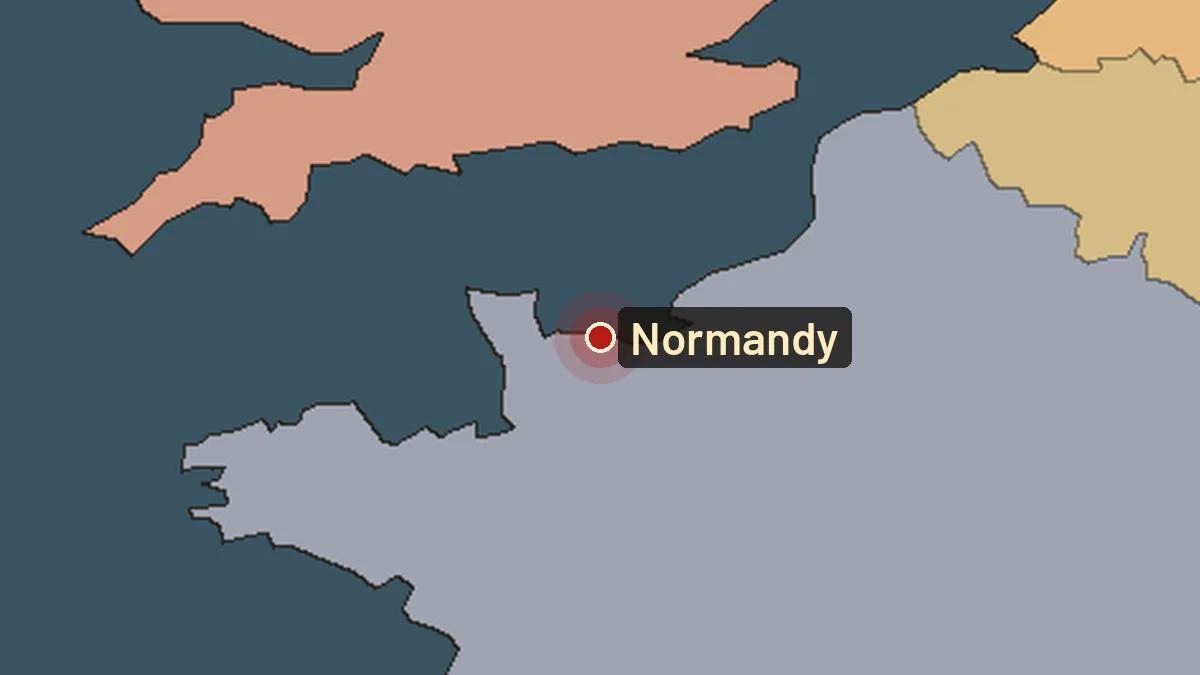
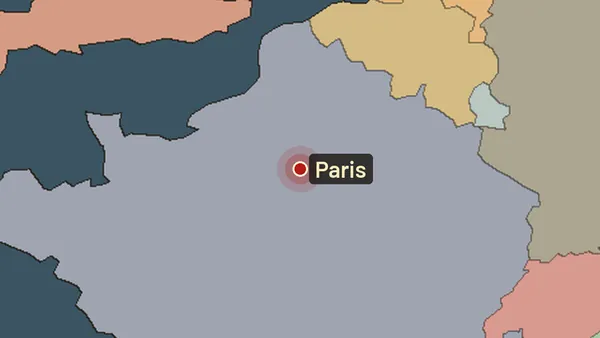
In the early hours of 6 June 1944 paratroopers dropped into the Norman countryside, and at dawn the largest invasion fleet ever assembled appeared off the coast of northern France. By nightfall more than 150,000 American, British and Canadian soldiers were ashore on five beaches. D-Day opened the long-promised second front in Western Europe. Within three months the German army in France had been shattered and Paris was free.
The long road to Overlord
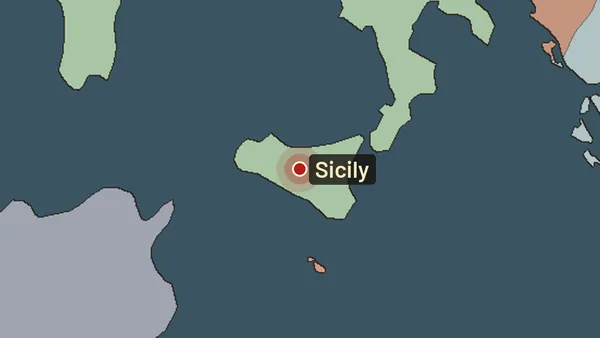
Since 1941 Stalin had pressed Britain and the United States to open a second front in the west and take pressure off the Red Army. The Western Allies first fought in North Africa, Sicily and Italy, partly because they did not yet have the landing craft, trained divisions and air superiority a cross-Channel invasion would need. A raid on Dieppe in August 1942, mostly by Canadian troops, ended in a costly failure and showed how hard it would be to seize a defended port. At the Tehran Conference in late 1943 Roosevelt and Churchill promised Stalin an invasion of France in the spring of 1944.
General Dwight D. Eisenhower became Supreme Allied Commander, with General Bernard Montgomery commanding the land forces for the assault. Rather than attack the Pas-de-Calais, the shortest crossing and the most heavily defended, the planners chose Normandy. Because no port could be taken quickly, the Allies built two huge artificial harbours, the Mulberries, to be towed across the Channel in sections.
Defending the Atlantic Wall
Germany had built the Atlantic Wall, a chain of bunkers, guns and obstacles along the coast from Norway to Spain. In Normandy Field Marshal Erwin Rommel, commanding Army Group B, had beaches covered with mines and steel obstacles and fields flooded or planted with poles against gliders. He believed the invasion had to be beaten on the beaches. His superior, Field Marshal Gerd von Rundstedt, and other generals wanted to hold the panzer divisions back for a counterattack. The compromise left the armour divided, and some of it could only be released on Hitler's orders.
The Allies worked hard to keep the Germans guessing. Operation Fortitude invented a whole army group under General George Patton in southeast England, with dummy equipment, fake radio traffic and double agents, to suggest the main blow would fall at Calais. Even after D-Day, German commanders kept strong forces there for weeks, expecting a second landing.
6 June 1944
The invasion was planned for 5 June, but a storm forced a delay. On the advice of his chief meteorologist, Group Captain James Stagg, who forecast a short break in the weather, Eisenhower gave the order to go on 6 June. The bad weather also convinced many German officers that no landing was possible; Rommel himself was at home in Germany.
Overnight, the US 82nd and 101st Airborne Divisions landed behind the western beaches and the British 6th Airborne Division on the eastern flank, where glider troops seized the bridge over the Caen canal, later named Pegasus Bridge. Heavy bombing and naval gunfire followed. From 6:30 the seaborne landings began on beaches code-named Utah and Omaha (American), Gold and Sword (British) and Juno (Canadian).
On Utah, troops landed in the wrong place but met light opposition. On Omaha, the preliminary bombing had largely missed, many amphibious tanks sank in rough seas, and the German defenders on the bluffs pinned the first waves to the shore. For hours the landing hung in the balance, until small groups of soldiers worked their way up the slopes. Omaha cost several thousand American casualties, the heaviest of the day. On the British and Canadian beaches the troops got inland, though Caen, a first-day objective, would not fall for more than a month.
The Battle of Normandy
The Allies won the race to build up forces. Within weeks they had landed hundreds of thousands of men while Allied air power, and the French Resistance sabotaging railways, slowed German reinforcements. Cherbourg was taken at the end of June. But the dense hedgerow country, the bocage, made every advance slow and bloody, and around Caen British and Canadian forces fought a series of costly battles that drew most of the German panzer divisions onto their front.
At the end of July the Americans broke through near Saint-Lô in Operation Cobra. Patton's Third Army poured south and east, and a German counterattack at Mortain on Hitler's orders only pushed his armies deeper into a trap. In the Falaise pocket, closed around 21 August with Polish and Canadian troops holding the northern jaws, much of two German armies was destroyed or captured. Paris was liberated on 25 August, and by the end of the month the Germans were retreating across the Seine.
The cost was heavy. Allied casualties in Normandy exceeded 200,000, German losses were higher still, and many thousands of French civilians were killed, mostly by Allied bombing and shelling.
Did you know?
- The term "D-Day" was a standard military code for the day an operation begins; it was used for many operations before 1944, including in the First World War.
- Between the wars, British and American officers studied the Gallipoli landings of 1915, the largest amphibious operation of the First World War, as a lesson in what could go wrong when landing against a defended coast.
D-Day in World Wars: 1914–20XX
World Wars: 1914–20XX currently covers the First World War; a 1939 scenario is planned, and D-Day is part of its event database. In that event a new Western Front opens, Allied units appear in a Normandy beachhead, and Germany, the United States and Britain all suffer heavy manpower losses.
You can already fight over the same ground in the 1914 game, where France, Britain and Germany are all playable and the Western Front decides the war. In the Parallel Fronts scenario, with aircraft carriers, bomber wings and armoured divisions available from the start, an invasion from the sea is no longer a distant dream. Take command and see where your second front opens.
▶ Play now Free in your browser, no download needed.
Further reading: Wikipedia (English)