World Wars: 1914–20XX
Second World War (1939–1945)
Liberation of Paris (August 1944): the Resistance rising and Leclerc's tanks
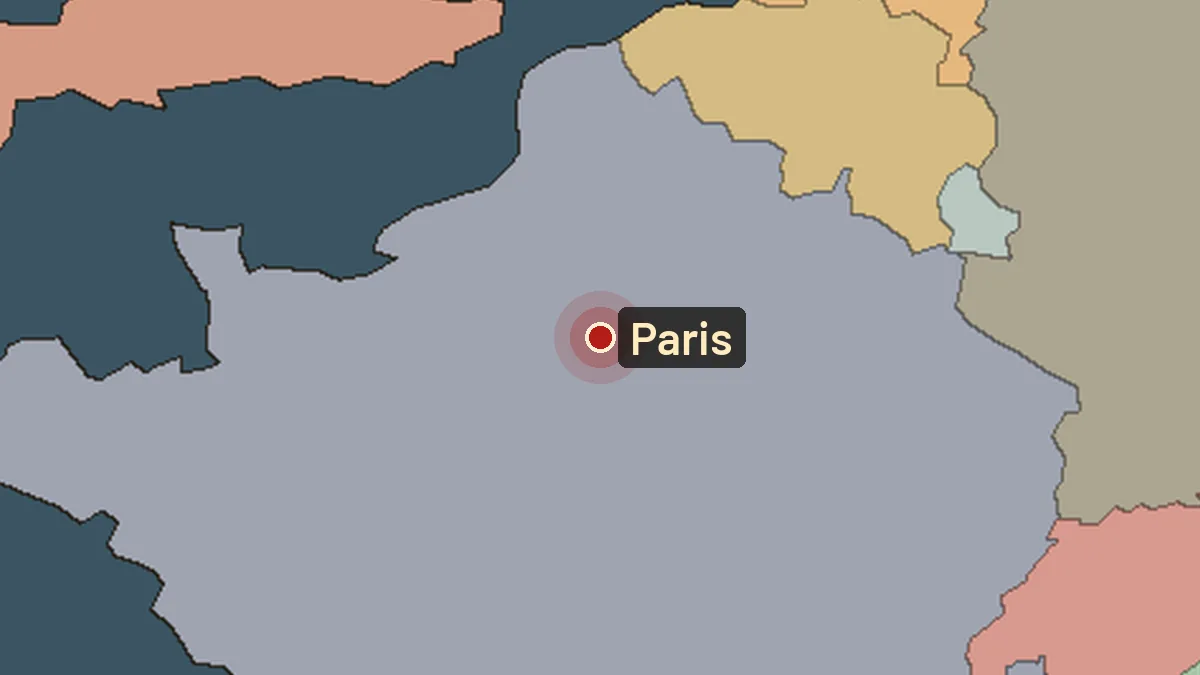
On the evening of 24 August 1944 a small column of French tanks and half-tracks drove into the square in front of the Paris city hall, and the great bell of Notre-Dame began to ring, followed by church bells all over the city. The next day the German commander of Paris surrendered. After more than four years of occupation, the French capital had been freed, partly by its own people and partly by a French armoured division, in one of the most celebrated moments of the Second World War.
Four years of occupation
German troops entered an undefended Paris on 14 June 1940. Under the armistice that followed, northern and western France were occupied, while Marshal Philippe Pétain's government at Vichy collaborated with Germany. In London, General Charles de Gaulle rejected the armistice and built the Free French movement, while inside France a Resistance grew slowly, from scattered groups to organised networks of very different political views, from conservatives to communists.
Life in occupied Paris meant rationing, curfews, German signs on the boulevards and growing repression. Jews were registered, robbed of their property and deported; in the Vel' d'Hiv round-up of July 1942, French police arrested about 13,000 Jews in Paris on German orders, most of whom were sent to Auschwitz.
The Allies hesitate
After the breakout from Normandy at the end of July 1944, Allied armies raced across northern France. General Dwight Eisenhower did not plan to take Paris quickly. He wanted to bypass it, encircle it and keep his fuel for the pursuit of the German armies; a battle in the streets could destroy the city, and feeding more than two million civilians would strain Allied supplies.
The people of Paris forced the issue. On 15 August the Paris police went on strike, followed by many other workers. On 19 August the French Forces of the Interior (FFI), the combined Resistance forces, rose in revolt under their regional leader, the communist Colonel Henri Rol-Tanguy, and policemen seized the Prefecture of Police. Over the next days barricades went up across the city, and poorly armed fighters attacked German vehicles and strongpoints. A fragile truce arranged with the help of the Swedish consul, Raoul Nordling, was only partly observed.
De Gaulle, who had returned to France, pressed Eisenhower to move. He feared both that the uprising would be crushed and that the communist-led Resistance might take power in the capital before his government could. On 22 August Eisenhower agreed to send in the Free French 2nd Armoured Division of General Philippe Leclerc, supported by the US 4th Infantry Division.
Leclerc enters Paris
On 24 August Leclerc's division fought its way into the southern suburbs. That evening he sent ahead a small detachment under Captain Raymond Dronne, whose company included many Spanish Republican veterans of the Spanish Civil War, and some of its half-tracks bore Spanish names such as Guadalajara and Ebro. Dronne reached the Hôtel de Ville shortly before midnight.
On 25 August the main forces entered the city and fought the remaining German strongpoints. The German commander, General Dietrich von Choltitz, was captured at his headquarters in the Hôtel Meurice and signed the surrender that afternoon in the presence of Leclerc and Rol-Tanguy.
Hitler had ordered that Paris must not fall into enemy hands except as "a field of ruins", and bridges and important buildings had been prepared for demolition. Choltitz later claimed that he had deliberately disobeyed to save the city. Historians debate how far this was true and how far he simply lacked the troops and time to carry out the order, but Paris survived almost intact. Hitler is said to have asked, "Is Paris burning?", a phrase that became the title of a famous book and film, though the exact words are attributed rather than firmly documented.
De Gaulle in Paris
That evening de Gaulle spoke at the Hôtel de Ville: "Paris outraged! Paris broken! Paris martyred! But Paris liberated!" He gave credit to the people of Paris and the armies of France, with only brief mention of the Allies. On 26 August he walked down the Champs-Élysées at the head of an enormous crowd; at Notre-Dame, shots rang out from unknown gunmen as he arrived for a Magnificat.
The liberation gave de Gaulle's Provisional Government of the French Republic control of the capital and the authority to govern France, and it restored France's place among the Allies. Liberation also had darker sides: suspected collaborators were attacked, and thousands of women accused of relationships with Germans had their heads shaved in public. The war went on: Germany surrendered only in May 1945.
Did you know?
- Paris had been saved once before. In September 1914 German armies came within about 50 kilometres of the city before the French and British stopped them at the Marne, and in 1918 Paris was shelled by the long-range German "Paris Gun".
- The US 28th Infantry Division marched down the Champs-Élysées on 29 August on its way to the front, combining a victory parade with an advance against the enemy.
The liberation of Paris in World Wars: 1914–20XX
World Wars: 1914–20XX currently covers the First World War; a 1939 scenario is planned, and the Liberation of Paris is part of its event database. In that event Paris passes from German to French control, France gets a new provisional government and rejoins the war on the Allied side.
In the 1914 game Paris is just as central: you can lead France, and in the Historical scenario the Battle of the Marne decides whether the capital holds. If Paris falls in your war, the game tells you what really happened. Defend the city, or take it, and write your own history.
▶ Play now Free in your browser, no download needed.
Further reading: Wikipedia (English)