World Wars: 1914–20XX
Second World War (1939–1945)
Operation Bagration (1944): the Soviet blow that destroyed Army Group Centre
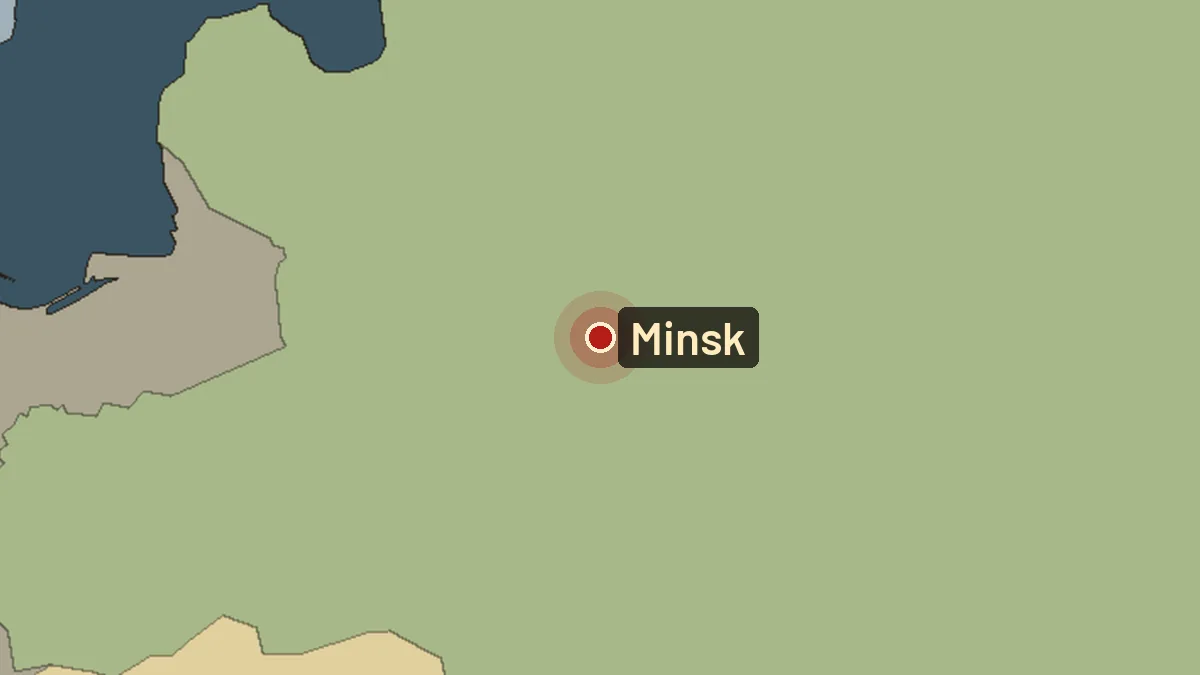
Three years to the day after Germany invaded the Soviet Union, the Red Army opened a massive offensive in Belarus. Within two weeks the front of Germany's Army Group Centre, which had stood for months, had collapsed. By August Soviet armies had advanced roughly 500 kilometres, freed Belarus, reached the river Vistula in Poland and stood on the border of East Prussia. Operation Bagration was the heaviest defeat the German army suffered in the war, and because it came just after D-Day, it is often less known in the West than it deserves.
The front in Belarus
By the spring of 1944 the Red Army had liberated most of Ukraine. The front line now bulged far to the east around Belarus, where Army Group Centre, under Field Marshal Ernst Busch, held a salient sometimes called the "Belarusian balcony". Its armies were stretched thin, short of armour and largely without reserves, because the German high command expected the next Soviet blow to fall further south, in Ukraine, where the Red Army had been most successful and where its tank armies were concentrated.
The Soviet high command encouraged that belief. Through a careful programme of deception, known in Russian as maskirovka, it moved huge forces into Belarus by night, under strict radio silence, while maintaining signs of activity in the south. The offensive was named after Pyotr Bagration, a Russian general of Georgian royal descent who was mortally wounded fighting Napoleon at Borodino in 1812.
The plan
Four Soviet fronts took part: the 1st Baltic Front under Ivan Bagramyan, the 3rd Belorussian Front under Ivan Chernyakhovsky, the 2nd Belorussian Front under Georgy Zakharov and the 1st Belorussian Front under Konstantin Rokossovsky, with Marshals Georgy Zhukov and Aleksandr Vasilevsky coordinating. Together they had well over a million men in the first phase, several thousand tanks and assault guns and overwhelming air power, while the Germans opposite had very few tanks.
Rather than one breakthrough, the plan called for several, aimed at the main German strongholds of Vitebsk, Orsha, Mogilev and Bobruisk, followed by deep pincer movements converging on Minsk. Shortly before the attack, Soviet partisans across Belarus launched thousands of attacks on railway lines, crippling German movement behind the front.
Collapse
The main offensive opened on 22 and 23 June. Hitler had declared Vitebsk, Bobruisk and other towns "fortified places" to be held at all costs, which meant that their garrisons stayed put while Soviet armour flowed around them. Vitebsk was surrounded within days, and much of the German Ninth Army was trapped near Bobruisk, where Soviet aircraft struck the encircled columns. Orsha and Mogilev fell in quick succession.
Busch was dismissed on 28 June and replaced by Field Marshal Walter Model. But nothing could stop the pincers. On 3 July Soviet tanks entered Minsk, the Belarusian capital, and around 100,000 German soldiers were cut off to the east of the city. Most were killed or captured over the following days. In about twelve days, more than 20 German divisions had been destroyed or shattered.
On 17 July around 57,000 German prisoners were marched through the streets of Moscow, followed by water trucks that washed the streets behind them, a deliberate symbol for a city that had been threatened by those same armies in 1941.
Onward to the Vistula
In July the offensive widened. In the north Soviet forces pushed into Lithuania and liberated Vilnius; in the south the left wing of Rokossovsky's front struck towards Lublin and Brest-Litovsk, which fell on 28 July, and crossed the Vistula south of Warsaw. On 1 August the Polish Home Army rose against the Germans in Warsaw, hoping to free the city before the Red Army arrived. The Soviet advance halted on the east bank of the Vistula, and the uprising was crushed after two months of fighting. Whether the halt was due to German counterattacks and exhausted supply lines, or to Stalin's political calculation, remains one of the most argued questions of the war.
By the time the operation ended in August, the Soviets had reached the borders of East Prussia. Exact German losses are disputed, but by most estimates they were heavier than at Stalingrad. Soviet losses were also very large. Germany, now fighting in Normandy as well, could not make good the gap, and the road to Berlin lay open the following year.
Did you know?
- The front Bagration broke through ran across some of the same ground as the Eastern Front of the First World War, which from 1915 to 1917 passed through western Belarus near Baranovichi and Lake Naroch.
- Brest-Litovsk, liberated during the operation, was the town where Soviet Russia signed its separate peace with Germany and its allies in March 1918.
Operation Bagration in World Wars: 1914–20XX
World Wars: 1914–20XX currently covers the First World War; a 1939 scenario is planned, and Operation Bagration is part of its event database. In that event Germany suffers very heavy manpower losses, its morale falls, and the Soviet Union gains a vast stretch of territory on the Eastern Front.
In the 1914 game you can lead Germany or Russia on the same front, where a war of movement in 1914 and 1915 settled into long trench lines across Belarus and Poland. In the Parallel Fronts scenario, armoured divisions and bomber wings make deep encirclements like Bagration possible in the first year of the war. Choose your side and see how far your armies can go.
▶ Play now Free in your browser, no download needed.
Further reading: Wikipedia (English)