World Wars: 1914–20XX
Second World War (1939–1945)
Remilitarization of the Rhineland (1936): Hitler's first great gamble
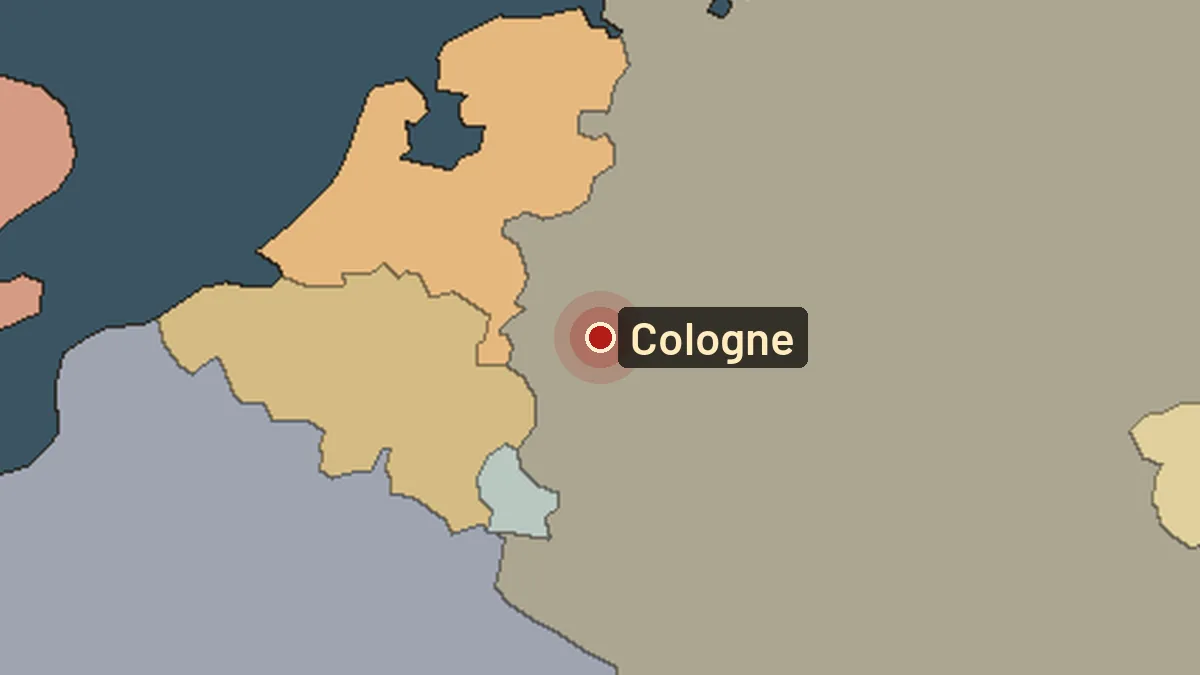
On the morning of 7 March 1936, a Saturday, German soldiers marched over the Rhine bridges into Cologne, Düsseldorf and other cities, where crowds threw flowers. Since 1919 no German troops had been allowed there. Adolf Hitler had broken two international treaties in a single day, and he had bet that France would not fight. He was right. The Rhineland coup was the first of a series of bloodless gambles that brought Europe to war three and a half years later.
A frontier written at Versailles
At the Paris Peace Conference in 1919, French Prime Minister Georges Clemenceau and Marshal Ferdinand Foch wanted the Rhine to become France's military frontier, so that Germany could never again invade as it had in 1870 and 1914. Britain and the United States refused to detach the Rhineland from Germany. The compromise in the Treaty of Versailles was that Allied troops would occupy the left bank of the Rhine for up to fifteen years, and that the whole left bank and a strip 50 kilometres wide on the right bank would stay permanently demilitarized: no German soldiers, no fortifications, no military exercises.
In 1925 the Locarno Treaties confirmed this arrangement, and this time Germany signed freely. Britain and Italy guaranteed the Franco-German and Belgian-German borders, including the demilitarized zone. The last Allied occupation troops left the Rhineland in 1930, five years early, in a spirit of reconciliation.
For France the demilitarized zone was vital. It meant that the French army could advance into western Germany quickly if Germany attacked France's allies in eastern Europe, such as Poland and Czechoslovakia, and that the industrial Ruhr lay exposed.
Hitler's gamble
Hitler came to power in January 1933. He took Germany out of the League of Nations, announced rearmament and conscription in 1935, and watched how Britain and France reacted. Their response was weak. In 1935–1936 their attention was also absorbed by Italy's invasion of Abyssinia, which drove Mussolini away from Britain and France.
Hitler's pretext was the Franco-Soviet treaty of mutual assistance, which the French Chamber of Deputies ratified on 27 February 1936. Germany claimed that it broke the spirit of Locarno. A few days later Hitler ordered the move into the zone.
The force that actually crossed the Rhine was small, a few battalions, though with police units already in the zone the total German force there was several tens of thousands. It was not ready for a real war. Historians still debate whether the troops had orders to withdraw if the French army marched; some accounts say they did, others that they would have fought a delaying action. Hitler later reportedly described the 48 hours after the march as the most nerve-racking of his life. At the same time, he offered new non-aggression pacts and even a return to the League, to make the move look peaceful.
Why France did not march
The French government of Albert Sarraut was a caretaker cabinet, with elections only weeks away. The army chief, General Maurice Gamelin, greatly overestimated German strength and said that any action would require general mobilization, which no politician wanted on the eve of an election. The French economy was weak, and the army had been built for defence behind the Maginot Line, not for a rapid strike.
Britain would not support military action. Many British people felt that Germany was only reoccupying its own territory; a remark attributed to the Liberal politician Lord Lothian, that the Germans were "only going into their own back garden", captured the mood. The League of Nations condemned the violation, but no sanctions followed. In a plebiscite at the end of March, the regime claimed about 99 percent approval.
Consequences
The Rhineland coup changed the balance of power in Europe. Germany began building fortifications in the west, later called the Westwall or Siegfried Line, which would make any French offensive far more difficult. France's allies in eastern Europe saw that France would not act even to protect its own security. Belgium returned to neutrality in October 1936, ending its military alliance with France. Mussolini, isolated over Abyssinia, moved closer to Hitler.
Above all, Hitler's confidence grew. His generals had warned him against the move; when it succeeded, his faith in his own judgement, and his belief that the Western democracies would not fight, hardened. Two years later he would test that belief again in Austria.
Did you know?
- After the First World War American troops also occupied part of the Rhineland, with their headquarters at Koblenz; the last of them left in early 1923.
- A year before the remilitarization, in January 1935, the people of the Saar, separated from Germany by the Treaty of Versailles, voted by about 90 percent to return to Germany.
The Rhineland in World Wars: 1914–20XX
The game currently covers the First World War, and a 1939 scenario is planned. The remilitarization of the Rhineland is part of the game's event database for that scenario. It is designed as a decision for France: protest without military action, or intervene and go to war with Germany. Either way, tension between France and Germany rises and the Rhineland returns to German military control.
The story links straight back to what you can play today: the same Rhine frontier that German armies crossed in 1914, the Treaty of Versailles that ended the war, and the same French fear of an invasion through Belgium. Start in 1914, and see whether your war ends with a peace that lasts.
▶ Play now Free in your browser, no download needed.
Further reading: Wikipedia (English)