World Wars: 1914–20XX
Second World War (1939–1945)
The Anschluss (March 1938): how Nazi Germany annexed Austria
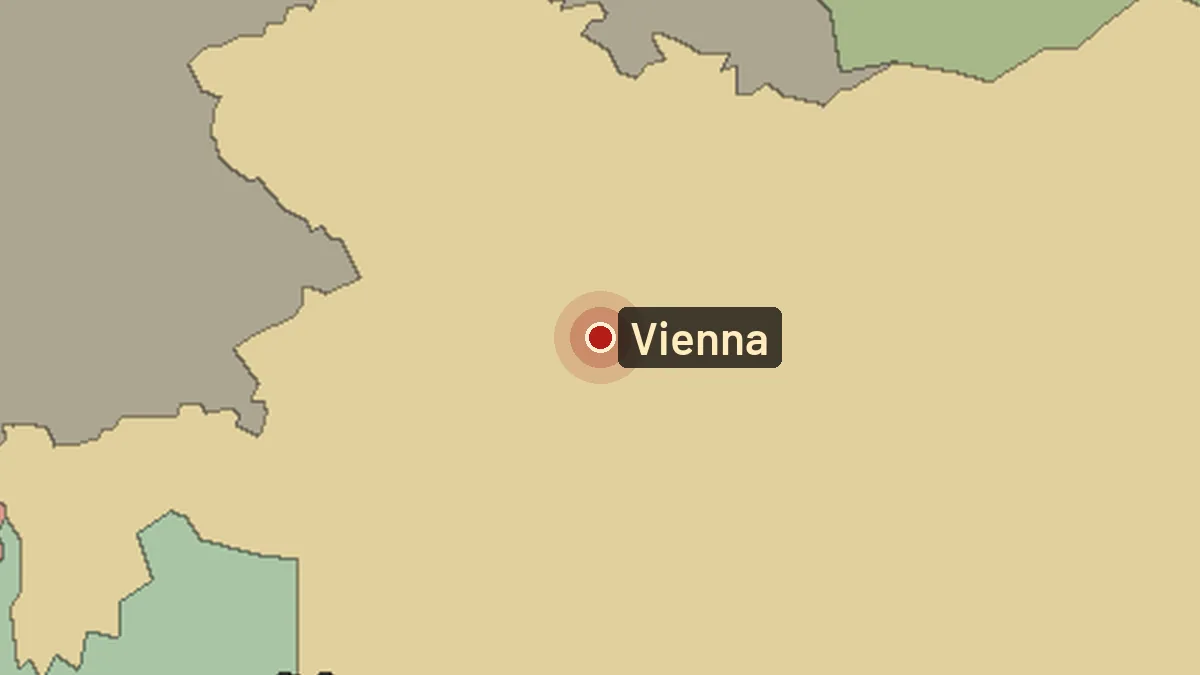
On 12 March 1938 German troops crossed the Austrian border, not to fight but to parade. There was no resistance, and in many towns cheering crowds greeted them. The next day a law declared Austria a province of the German Reich. In three days a sovereign state had disappeared from the map of Europe. The Anschluss ("connection" or "union") was the second of Hitler's great bloodless coups, and it opened the way to Czechoslovakia.
A small state born of defeat
Austria in its modern form was a product of the First World War. When Austria-Hungary collapsed in the autumn of 1918, the German-speaking heartland of the old empire proclaimed itself "German-Austria" and declared that it wished to join the new German republic. Many Austrians, on the left and the right, doubted that a small country of about 6.5 million people, cut off from its old markets, could survive alone.
The victors refused. The Treaty of Saint-Germain in 1919 forbade union with Germany without the consent of the League of Nations, and the country had to drop the name German-Austria. When Austria and Germany planned a customs union in 1931, France and others blocked it.
In the 1930s Austria was torn by economic crisis and political violence. Chancellor Engelbert Dollfuss suspended parliament in 1933 and created an authoritarian state with Catholic and Italian-style corporatist features, banning both the Social Democrats and the Austrian Nazis. In July 1934 Austrian Nazis murdered Dollfuss in a failed coup in Vienna. Mussolini, then Austria's protector, sent troops to the Brenner Pass, and Hitler backed away.
The crisis of March 1938
By 1938 the situation had changed. Mussolini, now bound to Hitler after the Abyssinian war and the Spanish Civil War, was no longer willing to defend Austria. Dollfuss's successor, Kurt Schuschnigg, was summoned to Hitler's mountain residence at Berchtesgaden on 12 February 1938 and, under heavy pressure, agreed to make the Austrian Nazi Arthur Seyss-Inquart minister of the interior, in control of the police.
Schuschnigg then tried a last move. On 9 March he announced a plebiscite for 13 March, asking Austrians to vote for a "free and German, independent and social, Christian and united Austria". Hitler was furious and feared the result. On 11 March Germany sent ultimatums demanding that the vote be cancelled and that Schuschnigg resign. With no foreign support, Schuschnigg gave in and, in a radio broadcast that evening, said he was yielding to force to avoid bloodshed. President Wilhelm Miklas at first refused to appoint Seyss-Inquart chancellor but finally gave way. Göring, directing events by telephone from Berlin, arranged for a request for German troops to be sent in Seyss-Inquart's name.
The annexation
German troops crossed the border on the morning of 12 March. The operation was improvised, and many German tanks and vehicles broke down on the roads to Vienna. Hitler crossed at his birthplace, Braunau am Inn, and visited Linz, where he had grown up. The enthusiasm of the crowds seems to have convinced him to go further than he first planned: instead of a separate Austrian state under Nazi rule, Austria was incorporated directly into Germany by a law of 13 March. On 15 March Hitler spoke to a huge crowd on the Heldenplatz in Vienna.
On 10 April a plebiscite under Nazi control produced an official result of over 99 percent approval in Austria. Jews and political opponents had already been excluded from voting.
Terror and consequences
The Anschluss was immediately followed by persecution. Within days, Jews in Vienna were forced to scrub pavements while crowds watched, their homes and businesses were looted, and thousands of people, Jews and political opponents, were arrested; many were sent to the Dachau concentration camp. Austria's Jewish community, around 180,000 to 200,000 people, was stripped of its rights; well over half managed to emigrate before the war, but tens of thousands of those who remained were later murdered in the Holocaust. Schuschnigg spent the war years in prison and camps.
Britain and France protested but did nothing; many politicians saw the union of two German-speaking states as a fulfilment of self-determination. Germany gained Austria's gold and currency reserves, its iron ore and its manpower. Strategically, Czechoslovakia was now surrounded by German territory on three sides, and its border fortifications faced the wrong way. The next crisis, over the Sudetenland, began within weeks.
After the war, the Allies' Moscow Declaration of 1943 called Austria the "first victim" of Hitler's aggression, a view that long allowed Austrians to play down their own part in Nazi crimes. Since the 1980s Austria has come to a more critical view of its role.
Did you know?
- Hitler had served not in the Austro-Hungarian army in the First World War but as a volunteer in the Bavarian army, having moved to Munich in 1913.
- Austria's independence was restored after the Second World War; the Austrian State Treaty of 1955 again forbade political or economic union with Germany.
The Anschluss in World Wars: 1914–20XX
The game currently covers the First World War, and a 1939 scenario is planned. The Anschluss is part of the game's event database for that scenario: Germany annexes Austria, German stability rises, and tension between Czechoslovakia and Germany increases sharply.
In the game's 1914 world, Austria is still the heart of Austria-Hungary, the great Habsburg empire whose ultimatum to Serbia set Europe on fire. Lead Austria-Hungary in the Historical (1914) or Parallel Fronts scenario, and see whether you can keep the empire together where history broke it apart.
▶ Play now Free in your browser, no download needed.
Further reading: Wikipedia (English)