World Wars: 1914–20XX
First World War (1914–1918)
Romania in World War I (1914–1918): neutrality, defeat and Greater Romania
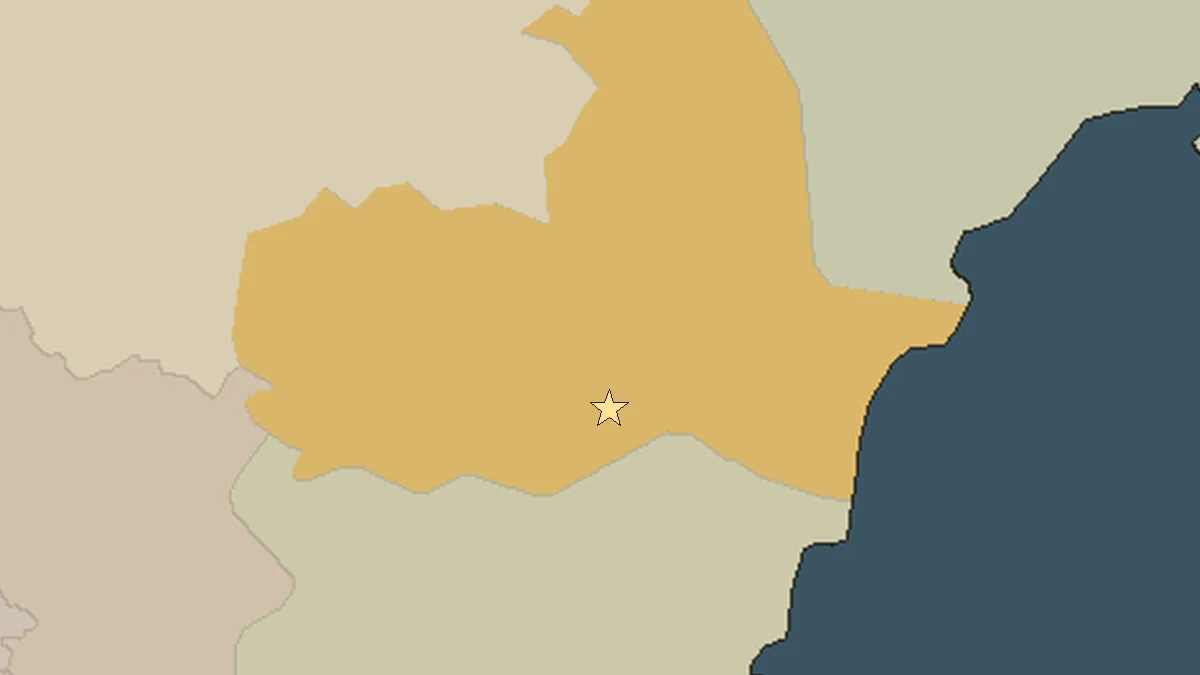
In August 1916 Romania gambled. After two years of careful neutrality it declared war on Austria-Hungary, hoping to seize Transylvania while the Habsburg army was reeling from Russia's Brusilov Offensive. Within four months Bucharest had fallen and two-thirds of the country was occupied. Yet Romania survived, stopped the Central Powers in Moldavia in 1917, and at the end of the war gained almost everything it had fought for.
A kingdom between two camps
Romania in 1914 was a young kingdom on the lower Danube, rich in wheat and with the largest oil fields in Europe outside Russia, around Ploiești. Its king, Carol I, was a German prince of the Hohenzollern family, and since 1883 Romania had been secretly linked to the Triple Alliance of Germany, Austria-Hungary and Italy.
Public opinion pulled the other way. Millions of ethnic Romanians lived across the Carpathians in Transylvania, ruled by Hungary, and their union with the kingdom was the great dream of Romanian nationalism. When war broke out, a Crown Council on 3 August 1914 rejected the old king's wish to join the Central Powers and chose neutrality. Carol I died that October, and his nephew Ferdinand I, married to the British-born Queen Marie, was far more open to the Entente.
For two years Prime Minister Ion I. C. Brătianu bargained with both sides while selling grain and oil to whoever paid. The Entente could offer what Austria-Hungary never would: Transylvania, Bukovina and the Banat. The Brusilov Offensive of summer 1916 seemed to prove that the Habsburg empire was collapsing, and on 17 August 1916 Romania signed a secret treaty with the Entente.
The campaign of 1916
On the night of 27 August 1916 Romania declared war on Austria-Hungary, and its armies crossed the Carpathian passes into Transylvania. Germany, Bulgaria and the Ottoman Empire declared war on Romania within days. The invasion advanced slowly, and the Central Powers reacted fast.
From the south, Field Marshal August von Mackensen led a mixed German, Bulgarian and Ottoman force into Dobruja and stormed the Danube fortress of Turtucaia (Tutrakan) in early September, taking tens of thousands of prisoners. In Transylvania, Erich von Falkenhayn, who had just been removed as chief of the German General Staff, took command of a new Ninth Army and drove the Romanians back to the mountains. After weeks of fighting in the passes his troops broke through into Wallachia in November, while Mackensen crossed the Danube near Zimnicea.
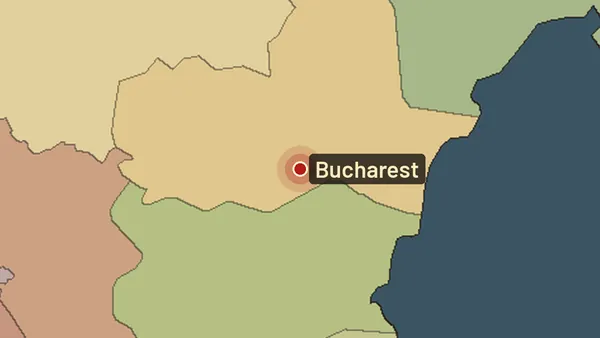
The Romanian army, short of heavy artillery and machine guns, could not hold both fronts, and the Russian help it had been promised arrived slowly. After a failed counterattack on the Argeș river, Bucharest fell on 6 December 1916. The king, the government and the remains of the army withdrew to Moldavia, with Iași as the temporary capital. Before the oil fields were lost, British engineers helped wreck the wells and refineries around Ploiești, which kept them out of German use for months.
Holding Moldavia
The winter of 1916–1917 in Moldavia was terrible. Refugees, soldiers and civilians crowded into a small region, and typhus and hunger killed huge numbers. Meanwhile a French military mission under General Henri Berthelot helped rebuild and re-equip the army.
In the summer of 1917 the rebuilt army fought its finest battles. At Mărăști in July it attacked successfully, and at Mărășești in August, together with Russian troops, it stopped a major German offensive under Mackensen. The phrase "Pe aici nu se trece" ("They shall not pass here") became the motto of the defence.
The Russian Revolution ended Romania's hopes. With the Russian army dissolving around it, Romania had to sign an armistice in December 1917 and the harsh Treaty of Bucharest in May 1918, which gave Dobruja to Bulgaria, mountain border areas to Austria-Hungary and long-term control of the oil industry to Germany. King Ferdinand never signed it into law.
Greater Romania
In the chaos of 1918 the map changed in Romania's favour. Bessarabia, a Russian province with a Romanian-speaking majority, voted to unite with Romania in the spring. As the Central Powers collapsed, Romania re-entered the war on 10 November 1918, a day before the armistice in the west. Bukovina joined in November, and on 1 December 1918 an assembly of Transylvanian Romanians at Alba Iulia proclaimed union with the kingdom. The peace treaties of Saint-Germain and Trianon confirmed most of these gains.
The result was "Greater Romania", roughly twice the size of the pre-war kingdom. The price had been very high: proportionally, Romania suffered some of the heaviest losses of any country in the war. Germany, for its part, had kept itself fed and fuelled for two years on Romanian wheat and oil.
Did you know?
- Queen Marie worked as a nurse among the sick and wounded in Moldavia and became one of the most popular figures of the war in Romania. She later lobbied for Romania at the Paris Peace Conference.
- Ottoman troops fought in Romania: an Ottoman army corps served alongside the Germans and Bulgarians in Dobruja and Wallachia in 1916 and 1917.
Romania in World Wars: 1914–20XX
Romania is one of the 26 states on the game's 1914 map, so you can lead it from 28 June 1914. In the Historical (1914) scenario, Romania joins the Entente on 27 August 1916, declares war on Austria-Hungary and a new Romanian front opens across the Carpathians and the Danube. The Romania entry unlocks in the in-game encyclopedia at the same moment.
Playing Romania means facing Brătianu's dilemma: a small army with rich oil and wheat, wedged between empires. In the Parallel Fronts scenario, where armoured divisions and bomber wings exist from 1914, those oil fields become even more valuable to whoever holds them. Can you take Transylvania and keep Bucharest at the same time?
▶ Play now Free in your browser, no download needed.
Further reading: Wikipedia (English)