World Wars: 1914–20XX
First World War (1914–1918)
Armistice of Mudros (1918): how the Ottoman Empire left the war
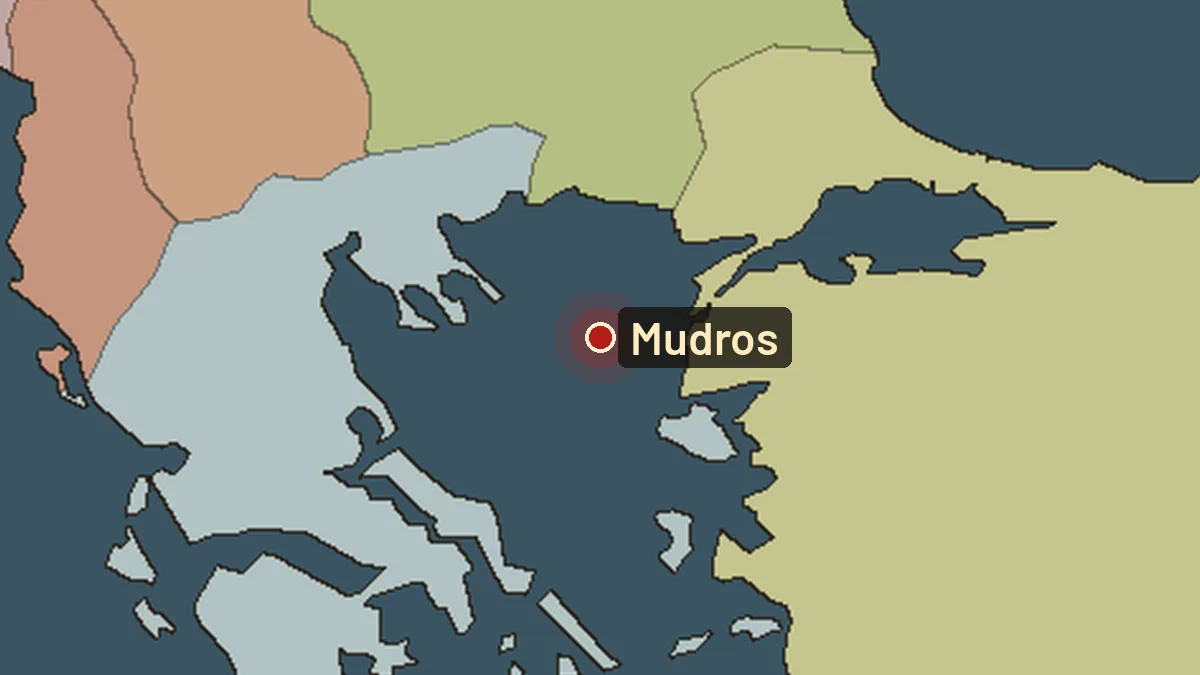
On 30 October 1918, in the harbour of Mudros on the Aegean island of Lemnos, an Ottoman delegation led by the navy minister Rauf Bey signed an armistice aboard the British battleship HMS Agamemnon. The next day at noon the fighting stopped on every Ottoman front, from Mesopotamia to Syria. After four years of war, the empire that had defeated the Allies at Gallipoli and Kut was out of the conflict. The armistice's 25 articles opened the Straits, disarmed the army and gave the victors rights that would soon be used to occupy Istanbul and much of Anatolia. In Turkish memory, Mudros marks the beginning of the empire's end and the starting point of the national struggle.
An empire alone
By October 1918 the Ottoman position had become hopeless. In Palestine, the Battle of Megiddo in September had destroyed two Ottoman armies, and British and Arab forces took Damascus on 1 October. In the Balkans, Bulgaria's armistice of 29 September cut the railway that linked Istanbul with Germany and Austria-Hungary, leaving the capital exposed to an Allied army advancing from Macedonia. Germany itself was asking for peace.
The Committee of Union and Progress government of Talat Pasha resigned on 8 October. A new cabinet under Ahmed İzzet Pasha was formed with one main task: to get the empire out of the war on the best terms possible. It used an unusual go-between, the British general Charles Townshend, who had been held prisoner since the surrender at Kut in 1916. Townshend was sent to the British naval commander in the Aegean, Vice-Admiral Somerset Gough-Calthorpe, to open contact.
The negotiations
The Ottoman delegation arrived at Mudros on 26 October. It was led by Rauf Bey (later Rauf Orbay), the navy minister and a celebrated naval officer, with Reşat Hikmet Bey of the foreign ministry and Lieutenant Colonel Sadullah Bey of the general staff. Calthorpe negotiated on behalf of the Allies, and to the irritation of the French, Britain kept the talks firmly in its own hands.
The Ottoman delegates hoped above all to prevent Allied troops from landing in Istanbul and to keep Greek forces out of the settlement. Rauf Bey later said that he had received verbal and written assurances on these points that convinced him the terms were acceptable. After four days of talks, the armistice was signed on the evening of 30 October.
The terms
The armistice contained 25 articles. The most important required the opening of the Dardanelles and the Bosphorus and Allied occupation of the forts that guarded them, the immediate demobilisation of the Ottoman army except for troops needed to guard the frontiers and keep internal order, the surrender of warships, and the surrender of Ottoman garrisons in the Hejaz, Yemen, Syria and Mesopotamia. The Allies took control of railways, ports and telegraph lines, and German and Austro-Hungarian soldiers and officials had to leave.
Two clauses became especially notorious. Article 7 gave the Allies the right to occupy any strategic point if a situation arose that threatened their security. Article 24 allowed them to occupy parts of the six eastern provinces with large Armenian populations in case of disorder there. Both were worded so broadly that they placed almost the whole country at the victors' discretion.
From armistice to occupation
Rauf Bey returned to Istanbul believing he had saved the capital from occupation, and many in the city welcomed the end of the war. Disillusion came quickly. On the night of 1–2 November, the leading figures of the old government, Talat, Enver and Cemal Pashas, left the country on a German ship. British forces occupied Mosul in early November, after the armistice had been signed. On 13 November an Allied fleet of dozens of warships anchored off Istanbul, and Allied troops gradually took control of key points in the city. Over the following months British, French, Italian and Greek forces landed in various parts of Anatolia, culminating in the Greek landing at Smyrna (İzmir) in May 1919.
Mustafa Kemal Pasha, commander of the Yıldırım Army Group in Syria at the time of the armistice, protested against the way its terms were applied, and returned to Istanbul on the day the Allied fleet arrived. In May 1919 he landed at Samsun and began organising the resistance that became the Turkish War of Independence. That struggle ended with the Armistice of Mudanya in 1922 and the Treaty of Lausanne in 1923, which replaced the much harsher Treaty of Sèvres the Ottoman government had signed in 1920.
Did you know?
- HMS Agamemnon, the ship on which the armistice was signed, had taken part in the naval attack on the Dardanelles in 1915, including the failed assault of 18 March.
- Mudros harbour had been the main base of the Allied fleet and army during the Gallipoli campaign, so the armistice was signed in the very bay from which the 1915 landings had been launched.
Mudros in World Wars: 1914–20XX
In the Historical (1914) scenario the Armistice of Mudros arrives on 30 October 1918. If you lead the Ottoman Empire the game pauses and you decide: sign and leave the war, or keep resisting, with falling stability and war support. If the armistice is signed, the Ottoman Empire leaves the war, the Dardanelles are opened, its stability drops sharply, and Britain gains the occupation rights of Article 7.
A different choice creates a different history: an empire that refuses to sign keeps the Straits closed and fights on into an uncertain future, and a stronger showing in Palestine and the Balkans earlier in the war changes the position from which you face this moment. Can you lead the Ottoman Empire to a better end than Mudros?
▶ Play now Free in your browser, no download needed.
Further reading: Wikipedia (English)