World Wars: 1914–20XX
First World War (1914–1918)
Armistice of Villa Giusti (1918): the end of Austria-Hungary's war
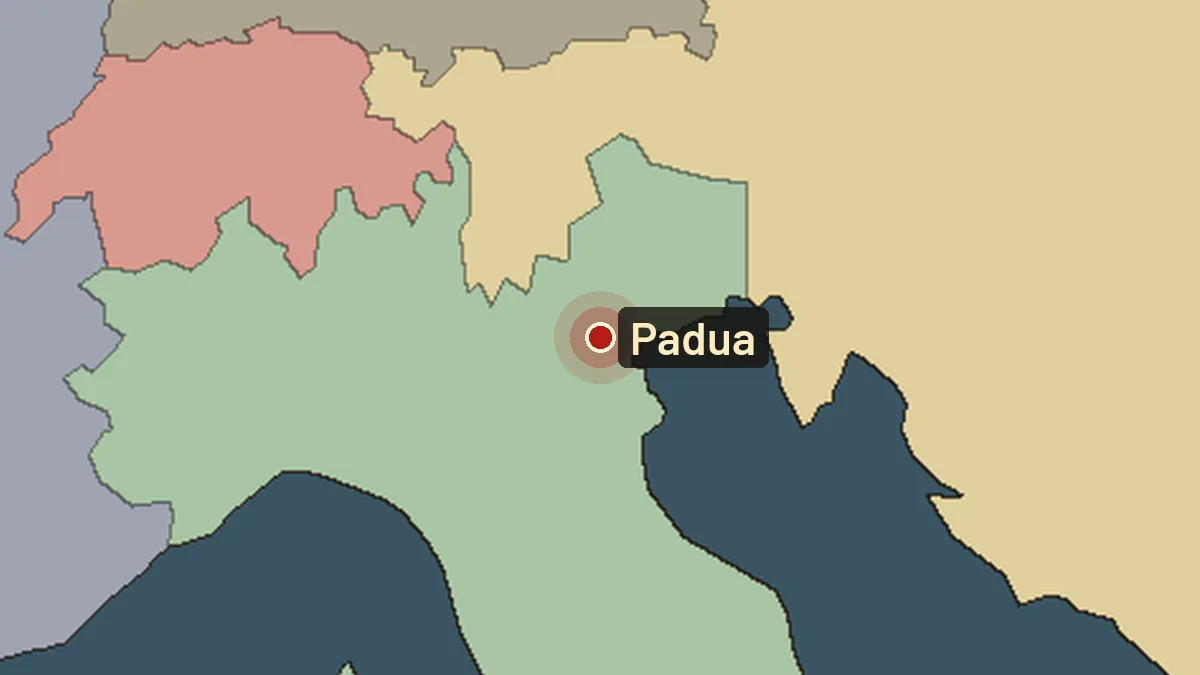
On 3 November 1918, in a country villa outside Padua, an Austro-Hungarian delegation signed an armistice with Italy, acting for all the Allies. It came into force the next afternoon, ending four years of war between the Habsburg monarchy and the Entente. By then the monarchy hardly existed. Its army was retreating in chaos after the Battle of Vittorio Veneto, and Czechs, Slovaks, South Slavs, Poles and Hungarians had already declared their own states. The Armistice of Villa Giusti closed the war on the Italian front, and with it ended an empire that had ruled much of Central Europe for centuries.
An empire coming apart
Austria-Hungary had started the war in July 1914 by declaring war on Serbia. Four years later it was exhausted: its cities were hungry, its army short of food and clothing, and its many nationalities increasingly unwilling to fight for Vienna. After Bulgaria's armistice in late September 1918, the Habsburg government joined Germany in asking President Wilson for peace. Emperor Karl, who had succeeded Franz Joseph in 1916, issued a manifesto on 16 October promising to turn the Austrian lands into a federation of nations. Rather than saving the empire, it encouraged the national councils to act on their own.
On 28 October Czechoslovakia was proclaimed in Prague. On 29 October the Croatian parliament in Zagreb broke with Hungary and joined the new State of Slovenes, Croats and Serbs. Polish leaders took control in Kraków, and in Budapest the Aster Revolution of 31 October brought Count Mihály Károlyi to power. At the front, the Italian offensive that began on 24 October turned into a rout after 28 October, as units refused to fight and Hungarian troops headed home.
Talks at Villa Giusti
An Austro-Hungarian armistice commission under General Viktor Weber von Webenau crossed the lines at the end of October. The terms had to be approved by the Allied Supreme War Council in Paris, and at the start of November the Italian delegation, led by General Pietro Badoglio, the deputy chief of the Italian general staff, presented them at Villa Giusti, the residence of Count Vettor Giusti del Giardino near Padua. Weber had no room to bargain, and the armistice was signed on 3 November.
The terms were strict. All hostilities on land, at sea and in the air were to end. The Austro-Hungarian army was to be demobilised, apart from a small force for internal order, and to hand over half its artillery. It had to withdraw from all territory occupied since 1914 and also behind a line in the Alps and along the Adriatic that roughly matched the lands promised to Italy by the Allies in the secret Treaty of London of 1915, and Allied troops could occupy that zone. The Allies gained the right to move freely across Austro-Hungarian territory and to use its railways, which opened a possible route to attack Germany from the south. German troops had to leave within fifteen days, and much of the navy was to be handed over.
Confusion over the ceasefire
The armistice was to take effect 24 hours after signing, at 3 p.m. on 4 November. However, the Austro-Hungarian high command, eager to stop the slaughter, ordered its troops to cease fighting earlier, on 3 November. Italian forces kept advancing until the agreed hour. In that final day many Austro-Hungarian units that had already laid down their arms were surrounded and captured. Estimates vary, but in total several hundred thousand soldiers were taken prisoner in the last phase of the war in Italy, and the episode left lasting bitterness in Austria.
The end of the Habsburg monarchy
The armistice did not stop the empire's collapse; it confirmed it. On 11 November, the same day Germany signed its own armistice, Emperor Karl announced that he was withdrawing from any part in the government of Austria, without formally abdicating. The next day German-speaking Austria was proclaimed a republic, and Hungary followed on 16 November. Hungary also signed a separate military convention with the Allies in Belgrade on 13 November.
The peace treaties of Saint-Germain (1919) with Austria and Trianon (1920) with Hungary confirmed the new map: Czechoslovakia, Poland and the Kingdom of the Serbs, Croats and Slovenes became independent or were enlarged, Romania gained Transylvania, and Italy received Trentino, South Tyrol, Trieste and Istria. The great multinational empire that had begun the war in 1914 was gone.
Did you know?
- Days before the armistice, Karl handed the Austro-Hungarian fleet at Pola over to the new South Slav state. On 1 November, two Italian naval officers who did not know of the transfer sank the flagship Viribus Unitis in the harbour with an explosive charge fixed to its hull.
- Karl was the last Habsburg emperor. He twice tried to regain the Hungarian throne in 1921, failed, and died in exile on Madeira in 1922.
Villa Giusti in World Wars: 1914–20XX
In the Historical (1914) scenario the Armistice of Villa Giusti arrives on 3 November 1918. If you lead Austria-Hungary, the game pauses and you choose: sign the armistice, or fight on while the empire dissolves, at the cost of falling stability and war support. If it is signed, Austria-Hungary leaves the war, its government changes as the monarchy dissolves, its stability collapses, and German war support falls as Berlin loses its last major ally.
Austria-Hungary is one of the playable states of 1914. Can you hold the Dual Monarchy together through four years of war, or will you, like Karl, watch it break apart in a single autumn?
▶ Play now Free in your browser, no download needed.
Further reading: Wikipedia (English)