World Wars: 1914–20XX
First World War (1914–1918)
Battle of Vittorio Veneto (1918): Italy's victory over Austria-Hungary
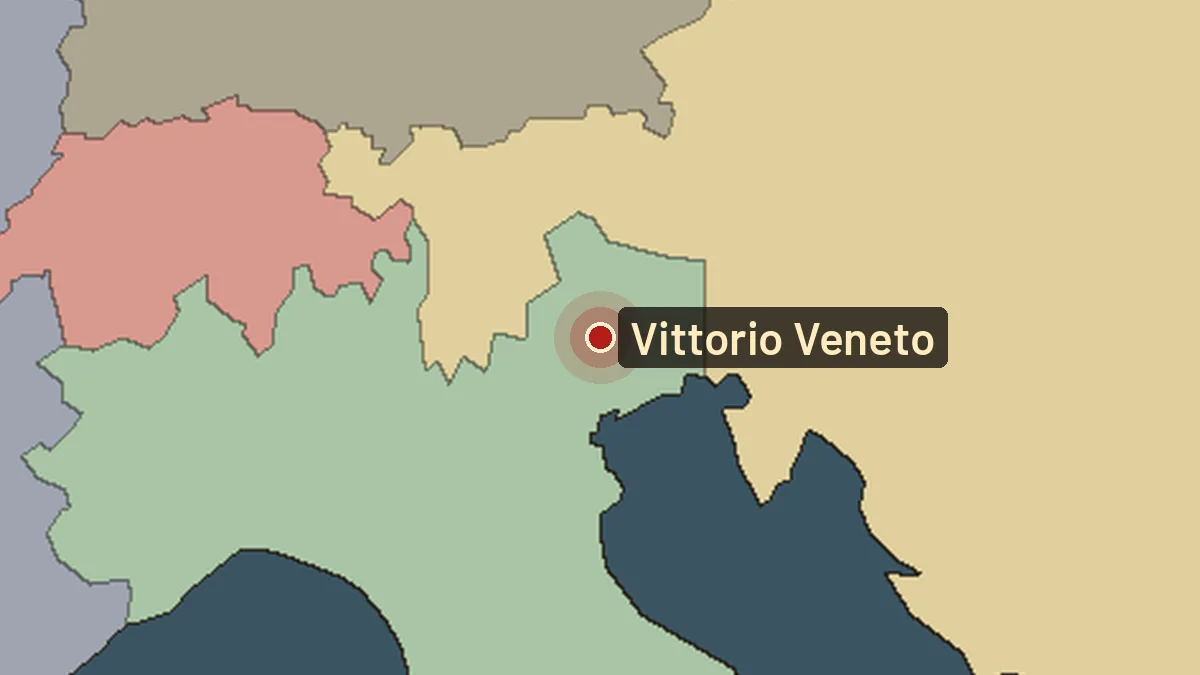
On 24 October 1918, exactly one year after the disaster of Caporetto, the Italian army went on the offensive in north-eastern Italy. For several days it made little progress against stubborn resistance in the mountains and a flooded river Piave. Then the army facing it simply came apart. Austria-Hungary's soldiers, whose peoples were declaring independence one after another, stopped fighting for an empire that was ceasing to exist. By the time the guns fell silent on 4 November, Italian troops had taken Trento and landed at Trieste, and hundreds of thousands of prisoners were in Italian hands. In Italy, Vittorio Veneto became the symbol of victory in the Great War.
From Caporetto to the Piave
Italy had entered the war in May 1915 on the side of the Entente, hoping to win the Italian-speaking lands of Trentino and Trieste from Austria-Hungary. For more than two years its army fought a long series of costly battles on the river Isonzo. In October 1917 a German and Austro-Hungarian offensive at Caporetto broke the Italian front, and the army retreated more than 100 kilometres before holding a new line on the river Piave and Monte Grappa, north of Venice.
The commander-in-chief, General Luigi Cadorna, was replaced by General Armando Diaz, who rebuilt the army's morale with better food, more leave and less brutal discipline. British and French divisions were sent to help. In June 1918 Austria-Hungary launched a last great offensive across the Piave, the Battle of the Solstice. It failed with heavy losses, and from then on the Habsburg army was short of food, clothing and men.
A crumbling empire
By October 1918 the Dual Monarchy was disintegrating from within. Bulgaria had left the war at the end of September, and Germany and Austria-Hungary had asked President Wilson for an armistice. On 16 October Emperor Karl issued a manifesto offering to turn the Austrian half of the empire into a federation of nations, but it came too late. Czechoslovak, South Slav and Polish leaders formed their own national councils, and on 28 and 29 October Prague and Zagreb declared their break with Vienna. Hungary's government decided to end its union with Austria and recalled Hungarian troops to defend the homeland.
Diaz had long been cautious, unwilling to risk his rebuilt army before he was sure of success. Under political pressure from Rome to win a victory before the war ended, he agreed to attack in the second half of October.
The battle
The offensive opened on 24 October with attacks on the Grappa massif, where Austro-Hungarian troops still fought hard and Italian losses were heavy. On the Piave the river was in flood, and the crossings had to be delayed. On the night of 26–27 October bridgeheads were established, among them one won by the British-Italian Tenth Army under the Earl of Cavan, which had seized the island of Papadopoli in the river.
On 28 October the Italian Eighth Army expanded its bridgehead, and resistance on the other bank began to collapse. Units of various nationalities refused to go into the line, Hungarian regiments left to go home, and the reserves could not be moved forward. On 30 October Italian troops entered the town of Vittorio, which gave the battle its name. The Austro-Hungarian command ordered a general retreat, and the front dissolved.
The armistice and the prisoners
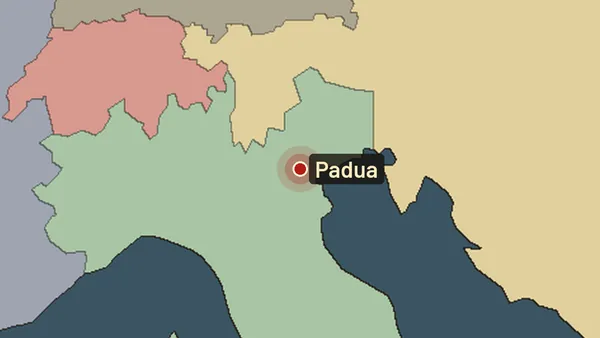
Austria-Hungary had sent a delegation to ask for an armistice, which was signed at Villa Giusti near Padua on 3 November and came into force at 3 p.m. on 4 November. Confusion over the timing led many Austro-Hungarian units to stop fighting on 3 November, while Italian troops continued to advance for another day. As a result huge numbers of soldiers were captured in the final hours: estimates of the total taken during the battle range from about 300,000 to more than 400,000. Italian troops entered Trento and landed at Trieste on 3 November.
Some historians and contemporaries have argued that Vittorio Veneto was more an occupation of an abandoned front than a battle, since the empire was collapsing anyway. Others stress the hard fighting on Monte Grappa and the Piave crossings. What is certain is that it ended the war in Italy, and that Italy emerged with Trentino, South Tyrol, Trieste and Istria, though not with everything its nationalists had hoped for, a disappointment they called the "mutilated victory".
Did you know?
- Italy still celebrates 4 November, the day the armistice came into force, as the Day of National Unity and the Armed Forces.
- The young Ernest Hemingway, an American Red Cross ambulance volunteer, was badly wounded on the Piave front in July 1918, an experience he later drew on in A Farewell to Arms.
Vittorio Veneto in World Wars: 1914–20XX
In the Historical (1914) scenario the Battle of Vittorio Veneto begins on 24 October 1918. Austria-Hungary's war support and stability fall, and its army's morale drops sharply for about two months, while Italian morale rises over the same period. The Armistice of Villa Giusti follows a few days later.
Both Italy and Austria-Hungary are playable. As Italy, you can try to win on the Isonzo years earlier and avoid Caporetto altogether; as Austria-Hungary, the real challenge is keeping a multinational empire stable enough that its army never dissolves like this. In the Parallel Fronts scenario, armoured divisions and air wings could make the Alpine front move at a very different pace. Which empire will still be standing in November 1918?
▶ Play now Free in your browser, no download needed.
Further reading: Wikipedia (English)