World Wars: 1914–20XX
First World War (1914–1918)
Austria-Hungary in World War I (1914–1918): the empire that fell apart
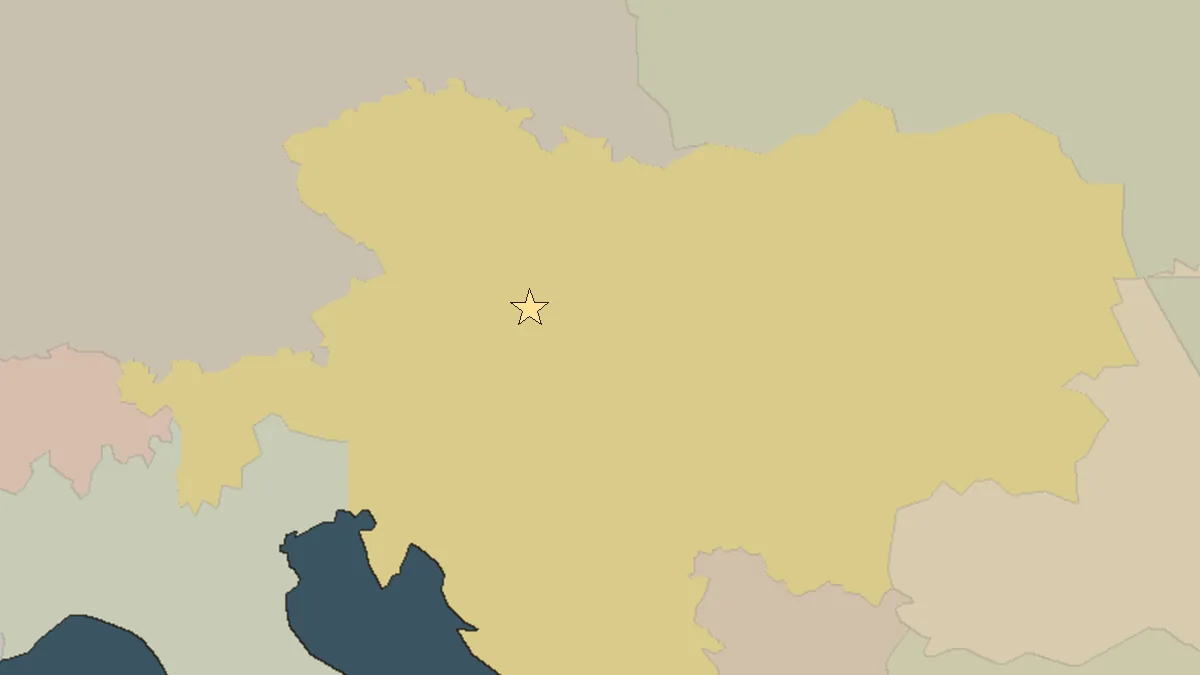
Austria-Hungary was the power that turned a political murder into a European war. In July 1914 its leaders decided that only a war against Serbia could stop the rise of South Slav nationalism and restore the monarchy's standing as a great power. Four years later the war had destroyed the monarchy itself. By the time its armies laid down their arms in November 1918, the empire of the Habsburgs had already broken into new national states.
A monarchy of many peoples
Since the Compromise of 1867 the Habsburg lands had been a dual monarchy: an Austrian half and the Kingdom of Hungary, each with its own parliament and government, joined by the person of the emperor-king Franz Joseph, by a common army and by common foreign policy. Germans and Hungarians dominated their halves, but they were minorities in the state as a whole, which also included Czechs, Slovaks, Poles, Ukrainians, Romanians, Croats, Serbs, Slovenes, Italians and others.
Nationalist movements, especially among the South Slavs, worried Vienna. Neighbouring Serbia, enlarged by the Balkan Wars of 1912–13, was seen as a magnet for the monarchy's own Serbs and Croats. When the heir to the throne, Archduke Franz Ferdinand, was assassinated in Sarajevo on 28 June 1914 by Gavrilo Princip, a young Bosnian Serb linked to a Serbian secret society, hardliners in Vienna, led by the chief of staff Franz Conrad von Hötzendorf, saw their chance. With German backing, Austria-Hungary sent Serbia a deliberately harsh ultimatum on 23 July and declared war on 28 July 1914.
A bad start on two fronts
Austria-Hungary planned to crush Serbia quickly, but Russia's mobilisation forced it to fight on two fronts at once. In Serbia the result was humiliating: Austro-Hungarian invasions were thrown back at Cer in August and, after Belgrade had briefly been taken, at the Kolubara in December 1914. In Galicia the main army suffered heavy defeats against Russia, lost Lemberg and was driven back to the Carpathians. Within months much of the trained pre-war officer corps and many of the best troops had been lost.
From 1915 the monarchy depended more and more on German help. A joint German and Austro-Hungarian breakthrough at Gorlice–Tarnów in May 1915 drove the Russians out of Galicia and Poland, and in the autumn of 1915 German, Austro-Hungarian and Bulgarian forces overran Serbia.
Italy, Brusilov and the long decline
In May 1915 Italy, formally an ally before the war, declared war on Austria-Hungary in hope of winning Trentino, Trieste and other Habsburg lands. A new front opened in the Alps and along the river Isonzo, where Italian armies attacked again and again in a series of battles. The Austro-Hungarian army, though outnumbered, held its mountain positions, and this was one front where soldiers of many nationalities fought with real determination.
In June 1916 the Russian Brusilov Offensive struck the Austro-Hungarian armies in the east and cost them huge numbers of men, many of them captured. After that, Habsburg forces in the east were increasingly placed under German command. In August 1916 Romania entered the war against the monarchy, but most of its territory was overrun within months.
Franz Joseph died in November 1916 after a reign of 68 years. His great-nephew Karl I wanted peace and made secret approaches to the Allies in 1917 through his brother-in-law, Prince Sixtus of Bourbon-Parma. When this became public in April 1918, it embarrassed Karl and tied him even more closely to Germany.
Hunger and collapse
The war's greatest successes for the monarchy came with German help: in October 1917 at Caporetto, a joint offensive drove the Italians back to the river Piave. But at home the Allied blockade, bad harvests and disputes between Austria and Hungary over food led to severe hunger, especially in Vienna. Strikes spread in January 1918, sailors mutinied at Cattaro in February, and national movements in exile won Allied recognition.
A last Austro-Hungarian offensive on the Piave in June 1918 failed. In October Karl offered to reorganise Austria as a federation of peoples, but it was too late. Czechoslovakia was proclaimed on 28 October, the South Slavs declared their own state the next day, and Hungary ended its union with Austria at the end of the month. Meanwhile the Italian offensive at Vittorio Veneto broke the disintegrating army. The armistice of Villa Giusti was signed on 3 November 1918. Karl withdrew from state affairs on 11 November, and Austria became a republic the next day.
Legacy
The peace treaties of Saint-Germain (1919) and Trianon (1920) confirmed the end of the old monarchy. Austria and Hungary became small states, and Czechoslovakia, Poland, Romania, Italy and the new Kingdom of Serbs, Croats and Slovenes (later Yugoslavia) took the rest. Historians still debate whether the empire was doomed by its nationalities or destroyed by the war it chose to start.
Did you know?
- The common army had German as its language of command, but officers were expected to speak the languages of their own soldiers; a regiment might have soldiers of three or four mother tongues.
- Karl I, the last emperor, died in exile on Madeira in 1922; the Catholic Church beatified him in 2004.
Austria-Hungary in World Wars: 1914–20XX
Austria-Hungary is one of the 26 states on the 1914 map, so you can lead it, and its entry is in the in-game encyclopedia from the start. In the Historical (1914) scenario the game begins with the Sarajevo assassination on 28 June 1914, which raises tension with Serbia. On 28 July the game pauses and the player decides: send the ultimatum and declare war, or accept international mediation at a cost to the monarchy's stability. Later events such as the Brusilov Offensive, Caporetto and Vittorio Veneto shape its war, and at Villa Giusti you choose between signing the armistice or fighting on while the empire comes apart.
In the Parallel Fronts scenario the same old empire fights with armoured divisions and air wings. Can you hold the Habsburg lands together where Franz Joseph and Karl could not?
▶ Play now Free in your browser, no download needed.
Further reading: Wikipedia (English)