World Wars: 1914–20XX
First World War (1914–1918)
Battle of Dobro Pole (1918): the breakthrough that knocked out Bulgaria
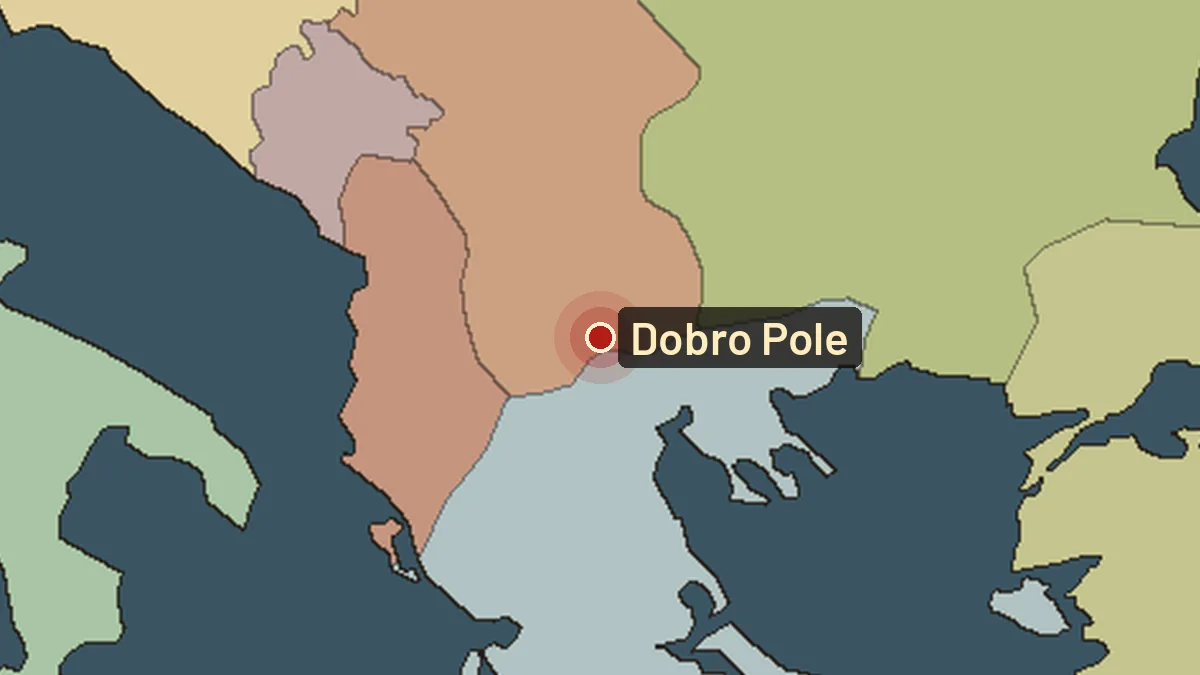
For almost three years the Macedonian front, also called the Salonica front, was one of the quietest of the First World War. Hundreds of thousands of Allied soldiers sat in the hills north of the Greek port of Salonica, suffering more from malaria than from enemy fire, and critics in London and Paris asked what they were for. Then, on 15 September 1918, Serbian and French infantry stormed a mountain ridge called Dobro Pole. Within days the Bulgarian front had broken, and within two weeks Bulgaria became the first of the Central Powers to leave the war. The collapse in the Balkans set off a chain reaction that reached Berlin.
A forgotten front
The Allies had landed at Salonica in October 1915, too late to save Serbia from invasion by Germany, Austria-Hungary and Bulgaria. The surviving Serbian army retreated through the mountains of Albania in winter, was evacuated to the island of Corfu, and in 1916 was brought to Salonica to fight again. Over the next two years an international army of French, British, Serbian, Italian, Russian and, from 1917, Greek troops faced Bulgarian forces, stiffened by German units and officers, along a line running from the Albanian coast to the river Struma.
Attacks in 1916 and 1917 gained little. The Bulgarians held strong positions on mountain ridges, and the Allied army was starved of reinforcements because every major government considered the Western Front more important. German soldiers mocked the front, according to a well-known wartime jibe, as their largest internment camp.
Franchet d'Espèrey's plan
In June 1918 General Louis Franchet d'Espèrey, a veteran of the Marne, took command of the Allied Armies of the Orient. He chose to attack where the Bulgarians least expected it: in the high mountains of the Moglena range, around the ridges of Dobro Pole, Sokol and Vetrenik, where the terrain was so steep that the defenders had grown confident. Engineers built roads and hauled heavy guns up the slopes. The chief of the Serbian general staff, Field Marshal Živojin Mišić, strongly supported the plan; his soldiers had been away from their homeland for three years and were eager to go home.
The Bulgarian army, meanwhile, was in a poor state. Its men were badly fed and clothed, many had been at war almost continuously since the Balkan Wars of 1912, and Germany had withdrawn many of its own troops from the front for the battles in France. Bulgarian soldiers also resented that their country had gained less than it hoped from the defeat of Romania.
The breakthrough
On 14 September Allied artillery opened a heavy bombardment. At dawn on 15 September two French divisions and Serbian troops of the Second Army under Field Marshal Stepa Stepanović climbed the slopes under fire and fought their way into the Bulgarian positions. By the end of the first day they held the ridges, and by 17 September the gap in the front was around 25 to 30 kilometres wide and growing. Serbian infantry poured through and pushed north towards the Vardar valley at remarkable speed, while French cavalry rode deep into the Bulgarian rear.
Elsewhere the Bulgarians still fought hard. On 18 and 19 September British and Greek troops attacked at Lake Doiran and were thrown back with heavy losses, the last Bulgarian victory of the war. But it made no difference to the outcome. With their line pierced, Bulgarian units began to retreat and then to disintegrate. Thousands of soldiers simply left the front and headed home, some of them marching on the capital, Sofia, in the mutiny known as the Radomir Rebellion. On 29 September French cavalry reached Skopje.
Consequences
Within ten days of the breakthrough the Bulgarian government asked for an armistice, and it signed it at Salonica on 29 September. Bulgaria was out of the war, and the Central Powers' land route between Germany and the Ottoman Empire was cut. Tsar Ferdinand abdicated a few days later in favour of his son Boris.
The news reached German headquarters at the worst possible moment, as the Hindenburg Line was under attack in France. It was one of the factors that persuaded Ludendorff on 28 and 29 September that Germany had to ask for an armistice. The Allied armies in Macedonia, long derided, advanced quickly: the Serbian army entered Belgrade on 1 November 1918, three years after it had been driven out, and other Allied forces moved towards Constantinople and the Danube.
Did you know?
- British soldiers, struggling with the French name Franchet d'Espèrey, nicknamed him "Desperate Frankie".
- Malaria put far more Allied soldiers out of action on the Macedonian front than enemy bullets did; in some years the army's sick lists ran into the tens of thousands.
Dobro Pole in World Wars: 1914–20XX
In the Historical (1914) scenario the Dobro Pole breakthrough arrives on 15 September 1918. Bulgaria's war support falls and its army's morale drops sharply for about two months, setting the stage for the Armistice of Salonica two weeks later.
Bulgaria and Serbia are both playable states on the game's 1914 map. If you lead Serbia, this is the moment your exiled army comes home; if you lead Bulgaria, it is the test of whether your worn-out army can hold the mountains. Playing any of the Central Powers, it is a warning that the Balkan flank can bring down the whole alliance. Can you keep the southern front from becoming the first domino?
▶ Play now Free in your browser, no download needed.
Further reading: Wikipedia (English)