World Wars: 1914–20XX
Second World War (1939–1945)
The Battle of France (1940): the Ardennes, Sedan and the fall of France
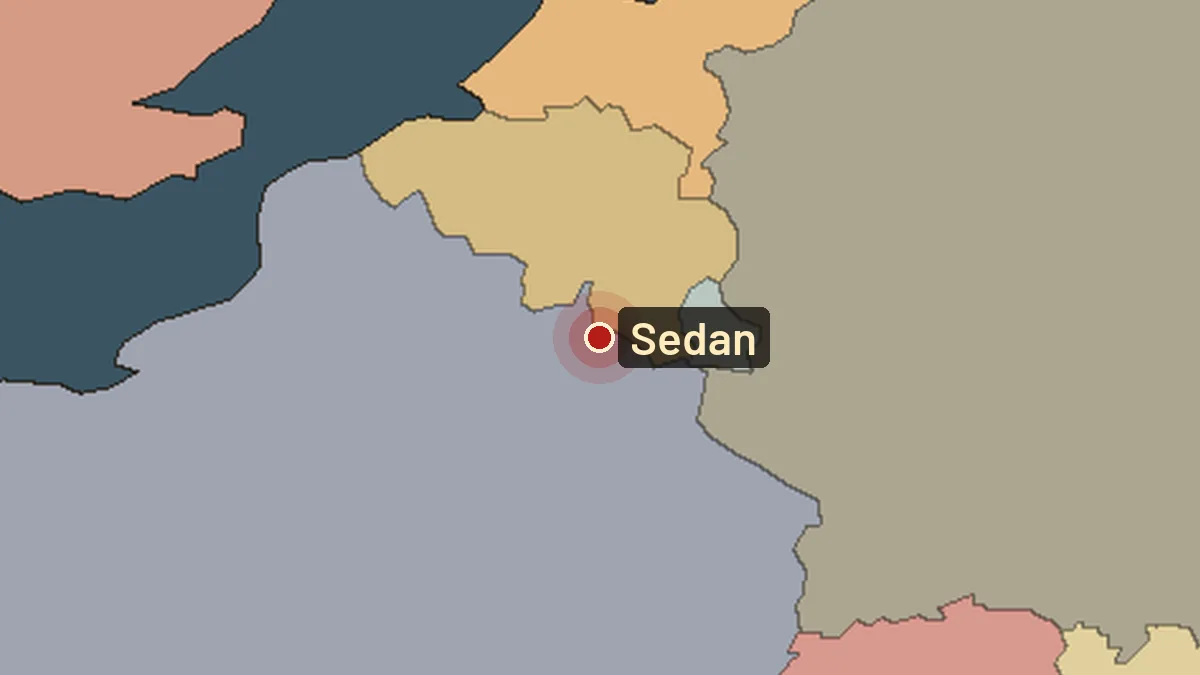
On 10 May 1940 Germany attacked the Netherlands, Belgium and Luxembourg. Britain and France rushed their best armies north into Belgium to meet what they believed was the main blow. It was a trap. The real thrust came further south, through the wooded hills of the Ardennes, which the French considered unsuitable for large armoured forces. On 13 May German tanks crossed the Meuse at Sedan, and ten days after the offensive began they reached the English Channel. Six weeks later France, which had held out for more than four years in 1914–1918, signed an armistice.
A plan that repeated 1914, and one that did not
After the trench slaughter of the First World War, France built the Maginot Line, a chain of powerful fortifications along its border with Germany, and planned to fight any new war defensively and, if possible, on Belgian soil. Belgium, neutral again since 1936, would not coordinate openly with France. Allied planners expected the Germans to swing through central Belgium as they had in 1914, and their Dyle Plan was to advance to meet them there.
The first German plan, Fall Gelb (Case Yellow), was indeed a rerun of 1914. But after a German staff officer carrying documents about it crash-landed in Belgium in January 1940, and after persistent lobbying by General Erich von Manstein, the plan was changed. Army Group B under Fedor von Bock would still invade the Low Countries, loudly and visibly, to draw the Allies forward. The main weight, Army Group A under Gerd von Rundstedt, with most of the armoured divisions, would cross the Ardennes and break through on the weakly held Meuse, then drive west to the sea behind the Allied armies. Churchill later called it the "sickle cut".
The two sides were more evenly matched than legend suggests. The French and British had about as many tanks as the Germans, and some French models such as the Char B1 were better armed and armoured. But most French tanks were spread out in support of infantry, few had radios, and French command worked slowly, by telephone and courier. The Luftwaffe, by contrast, had more modern aircraft and worked closely with the ground forces.
Breakthrough at Sedan
In the north, glider troops captured the Belgian fortress of Eben-Emael in a matter of hours, and paratroopers seized bridges in the Netherlands. After the German bombing of Rotterdam on 14 May, the Dutch army capitulated. The Allied armies moved into Belgium as planned.
Meanwhile some 40,000 German vehicles wound through the Ardennes in one of the largest traffic jams in military history, largely unbothered by Allied aircraft. On 13 May, after an intense day of dive-bomber attacks, the infantry of General Heinz Guderian's corps crossed the Meuse near Sedan, while further north the 7th Panzer Division of General Erwin Rommel forced a crossing at Dinant. French reserve divisions on the Meuse broke, and French counter-attacks came late and piecemeal.
Instead of turning towards Paris, the panzers raced west through open country. On 20 May Guderian's tanks reached Abbeville at the mouth of the Somme. The British, French and Belgian armies in Belgium were cut off from the rest of France. A British counter-attack at Arras on 21 May shook Rommel, but it was too small to change the outcome. The French commander, General Maurice Gamelin, was dismissed and replaced by the 73-year-old General Maxime Weygand.
The fall of France
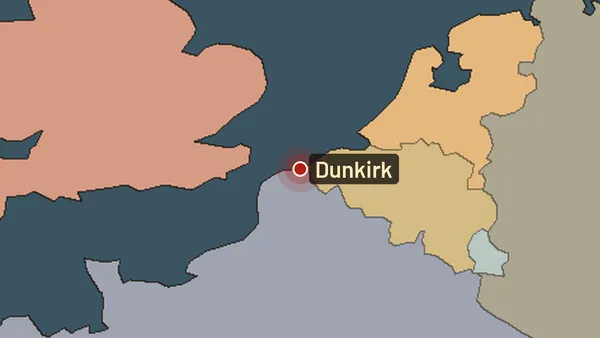
King Leopold III surrendered the Belgian army on 28 May. Between 26 May and 4 June about 338,000 British and French soldiers were evacuated from Dunkirk, but almost all their heavy equipment was lost. On 5 June the Germans attacked again southwards across the Somme and the Aisne in Fall Rot (Case Red). The French fought hard in places, but they were now heavily outnumbered, and the line broke within days.
On 10 June Italy declared war, and the French government left Paris, which was declared an open city and entered by German troops on 14 June. Prime Minister Paul Reynaud wanted to fight on from North Africa, but most of his cabinet did not. He resigned on 16 June, and his successor, Marshal Philippe Pétain, the hero of Verdun, asked for an armistice. It was signed on 22 June near Compiègne and took effect on 25 June.
The defeat stunned the world. It left Britain alone against Germany, made Hitler master of western Europe and led to the end of the French Third Republic. Historians have long debated its causes: doctrine, command, morale and politics all played a part, but most now stress the German gamble in the Ardennes and the Allied commanders' slowness to react to it.
Did you know?
- One of the few French commanders whose armoured counter-attacks in May 1940 won praise was Colonel, soon General, Charles de Gaulle, who led the new 4th Armoured Division near Montcornet and Abbeville.
- The Maginot Line itself was hardly broken. Most of its forts were still holding when the armistice came and surrendered only on French government orders.
The Battle of France in World Wars: 1914–20XX
World Wars: 1914–20XX currently covers the First World War; a 1939 scenario is planned, and the Battle of France is already part of the game's event database for it. There it is designed so that Germany declares war on the Netherlands and Belgium and annexes them, a new Western Front opens, and German forces get a breakthrough bonus for about 30 days.
The same ground is the heart of the game you can play today. In the Historical (1914) scenario the German armies march through Belgium towards Paris and are stopped at the Marne. In the Parallel Fronts scenario, where engines, radio and flight matured a generation early, the 1914 armies already have armoured divisions and dive-bombing wings: the kind of war that broke France in 1940 can happen in the summer of 1914. Lead France and see whether you can do better than Gamelin, or lead Germany and try to win where Moltke failed.
▶ Play now Free in your browser, no download needed.
Further reading: Wikipedia (English)