World Wars: 1914–20XX
Second World War (1939–1945)
The Dunkirk Evacuation (1940): Operation Dynamo and the little ships
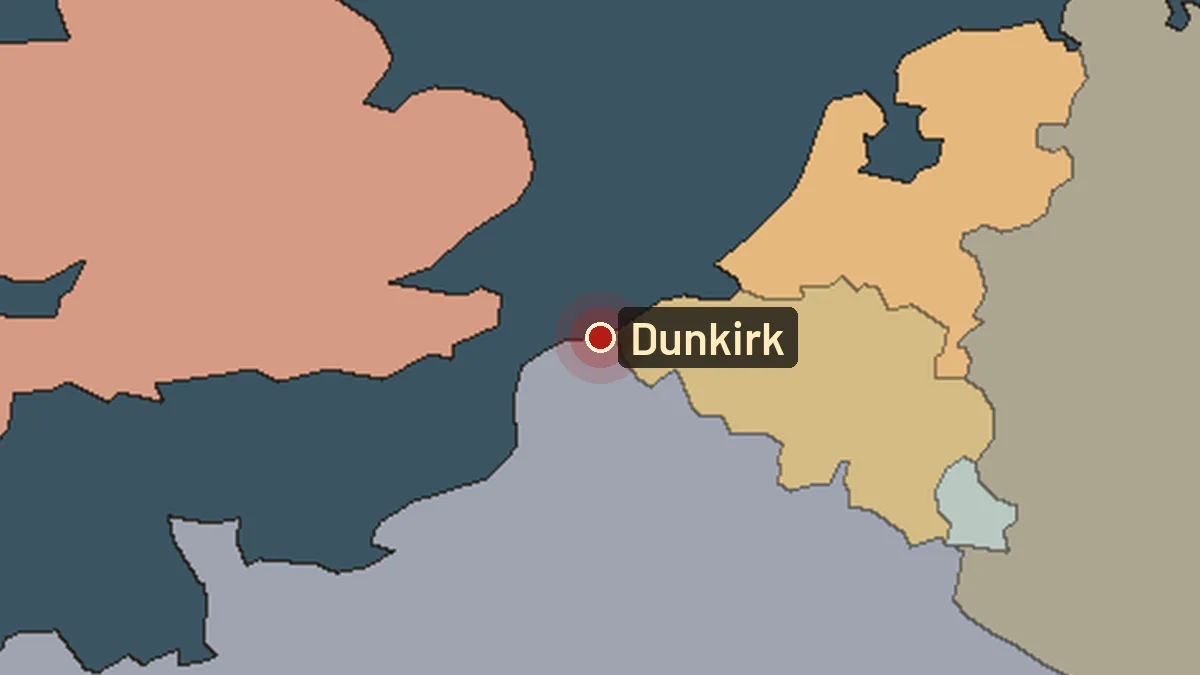
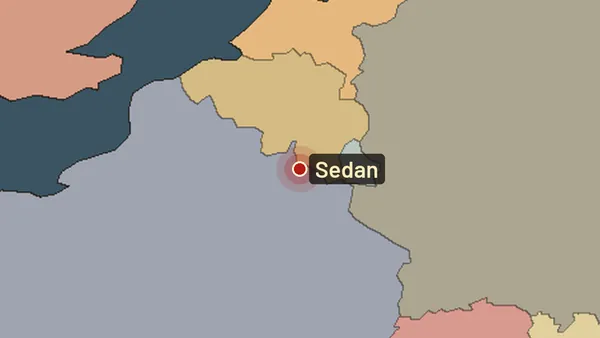
At the end of May 1940 the British Expeditionary Force and large French and Belgian armies were trapped against the coast of Flanders, cut off by the German breakthrough at Sedan. The British government hoped to bring home perhaps 45,000 men. Over nine days, from the harbour and beaches of Dunkirk, a fleet of warships, ferries, fishing boats and pleasure craft carried about 338,000 soldiers to England. The army lost almost all its guns and vehicles, but it survived, and Britain could fight on.
Trapped in Flanders
When German tanks reached the Channel at Abbeville on 20 May, they cut the Allied armies in two. In the north were the BEF under General Lord Gort, the French First Army and the Belgian army, squeezed into a shrinking pocket around Lille and the Flemish coast. An Allied plan to break out southwards came to nothing, and on 25 May Gort decided on his own authority to fall back towards the sea.
The Channel ports were going one by one. Boulogne fell on 25 May and Calais, defended to the end by a British brigade, on 26 May. Dunkirk, with its large harbour, long sandy beaches and a ring of canals and flooded land around it, was the last way out.
The halt order
On 24 May, with German tanks only some 25 kilometres from Dunkirk, the advance stopped. Rundstedt, commanding Army Group A, wanted to rest and repair his armoured divisions for the coming battle in the south, and Hitler confirmed the order. Hermann Göring had also promised that his Luftwaffe could destroy the trapped armies from the air. The tanks did not move forward again until 26 May.
Why the halt was ordered has been debated ever since. It was not, as was later sometimes claimed, a deliberate gesture to spare the British; the marshy ground, exhausted units and fears of a counter-attack all played a part. Whatever the reason, it gave the Allies precious time to strengthen the perimeter.
Operation Dynamo
The evacuation, code-named Operation Dynamo, was run from tunnels beneath Dover Castle by Vice-Admiral Bertram Ramsay. It began on the evening of 26 May. On the first full day fewer than 8,000 men were brought out.
Most of the soldiers were not lifted from the beaches but from the East Mole, a long breakwater at the harbour entrance that was never designed for ships to moor against. Destroyers and passenger ferries tied up alongside it and loaded thousands of men at a time. Off the beaches, where the water was too shallow for big ships, hundreds of small civilian craft, the "little ships", such as yachts, lifeboats, barges and fishing boats, ferried troops out to the larger vessels or carried them across the Channel themselves. Many were crewed by naval personnel, but some were taken over by their owners. In all, more than 800 vessels took part.
The Luftwaffe attacked the harbour, the beaches and the ships, and German artillery shelled the approaches. Bad weather and smoke from burning oil tanks sometimes helped the evacuation. The Royal Air Force flew patrols over the area from bases in England, though soldiers on the beaches often did not see them and complained bitterly. Several British and French destroyers and many other ships were sunk.
On the perimeter, British and French rearguards held off the Germans. At Lille, several French divisions surrounded since late May fought on until 31 May, tying down German forces. Under Admiral Jean-Marie Abrial, French troops held the final line around the town after the last British units had left. On the night of 3–4 June the last ships sailed; about 35,000–40,000 French soldiers left behind were captured when the Germans entered the town.
In the end, roughly 198,000 British and 140,000 French and other Allied soldiers were evacuated. Most of the French were soon shipped back to France to continue the fight.
Why it mattered
On 4 June Winston Churchill reported to the House of Commons. He warned that "wars are not won by evacuations", and then delivered the famous lines promising that Britain would "fight on the beaches" and "never surrender". Saving the trained core of the army made it possible for Britain to keep fighting in 1940, when many expected it to make peace.
The cost was enormous. The BEF abandoned nearly all its heavy equipment in France, including thousands of guns and tens of thousands of vehicles, and for months Britain had very few tanks and field guns to defend itself. The image of the "Dunkirk spirit", of ordinary people saving an army, also became part of British national identity, sometimes overshadowing the professional naval operation that did most of the work and the French soldiers who held the line.
Did you know?
- Several dozen of the surviving little ships still exist, and many of them return to Dunkirk for commemorative crossings every few years.
- In the same days, German troops murdered British prisoners in at least two massacres, at Le Paradis and near Wormhoudt, which were investigated after the war.
The Dunkirk evacuation in World Wars: 1914–20XX
World Wars: 1914–20XX currently covers the First World War; a 1939 scenario is planned, and the Dunkirk evacuation is already part of the game's event database for it. There it is designed so that most British units in Flanders are evacuated to Britain, British support for the war rises, and Britain loses a large share of its equipment.
The same coast saw Britain's armies in 1914, when the BEF fought around Ypres and the Race to the Sea ended on the Belgian shore, and a great evacuation is part of the history you can play today: the Allied withdrawal from Gallipoli in 1915–16. In the Parallel Fronts scenario, with aircraft and armour available from the start, an encircled army on the Flanders coast is a real danger in 1914. Take command of Britain and see whether you can keep your army in the field.
▶ Play now Free in your browser, no download needed.
Further reading: Wikipedia (English)