World Wars: 1914–20XX
Second World War (1939–1945)
Italy Enters the Second World War (10 June 1940): Mussolini's gamble
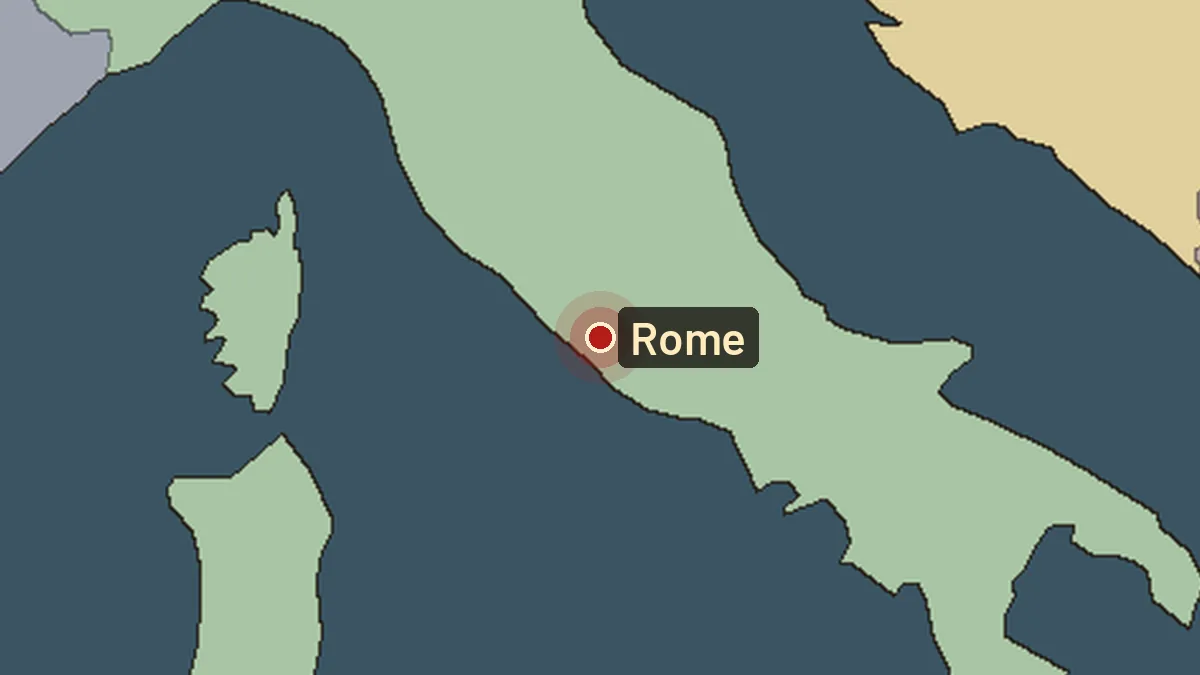
On the evening of 10 June 1940, Benito Mussolini stepped onto the balcony of the Palazzo Venezia in Rome and told the crowd below that Italy was at war with Britain and France. The French army was collapsing, the Germans were approaching Paris, and Mussolini believed the war was nearly over. He wanted a seat at the victors' table. Instead, his decision opened new fronts in the Alps, North Africa, East Africa and the Mediterranean, and drew Italy into a war it was not ready to fight.
The ally who waited
Italy had fought on the side of Britain and France in the First World War, after leaving its pre-war alliance with Germany and Austria-Hungary and signing the secret Treaty of London in 1915. It won South Tyrol, Trieste and Istria, but many Italians felt cheated of the other gains they had been promised and spoke of a "mutilated victory". That resentment helped Mussolini's Fascists to power in 1922.
In the 1930s Mussolini conquered Ethiopia, sent troops to fight for Franco in Spain, and drew close to Hitler. In May 1939 Italy and Germany signed the "Pact of Steel", a full military alliance. But Mussolini told Berlin that Italy would not be ready for a major war until about 1942 or 1943. The army had fought hard in Ethiopia and Spain, its equipment was outdated, and the country lacked raw materials, fuel and foreign currency.
So when Germany attacked Poland in September 1939, Italy declared itself "non-belligerent", a word chosen to sound less passive than neutrality. Through the winter Mussolini watched, frustrated by his role on the sidelines. When German armies broke through at Sedan in May 1940 and the Allies began to fall apart, he decided that he could no longer wait. To his military chief, Marshal Pietro Badoglio, he is said to have remarked that he needed only a few thousand dead to sit at the peace conference as a man who had fought; the remark is attributed and its exact wording uncertain, but it captures his calculation.
A stab in the back
The declaration took effect on 11 June. In the United States, President Franklin D. Roosevelt reacted the same day in a speech at Charlottesville: "the hand that held the dagger has struck it into the back of its neighbor." The phrase stuck, and the episode became known in France as the "stab in the back".
Italian aircraft bombed Malta on 11 June and attacked targets in southern France and Tunisia. On the Alpine border, however, the army remained on the defensive for more than a week, since it had prepared for defence and the French had a strong, well-fortified Army of the Alps. Only when France had already asked Germany for an armistice did Mussolini order a general offensive. It began on 21 June in snow and fog in the high passes. French troops, outnumbered but in good positions, held firm almost everywhere. Italian gains were limited to a few border villages and part of the town of Menton on the coast.
France signed an armistice with Italy at the Villa Incisa near Rome on 24 June. Both armistices, with Germany and with Italy, took effect early on 25 June. Italy received only a small occupation zone and a demilitarised strip along the border, far less than the Nice, Corsica, Tunisia and French Somaliland that Mussolini had hoped for.
New fronts in Africa and the Mediterranean
Italy's entry turned the war into a struggle for the Mediterranean. The Italian navy, one of the largest in the world, now faced the British Mediterranean Fleet. Italy's colonies of Libya and Italian East Africa bordered British-held Egypt, Sudan, Kenya and British Somaliland, and the Suez Canal, Britain's lifeline to India, lay within reach.
At first Italy took the initiative. In August 1940 it overran British Somaliland, and in September Marshal Rodolfo Graziani's army advanced some 100 kilometres into Egypt before stopping at Sidi Barrani. But the setbacks came quickly. In November British carrier aircraft crippled the Italian battle fleet at Taranto, the invasion of Greece launched in October bogged down in the Albanian mountains, and in December a much smaller British and Indian force routed Graziani's army in Operation Compass. In early 1941 Germany had to send help, including the Afrika Korps under Erwin Rommel.
Mussolini had hoped for a short "parallel war" alongside Germany. Instead Italy became more and more dependent on its ally. The war on these new fronts would last until 1943 and end with the fall of Mussolini.
Did you know?
- In the First World War Italy also took months to decide. It stayed neutral in 1914 and entered the war only in May 1915, after negotiating with both sides.
- Roughly a third of the Italian merchant fleet was in foreign ports on 10 June 1940 and was seized or interned there, a serious early loss for a country that depended on imports.
Italy's entry in World Wars: 1914–20XX
World Wars: 1914–20XX currently covers the First World War; a 1939 scenario is planned, and Italy's entry into the Second World War is already part of the game's event database for it. There it is designed so that Italy declares war on France and Britain, joins the Axis, and opens both a North African front and a Mediterranean front.
Italy is one of the playable great powers in the 1914 map, starting the war as a neutral still formally allied to Germany and Austria-Hungary, the same position from which it bargained its way into the Entente camp in 1915. In the Parallel Fronts scenario, with carriers and bomber wings already in service, the battle for the Mediterranean can begin a generation early. Lead Italy and see where its ambitions take you.
▶ Play now Free in your browser, no download needed.
Further reading: Wikipedia (English)