World Wars: 1914–20XX
Second World War (1939–1945)
Operation Weserübung (1940): the German invasion of Denmark and Norway
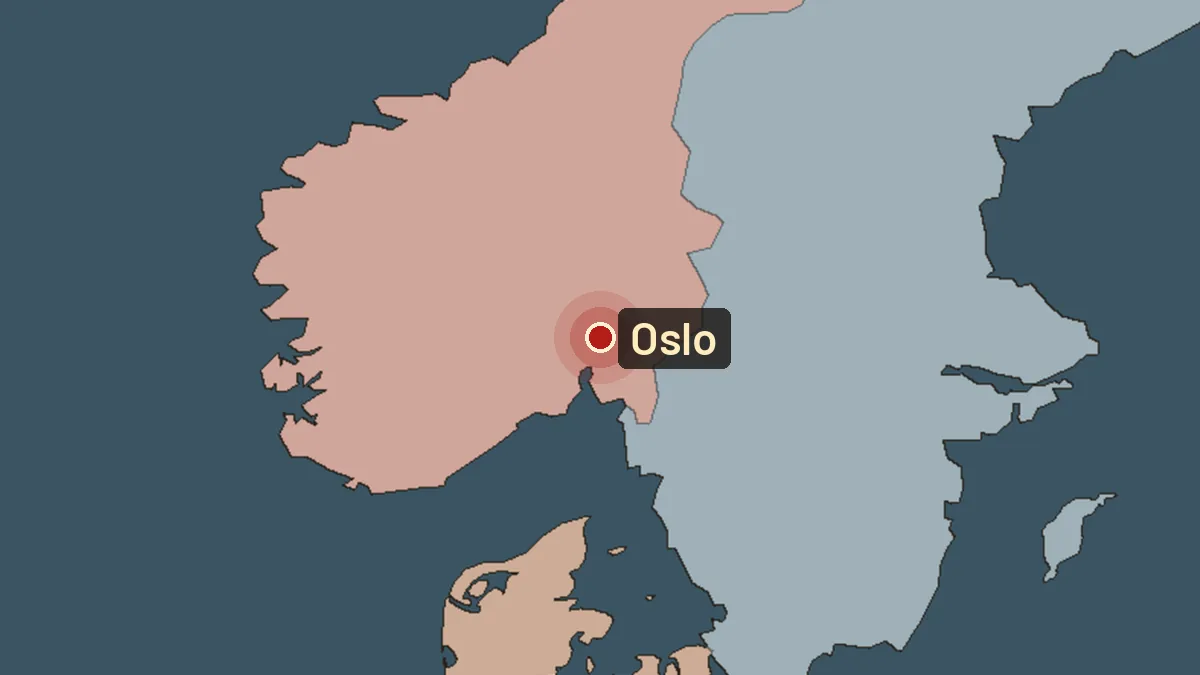
In the early hours of 9 April 1940, German warships slipped into Norwegian ports from Oslo to Narvik, paratroopers dropped on airfields, and German troops crossed the Danish border. Denmark gave in within hours. Norway fought for two months, with British, French and Polish help, before its last forces laid down their arms on 10 June. The campaign secured Germany's iron ore supply and the long Norwegian coast for its navy, but it cost the German fleet dearly and, in London, it brought down a prime minister.
Iron ore and a long coastline
Denmark and Norway had both stayed neutral in the First World War, and they hoped to do the same in 1939. But Scandinavia mattered to both sides. German industry depended heavily on iron ore from northern Sweden. In summer it was shipped across the Baltic, but in winter, when the Baltic froze, it travelled by rail to the ice-free Norwegian port of Narvik and then south along the Norwegian coast, inside territorial waters where British warships could not legally attack it.
German admirals, led by Erich Raeder, also argued that bases in Norway would let the navy break out into the Atlantic far more easily than in 1914–1918, when the British blockade had kept the German fleet bottled up in the North Sea. In Britain, Winston Churchill, then First Lord of the Admiralty, pressed for mining Norwegian waters to stop the ore traffic.
In February 1940 the British destroyer Cossack boarded the German supply ship Altmark in a Norwegian fjord and freed around 300 British prisoners. The incident convinced Hitler that Norway would not or could not defend its neutrality, and he ordered planning to accelerate under General Nikolaus von Falkenhorst.
A day in Denmark, a race in Norway
The British laid mines off the Norwegian coast on 8 April, but the German invasion fleets were already at sea. On 9 April Denmark, small, flat and almost impossible to defend, was overrun in a few hours with little fighting, and King Christian X and his government accepted occupation under protest. In the first airborne operations of the war, German paratroopers seized the airfield at Aalborg in Denmark and the Sola airfield near Stavanger in Norway the same morning.
In Norway the plan nearly worked, but not quite. In the narrow Oslofjord, the old guns and torpedo batteries of the Oscarsborg fortress, under Colonel Birger Eriksen, sank the new heavy cruiser Blücher, which was carrying troops and officials meant to seize the capital. The delay gave King Haakon VII, the government and parliament time to leave Oslo, and the national gold reserves were also taken away. When the Norwegian fascist Vidkun Quisling announced on the radio that he had formed a government, the King refused to accept him or the German demands, and Norway fought on.
The Germans nonetheless captured Oslo, Bergen, Trondheim, Kristiansand and Narvik on the first day. At Narvik, two British destroyer attacks on 10 and 13 April destroyed all ten German destroyers that had brought the troops there. In Bergen harbour, British naval aircraft sank the cruiser Königsberg, the first major warship ever sunk by dive-bombers.
The Allied failure and a change in London
British and French troops landed in central Norway at Namsos and Åndalsnes in mid-April, but they were poorly equipped, short of artillery and without air cover. German aircraft dominated the skies, and the Allies withdrew by the start of May. In the far north, British, French, Polish and Norwegian forces fought for Narvik and finally recaptured it on 28 May.
By then Germany had invaded France, and the Allies needed every man there. They evacuated northern Norway in early June. King Haakon and his government left for London on 7 June to continue the fight in exile, and the Norwegian army capitulated on 10 June. During the evacuation the German battleships Scharnhorst and Gneisenau sank the British aircraft carrier Glorious with heavy loss of life.
The political consequences in Britain were immediate. In the House of Commons debate of 7 and 8 May on the Norwegian failure, Conservative MP Leo Amery quoted Cromwell's words to Neville Chamberlain: "In the name of God, go." Chamberlain's majority collapsed, and on 10 May, the day Germany attacked in the west, Winston Churchill became prime minister.
For Germany, Norway provided naval and air bases and secured the iron ore route, but the navy had lost a large part of its surface fleet. Those losses weighed heavily when Hitler later considered invading Britain. Hundreds of thousands of German troops stayed tied down in Norway for the rest of the war.
Did you know?
- The Norwegian merchant fleet, one of the largest in the world, escaped German control almost entirely and served the Allies throughout the war under the organisation known as Nortraship.
- Quisling's name entered the English language: a "quisling" means a traitor who collaborates with an occupying enemy.
Operation Weserübung in World Wars: 1914–20XX
World Wars: 1914–20XX currently covers the First World War; a 1939 scenario is planned, and Operation Weserübung is already part of the game's event database for it. There it is designed so that Germany declares war on Norway and Denmark, annexes Denmark, gains naval bases in Norway, and a Churchill cabinet takes office in Britain.
Both Denmark and Norway are playable in the 1914 map, as neutrals squeezed between the Royal Navy and the German fleet in the North Sea. Lead one of them in the Historical (1914) scenario and try to keep your coasts safe; in Parallel Fronts, with carriers and bomber wings already at sea, the fight for Scandinavia's coasts can come a generation early.
▶ Play now Free in your browser, no download needed.
Further reading: Wikipedia (English)