World Wars: 1914–20XX
First World War (1914–1918)
The British Empire in World War I (1914–1918): sea power and a global army
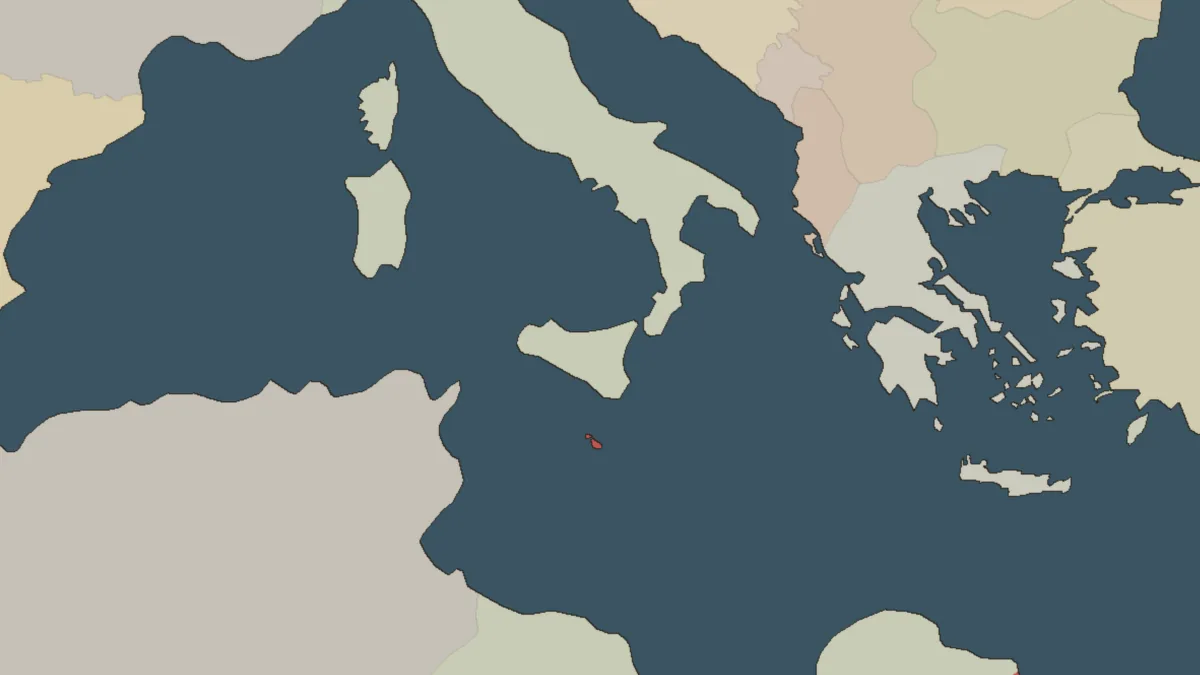
In 1914 the British Empire covered roughly a quarter of the world's land and ruled about a quarter of its people. It had the largest navy on earth but only a small professional army. Over the next four years it turned itself into a military power on the continental scale, raised soldiers from Canada to India and Australia, and fought on fronts from Belgium to the Tigris. Britain ended the war among the victors, but the effort changed both the country and the empire for good.
A reluctant entry
For decades Britain had tried to stay out of continental alliances. The rise of the German navy changed that. After the launch of HMS Dreadnought in 1906, a costly naval race with Germany pushed Britain into understandings with France (1904) and Russia (1907). These were not binding alliances, and in July 1914 the Liberal cabinet of H. H. Asquith was divided over whether to fight.
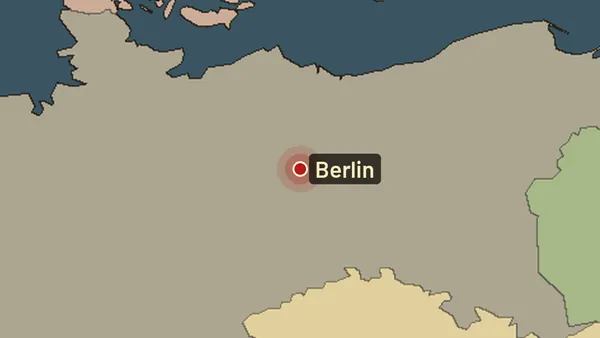
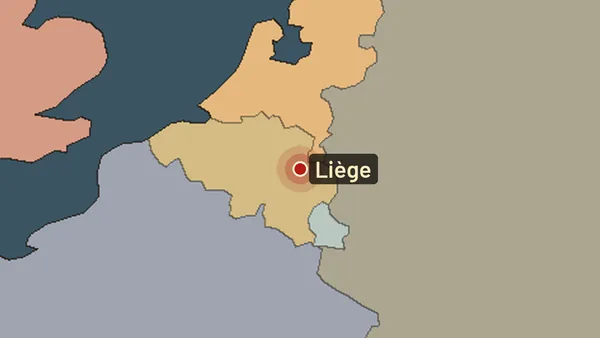
Germany's invasion of neutral Belgium settled the matter. Britain had been one of the guarantors of Belgian neutrality under the Treaty of London of 1839, and on 4 August 1914 it declared war on Germany. The foreign secretary, Sir Edward Grey, is remembered for a remark he is said to have made that evening: "The lamps are going out all over Europe." Because Britain declared war, so did the whole empire: the dominions and India had no separate say in the decision, though they would choose how much to contribute.
From a small army to a mass army
The British Expeditionary Force that crossed to France in August 1914 was about 100,000 strong, tiny next to the French and German armies. It fought at Mons, through the long retreat that followed and at the Marne, and was nearly destroyed in the First Battle of Ypres that autumn.
Lord Kitchener, the new secretary of state for war, was one of the few who expected a long war. His appeal for volunteers, with the famous recruiting poster of his pointing finger, brought in well over two million men by the end of 1915. Many joined "Pals battalions" made up of friends and workmates from the same town. When volunteering was no longer enough, Britain introduced conscription with the Military Service Act of January 1916, a large step for a country that had never had it.
These new armies fought their first great battle on the Somme. On 1 July 1916 the British Army suffered about 57,000 casualties, including some 19,000 dead, the worst single day in its history. Passchendaele in 1917 became a byword for mud and slaughter. Yet the same army, now experienced and supported by tanks, aircraft and far more accurate artillery, led much of the Allied advance in the Hundred Days of 1918.
An imperial war
The empire's contribution was enormous. India sent well over a million men overseas, to France, East Africa, Gallipoli, Egypt and above all Mesopotamia. Canada, Australia, New Zealand and South Africa raised large volunteer forces, and Canada and New Zealand later introduced conscription too (Australia voted against it twice). Newfoundland, then a separate dominion, lost most of its regiment in a single morning at Beaumont-Hamel on 1 July 1916.
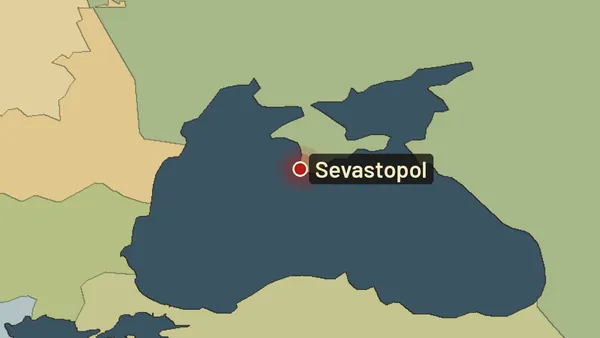
Several of these battles became founding moments of national memory: Gallipoli for Australia and New Zealand, Vimy Ridge in April 1917 for Canada. Against the Ottoman Empire, British and Indian forces suffered a humiliating surrender at Kut in April 1916, then took Baghdad in March 1917 and Jerusalem in December 1917, and broke the Ottoman front in Palestine at Megiddo in September 1918. In 1916 Britain also supported the Arab Revolt, while making contradictory commitments about the region's future, such as the Sykes–Picot agreement with France and the Balfour Declaration of 1917.
The war at sea and at home
The Royal Navy's main task was to keep the seas open for Britain and closed for Germany. Its distant blockade slowly strangled German imports. The only great fleet battle, Jutland on 31 May 1916, cost Britain more ships and men than Germany, but the German High Seas Fleet never seriously challenged British control of the North Sea again. The real danger came from below the surface: in early 1917 German U-boats were sinking ships faster than they could be replaced, until the introduction of convoys turned the tide.
At home the state took on powers unheard of before 1914. After a "shell crisis" in 1915, David Lloyd George became minister of munitions and reorganised war industry; hundreds of thousands of women went to work in factories. Lloyd George replaced Asquith as prime minister in December 1916. In Ireland, the Easter Rising of April 1916 was crushed, but the executions that followed helped turn Irish opinion towards independence. In 1918 the vote was extended to all adult men and to most women over 30.
Victory and its price
Britain finished the war on the winning side, with Germany's fleet surrendered and its colonies and much of the Ottoman Middle East coming under British control as League of Nations mandates. On paper the empire was larger than ever. But around 900,000 servicemen of the empire had died, Britain had sold overseas investments and borrowed heavily, especially from the United States, and the dominions and India came out of the war with a stronger sense of their own identity and new demands for self-government.
Did you know?
- King George V changed the royal family's German-sounding name, Saxe-Coburg and Gotha, to Windsor in 1917, during a wave of anti-German feeling.
- British daylight saving time ("summer time") was first introduced in 1916 as a wartime measure to save coal.
Britain in World Wars: 1914–20XX
Britain is one of the 26 states on the game's 1914 map, so you can lead it yourself, and its entry is in the in-game encyclopedia from the start. In the Historical (1914) scenario Britain enters the war through the invasion of Belgium on 4 August 1914: it declares war on Germany, joins the Entente, the Western Front opens and British war support rises. Later events, from Gallipoli and Jutland to the Somme, Kut, Baghdad and Jerusalem, put its global reach to the test.
In the Parallel Fronts scenario the same empire goes to war with aircraft carriers, bomber wings and armoured divisions, and the Royal Navy's command of the sea no longer guarantees safety from the air. Can you keep the sea lanes open and hold an empire together on every front?
▶ Play now Free in your browser, no download needed.
Further reading: Wikipedia (English)