World Wars: 1914–20XX
First World War (1914–1918)
Dreadnought battleships (1906–1918): the warships behind a naval race
When HMS Dreadnought slid into the water at Portsmouth in February 1906, she made every other battleship in the world, including Britain's own, second class overnight. Her design was simple in idea and radical in effect: one size of very big gun, and engines fast enough to choose the range of the fight. Within a few years every major navy was building "dreadnoughts", and the race between Britain and Germany to build the most of them became one of the great sources of tension before the First World War.
Why one big gun was better than many
Battleships at the turn of the century, later called pre-dreadnoughts, carried a mixture of guns: typically four heavy guns plus a large number of medium and small ones. That made sense when battles were expected at short range. But naval guns were getting more accurate, torpedoes forced fleets to fight further apart, and at long range a mixed armament was a handicap. Gunners aimed by watching where their shells splashed, and with several calibres firing at once it was almost impossible to tell whose splash was whose.
The Russo-Japanese War of 1904–1905, and especially the Japanese victory at Tsushima, seemed to confirm that heavy guns decided naval battles. Designers in several countries, including Italy, Japan and the United States, were moving towards the same answer. Britain got there first because of one forceful man: Admiral Sir John Fisher, who became First Sea Lord in 1904.
A ship built in a year
Dreadnought was built with extraordinary speed. Her keel was laid in October 1905, she was launched by King Edward VII on 10 February 1906 and she went to sea for trials that autumn. Material originally gathered for other ships helped make that possible.
She displaced about 18,000 tonnes and carried ten 12-inch guns in five turrets, so that she could fire eight of them on either side, roughly twice the broadside of an older battleship. She was also the first battleship driven by steam turbines rather than piston engines, giving her a speed of about 21 knots. Fisher pushed an even more extreme idea as well: the battlecruiser, with battleship guns but lighter armour and greater speed. The first, HMS Invincible, entered service in 1908.
The naval race
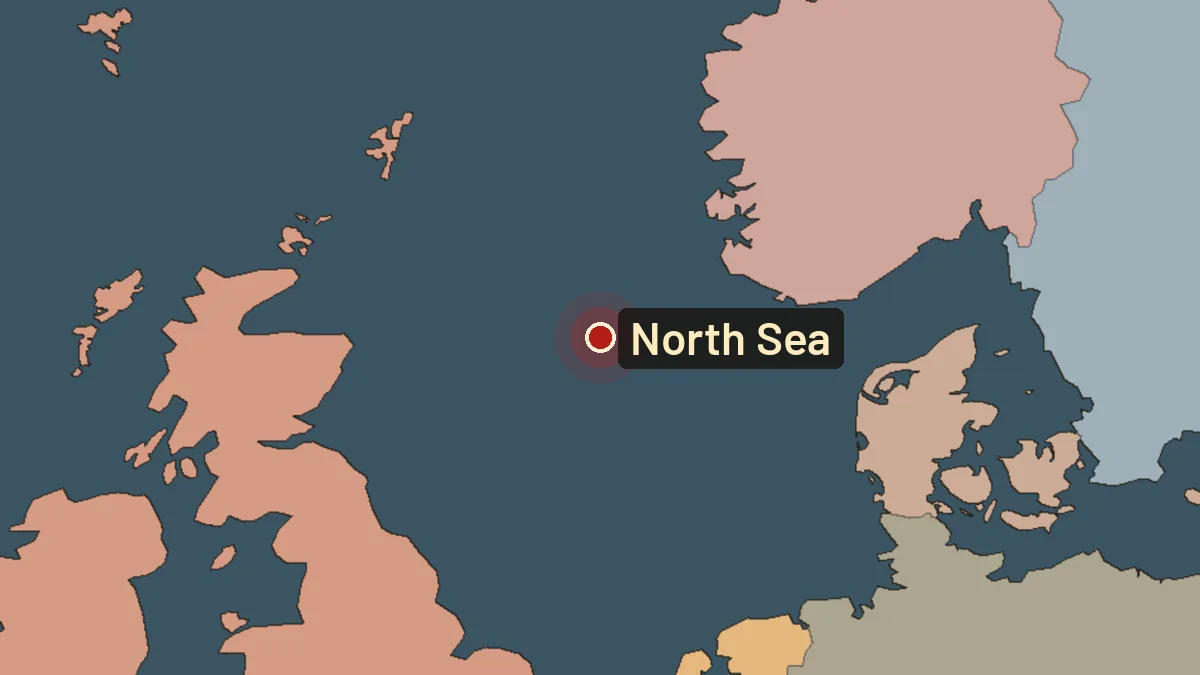
Dreadnought's success had an awkward side for Britain. By making older battleships obsolete, she wiped out much of the Royal Navy's huge lead and allowed rivals to start almost level. Germany was ready to try. Under Admiral Alfred von Tirpitz and with Kaiser Wilhelm II's enthusiastic support, a series of Navy Laws from 1898 onwards had already committed Germany to a large battle fleet. From 1906 it switched to dreadnoughts, and even widened the Kiel Canal so they could pass between the Baltic and the North Sea.
The British public watched the race closely. In 1909, amid fears that Germany was building secretly, the popular slogan "We want eight and we won't wait" pushed the government to order more ships. Each new class was bigger: "super-dreadnoughts" with 13.5-inch and then 15-inch guns followed, and the Queen Elizabeth class of 1913–1915 burned oil instead of coal. By 1914 Britain had kept a clear lead, but the cost had pushed it into closer understandings with France and Russia, and German hopes of matching Britain at sea had failed.
Smaller states joined in too. The Ottoman Empire ordered two dreadnoughts from British yards, Reşadiye and Sultan Osman I, paid for partly through public donations. In early August 1914, just as they were ready, Britain seized both for the Royal Navy. The anger this caused in Istanbul helped push the Ottomans towards Germany.
Dreadnoughts at war
Once war came, the dreadnought fleets were too valuable to risk lightly. Britain's Grand Fleet at Scapa Flow kept the German High Seas Fleet bottled up in the North Sea and enforced a blockade that slowly starved Germany. The two fleets met in full only once, at Jutland on 31 May and 1 June 1916. About 28 British battleships and 9 battlecruisers faced 16 German dreadnoughts, 6 older battleships and 5 battlecruisers. Three British battlecruisers blew up when shells reached their magazines, and the British lost more ships and roughly twice as many men, about 6,000 against about 2,500. Yet the German fleet returned to port and never again seriously challenged British control of the sea. Germany turned instead to the submarine.
After the war, the surrendered German fleet scuttled itself at Scapa Flow in June 1919, and the Washington Naval Treaty of 1922 limited the number and size of battleships the great powers could build. In the Second World War the aircraft carrier would replace the battleship as the queen of the seas.
Did you know?
- Dreadnought herself missed Jutland because she was in refit. Her only real combat success came in March 1915, when she rammed and sank the German submarine U-29.
- In 1910 a group of pranksters, among them the young Virginia Woolf, toured Dreadnought disguised as the visiting royal family of Abyssinia. The "Dreadnought hoax" embarrassed the Royal Navy for years.
- Sultan Osman I became HMS Agincourt, which carried fourteen 12-inch guns in seven turrets, more heavy turrets than any other battleship ever built.
Dreadnoughts in World Wars: 1914–20XX
The dreadnought has its own entry in the in-game encyclopedia, available from the start, so you can read about the naval race before the first shot is fired. In the Historical (1914) scenario the fleets clash at Jutland on 31 May 1916: both Britain and Germany lose ships, the British blockade of Germany takes hold, and Germany gains the option of unrestricted submarine warfare. The Jutland entry unlocks in the encyclopedia.
In the Parallel Fronts scenario there are aircraft above the fleets: the side that has aircraft carriers sees further, and the battleship's long reign may end decades early. Which will rule your seas?
▶ Play now Free in your browser, no download needed.
Further reading: Wikipedia (English)