World Wars: 1914–20XX
First World War (1914–1918)
Emperor Franz Joseph (1830–1916): the old monarch who went to war in 1914
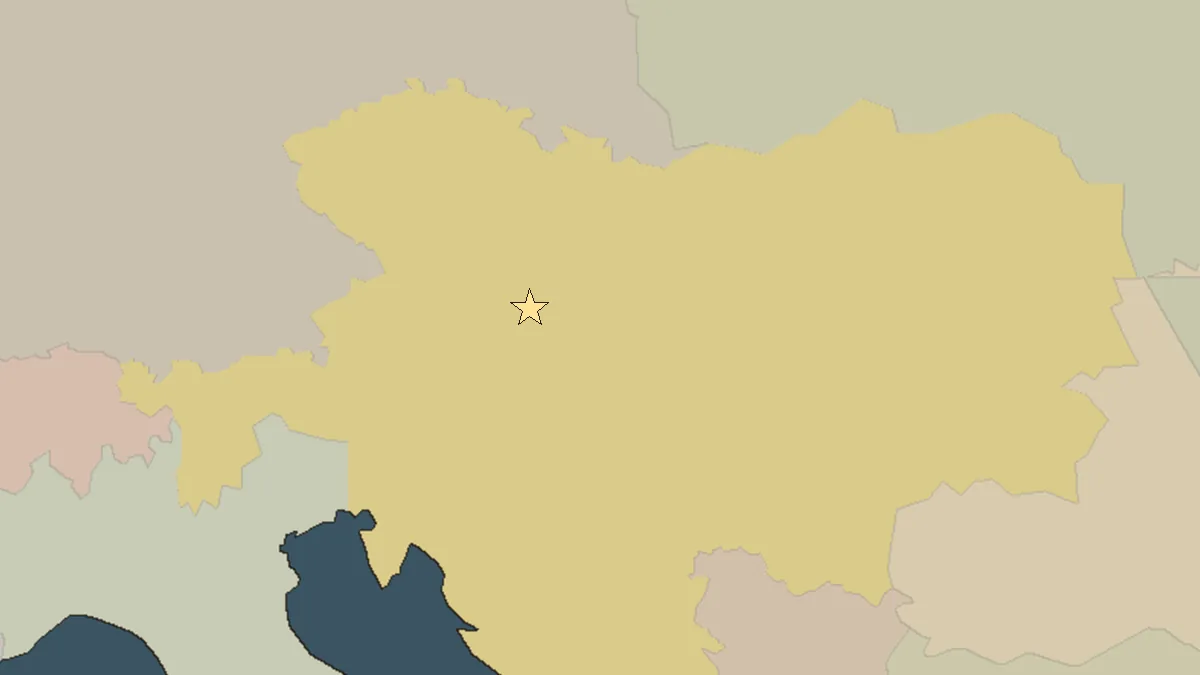
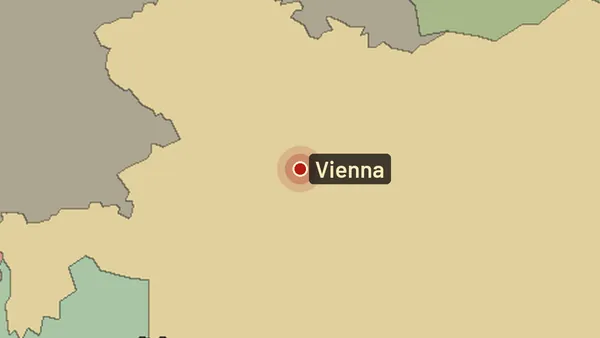
When Franz Joseph came to the throne in December 1848, the revolution of that year was still burning in Vienna and Budapest, and armies fought with muzzle-loading muskets. When he died in November 1916, his armies were fighting with machine guns, poison gas and aircraft in a world war that his own decision had helped to start. For 68 years he was the fixed point of a multinational empire of a dozen peoples, and for many of his subjects he was simply the only emperor they had ever known.
A throne won in revolution
Franz Joseph was born at Schönbrunn Palace in 1830, the eldest son of Archduke Franz Karl and the ambitious Archduchess Sophie. He was raised for rule, with a strict education in languages, law and above all military affairs. He wore uniform almost every day of his life.
The revolutions of 1848 shook the Habsburg monarchy to its foundations. The court fled Vienna, Hungary rose in revolt, and the weak-minded Emperor Ferdinand I was persuaded to abdicate. On 2 December 1848, at the age of eighteen, Franz Joseph became emperor. His early reign was one of restored order by force: Vienna was retaken, and the Hungarian revolution was crushed in 1849 with the help of a Russian army sent by Tsar Nicholas I. For a decade he ruled as an absolute monarch.
Defeats and the Compromise of 1867
The empire he inherited was a great power, but it lost two crucial wars within seven years. In 1859 France and Piedmont defeated Austria at Magenta and Solferino, and Lombardy was lost to the emerging Kingdom of Italy. In 1866 Prussia crushed the Austrian army at Königgrätz (Sadowa) in a war of only seven weeks. Austria was pushed out of German affairs, which Prussia under Otto von Bismarck would soon unite without it, and Venetia went to Italy.
Weakened, Franz Joseph made the most important political deal of his life. The Compromise (Ausgleich) of 1867 turned the empire into a dual monarchy: Austria-Hungary. Hungary received its own parliament and government, and Franz Joseph was crowned King of Hungary in Budapest. The two halves shared a monarch, an army, foreign policy and the finances to pay for them. The arrangement held for half a century, but it also gave the Hungarian elite a strong say over everything, and it left the empire's Slavic peoples, the Czechs, Poles, Croats, Serbs, Slovenes and others, feeling like second-class partners.
A life of private tragedy
Franz Joseph's private life became a byword for misfortune. His younger brother Maximilian, made Emperor of Mexico with French backing, was executed by a Mexican firing squad in 1867. His only son and heir, Crown Prince Rudolf, died with his young lover Mary Vetsera at the hunting lodge of Mayerling in 1889, in what is generally accepted as a murder-suicide. His wife, Empress Elisabeth, the restless and much-admired "Sisi", was stabbed to death by an Italian anarchist in Geneva in 1898. The emperor is said to have remarked that nothing in this world had been spared him.
The new heir was his nephew, Archduke Franz Ferdinand. The two men never got on. Franz Joseph disapproved of his nephew's marriage to the Czech countess Sophie Chotek, which he allowed only as a morganatic union whose children could not inherit the throne.
The road to war
In his later years Franz Joseph lived by an iron routine, rising before dawn and working through piles of documents at his desk. His foreign policy was cautious, with one major exception: in 1908 Austria-Hungary formally annexed Bosnia and Herzegovina, which it had occupied since 1878. The move enraged Serbia and Russia and left a lasting grievance in the Balkans.
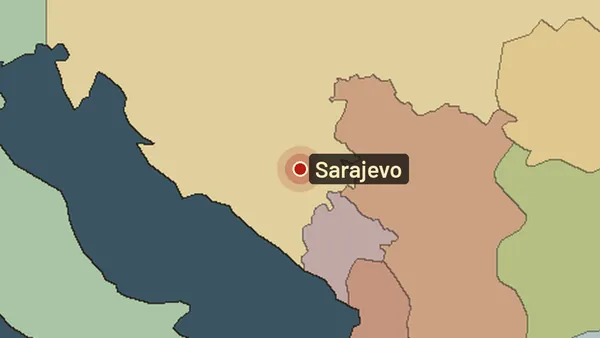
On 28 June 1914 Franz Ferdinand and Sophie were assassinated in Sarajevo by Gavrilo Princip, a young Bosnian Serb linked to a Serbian nationalist secret society. In Vienna, the foreign minister Count Leopold Berchtold and the chief of the General Staff, Franz Conrad von Hötzendorf, pressed for a war to crush Serbia once and for all. After Germany promised its full support, Franz Joseph agreed. A hard ultimatum went to Belgrade, and on 28 July 1914 the emperor signed the declaration of war at his summer residence in Bad Ischl. His manifesto "To My Peoples" presented the war as forced on the monarchy. Within a week Russia, Germany, France and Britain were at war too.
The old emperor did not live to see the end. Austria-Hungary's armies suffered huge losses against Russia in 1914 and 1915 and became more and more dependent on German help. Franz Joseph died of pneumonia at Schönbrunn on 21 November 1916, aged 86. His great-nephew Karl I tried in vain to find a way out of the war. Two years later the Habsburg monarchy, which had lasted more than six centuries, fell apart into new national states.
Did you know?
- Franz Joseph distrusted modern inventions. He is said to have disliked telephones, typewriters and electric light, and he preferred to write by hand.
- His famous side-whiskers made him instantly recognisable; images of the bearded emperor hung in offices, schools and inns across Central Europe.
- He fought Bismarck's Prussia in 1866, but by 1879 the two states had signed the Dual Alliance, which bound them together in 1914.
Franz Joseph in World Wars: 1914–20XX
Franz Joseph has his own entry in the in-game encyclopedia, available from the start of the game. When you play Austria-Hungary in the Historical (1914) scenario, his empire's crisis begins on day one: the assassination in Sarajevo on 28 June 1914 raises tension with Serbia and Russia and shakes Austro-Hungarian stability.
Exactly one month later the July Crisis event pauses the game and asks you to make Franz Joseph's choice: send the ultimatum and declare war on Serbia, or accept international mediation. Choose peace and history takes another path. Will you sign the declaration in Bad Ischl, or save the old emperor's monarchy from the war that destroyed it?
▶ Play now Free in your browser, no download needed.
Further reading: Wikipedia (English)