World Wars: 1914–20XX
First World War (1914–1918)
Ferdinand Foch: the Allied supreme commander who won the war in 1918
In March 1918 the German Spring Offensive tore a hole in the British line and threatened to split the British and French armies apart. In the crisis, the Allies did something they had avoided for nearly four years: they put one man in charge of all their armies on the Western Front. That man was Ferdinand Foch, a 66-year-old French general known for his energy and his faith in the attack. Within eight months the German army was in retreat and Germany had signed an armistice in Foch's own railway carriage.
The professor of the offensive
Foch was born in 1851 in Tarbes, in the foothills of the Pyrenees. He enlisted during the Franco-Prussian War of 1870–1871, too late to fight, and saw the humiliation of the defeat and the loss of Alsace-Lorraine, which shaped his whole career. He became an artillery officer and later one of the leading teachers at the École supérieure de guerre, the French staff college, which he went on to command.
His lectures, published as books, stressed morale, will and the offensive. Foch was not blind to the power of modern firepower, but his ideas were taken up by others in a cruder form, and French doctrine in 1914 put too much faith in attack at any cost. He was also a devout Catholic in an army where that could slow a career, and his promotion had stalled for a time before 1914.
1914–1917: rise and setback
At the outbreak of war Foch commanded the XX Corps near Nancy. Within weeks he was given the new Ninth Army, which held the centre of the French line at the Marne in September 1914 under heavy German attack in the marshes of Saint-Gond. A famous message from those days ("My centre is giving way, my right is retreating, situation excellent, I am attacking") is widely attributed to him, though its exact wording is doubtful. Its spirit fitted the man.
Joffre then sent him north to coordinate the French, British and Belgian forces during the "Race to the Sea" and the First Battle of Ypres, where his tact and drive impressed the British. He commanded Army Group North in 1915 and in the French part of the Battle of the Somme in 1916. When those costly battles brought little, he was sidelined at the end of 1916. In May 1917 he returned as Chief of the General Staff in Paris under the new commander-in-chief, Philippe Pétain, and in late 1917 he helped organise Allied help for Italy after the disaster of Caporetto.
Supreme commander
The German offensive of 21 March 1918 drove the British Fifth Army back dozens of kilometres. Pétain and the British commander Sir Douglas Haig each feared for their own front, and the gap between their armies grew. At a conference at Doullens on 26 March, with Prime Minister Georges Clemenceau and British leaders present, Foch was charged with coordinating the Allied armies. On 3 April he was given the strategic direction of operations, and on 14 April he became General-in-Chief of the Allied Armies in France, later joined by the Americans, Belgians and Italians.
Foch did not command in detail; he coordinated, persuaded and held a strategic reserve. Through a series of German blows in April, May and June, he refused to scatter his reserves and insisted on holding Amiens and the link between the British and French. When the Germans attacked across the Marne in July, he launched a counterattack on 18 July 1918 with French and American divisions and tanks, near Villers-Cotterêts. It was the turning point of the year. On 6 August he was made a Marshal of France.
The Hundred Days
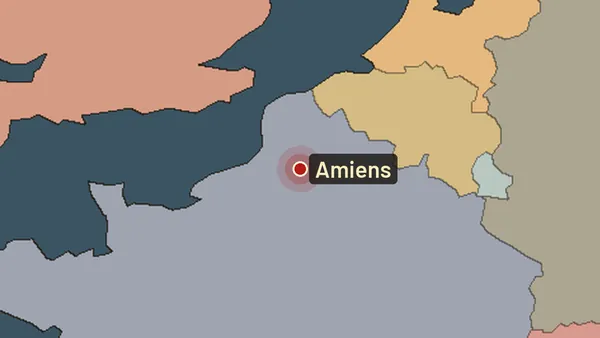
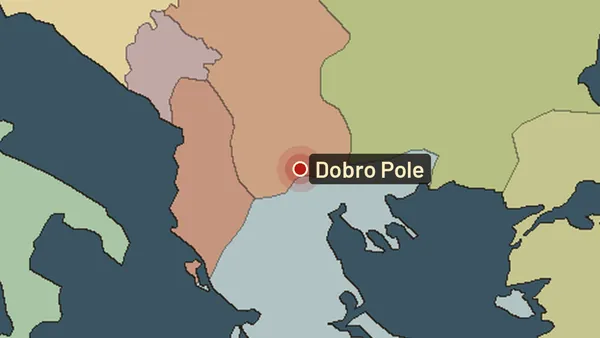
Foch's plan was to strike again and again at different points along the line, never giving the Germans time to recover. On 8 August the British, Australian, Canadian and French attack at Amiens, led by hundreds of tanks, began what became known as the Hundred Days Offensive. It was followed by attacks in Picardy, at Saint-Mihiel, in the Meuse-Argonne and in Flanders, and by the end of September the Allies had broken the Hindenburg Line. At the same time, the collapse of Bulgaria after the Allied breakthrough on the Macedonian front shook the Central Powers.
On 8 November 1918 German delegates met Foch in his railway carriage in the forest of Compiègne. The armistice was signed there in the early hours of 11 November and took effect at 11 o'clock that morning.
Foch wanted the peace to give France the Rhine as a military frontier. When the Treaty of Versailles fell short of that, he is reported to have said that it was not a peace but an armistice for twenty years. The remark is widely quoted, and the Second World War began almost exactly twenty years later.
Did you know?
- In June 1940 Hitler had the same railway carriage brought back to the same clearing at Compiègne so that France would sign its surrender there.
- Foch is buried in Les Invalides in Paris, near Napoleon.
Foch in World Wars: 1914–20XX
Foch has his own entry in the in-game encyclopedia, which unlocks with the Hundred Days Offensive. In the Historical (1914) scenario this begins at Amiens on 8 August 1918: German morale and support for the war fall sharply, and the Entente gains ground on the Western Front.
Leading France or Britain, you can test Foch's method yourself: keep a reserve, hold the line through the German storm, then attack in one sector after another. In the Parallel Fronts scenario, with armoured divisions and air wings from 1914, a breakthrough like Amiens can come years earlier, for either side. Will you be the one to dictate the armistice?
▶ Play now Free in your browser, no download needed.
Further reading: Wikipedia (English)