World Wars: 1914–20XX
First World War (1914–1918)
Wilson's Fourteen Points (1918): the American plan for peace
On 8 January 1918, nine months after the United States entered the First World War, President Woodrow Wilson stood before both houses of Congress and listed fourteen points for a just and lasting peace. The speech was short, idealistic and very public. It gave the Allies a programme that sounded like more than a fight for territory, it offered the peoples of the Central Powers a peace they might accept, and it set the terms of the debate that would dominate the peace conference in Paris a year later.
A war without stated aims
By the winter of 1917–1918 the war had lasted more than three years, and few governments had said clearly what they were fighting for. The Allies had made secret agreements among themselves, promising territory to Italy, Russia and others in exchange for their support. In November 1917 the Bolsheviks seized power in Russia, opened peace talks with Germany and published the tsarist government's secret treaties for the whole world to read. The revelations embarrassed Britain and France and strengthened the Bolshevik call for a peace "without annexations or indemnities".
Wilson wanted to answer that call with a liberal alternative and to keep Russia in the war if he could. Since the autumn of 1917 a group of scholars and experts known as the Inquiry, organised by his close adviser Colonel Edward House, had been studying the borders, peoples and economies of Europe and the Middle East. Their memoranda became the raw material of the speech. Only three days earlier, on 5 January, the British prime minister David Lloyd George had given his own statement of war aims, and Wilson's address went further.
The fourteen points
The first five points were general principles. Wilson called for "open covenants of peace, openly arrived at", meaning an end to secret treaties; freedom of navigation on the seas in peace and war; the removal of economic barriers to trade; the reduction of national armaments; and a fair settlement of colonial claims in which the interests of the colonial peoples would carry weight.
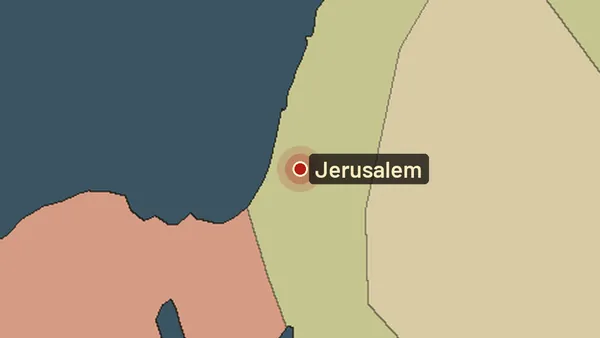
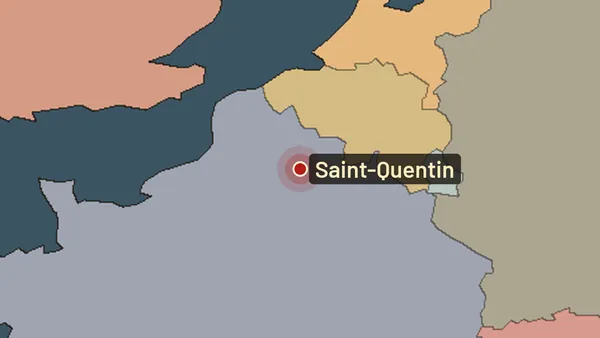
The next eight points dealt with specific places. Russian territory was to be evacuated and Russia left free to choose its own political path. Belgium was to be evacuated and restored. French territory was to be freed and the "wrong" done to France over Alsace-Lorraine in 1871 righted. Italy's frontiers were to follow clear lines of nationality. The peoples of Austria-Hungary were to have the chance of autonomous development. Romania, Serbia and Montenegro were to be evacuated, and Serbia given access to the sea. The Turkish parts of the Ottoman Empire were to keep secure sovereignty, while the other nationalities under Ottoman rule were promised autonomous development, and the Dardanelles were to be permanently opened to ships of all nations. An independent Poland was to be created with secure access to the sea.
The fourteenth point was the one Wilson cared about most: a general association of nations that would guarantee the independence and territory of great and small states alike. It became the League of Nations.
From speech to armistice
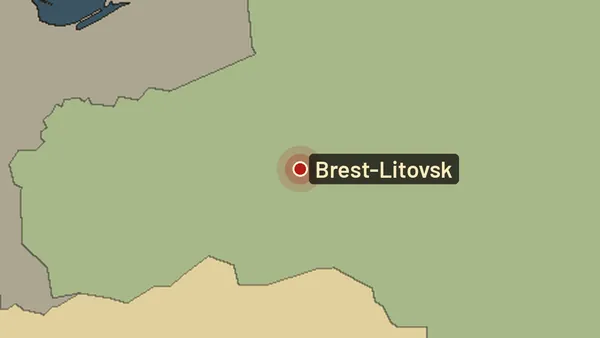
At first the Central Powers rejected the programme. Germany, about to impose the harsh Treaty of Brest-Litovsk on Russia, still expected to win in the west. The Allies, for their part, never formally adopted all fourteen points, and Britain in particular objected to freedom of the seas, which threatened its use of naval blockade.
By the autumn of 1918 everything had changed. With its armies retreating and its allies collapsing, the new German government of Prince Max of Baden sent a note to Wilson on the night of 3–4 October asking for an armistice on the basis of the Fourteen Points. Austria-Hungary made a similar request. In a series of notes Wilson made clear that he would deal only with a government that represented the German people, and he told Vienna that autonomy was no longer enough, because the United States had recognised the Czechoslovak national council. In early November the Allies agreed to make peace on the basis of the points, with two reservations: freedom of the seas was left open, and Germany would have to pay compensation for damage done to civilians.
Ideals and disappointment
Many Germans later believed they had laid down their arms in exchange for a "Wilson peace" and that the Treaty of Versailles betrayed it. The treaty did contain Wilsonian elements, above all the League of Nations, an independent Poland and new states built on nationality, but it also imposed reparations, disarmament and territorial losses on Germany alone.
Elsewhere the idea of self-determination travelled far beyond Europe. Nationalists from Egypt to Korea and India appealed to Wilson in 1919, and most were disappointed when the victors redrew the colonial map in their own interest. In the Ottoman lands, the twelfth point was widely discussed after the armistice of 1918. At home, Wilson suffered the hardest blow: the US Senate refused to ratify the Treaty of Versailles, and the United States never joined the League it had inspired. Wilson received the Nobel Peace Prize for 1919.
Did you know?
- The French prime minister Georges Clemenceau is said to have remarked that God had needed only ten commandments while Wilson needed fourteen. The joke is widely attributed to him, though it may be apocryphal.
- Wilson was the first sitting US president to travel to Europe while in office, when he sailed to the Paris Peace Conference in December 1918.
The Fourteen Points in World Wars: 1914–20XX
In the Historical (1914) scenario the Fourteen Points arrive on 8 January 1918. The United States is not on the game's 1914 map, but its president's words still cross the Atlantic: war support falls in Germany, Austria-Hungary, Bulgaria and the Ottoman Empire, with the Habsburg monarchy hit hardest, as the hope of a just peace weakens the will to keep fighting.
For a Central Powers player this is a warning sign. Early 1918 is the moment to hold your home front together and decide whether to gamble on one last offensive in the west. Can you keep your people in the war longer than the Kaiser's government did?
▶ Play now Free in your browser, no download needed.
Further reading: Wikipedia (English)