World Wars: 1914–20XX
First World War (1914–1918)
German Spring Offensive (1918): Ludendorff's last gamble in the west
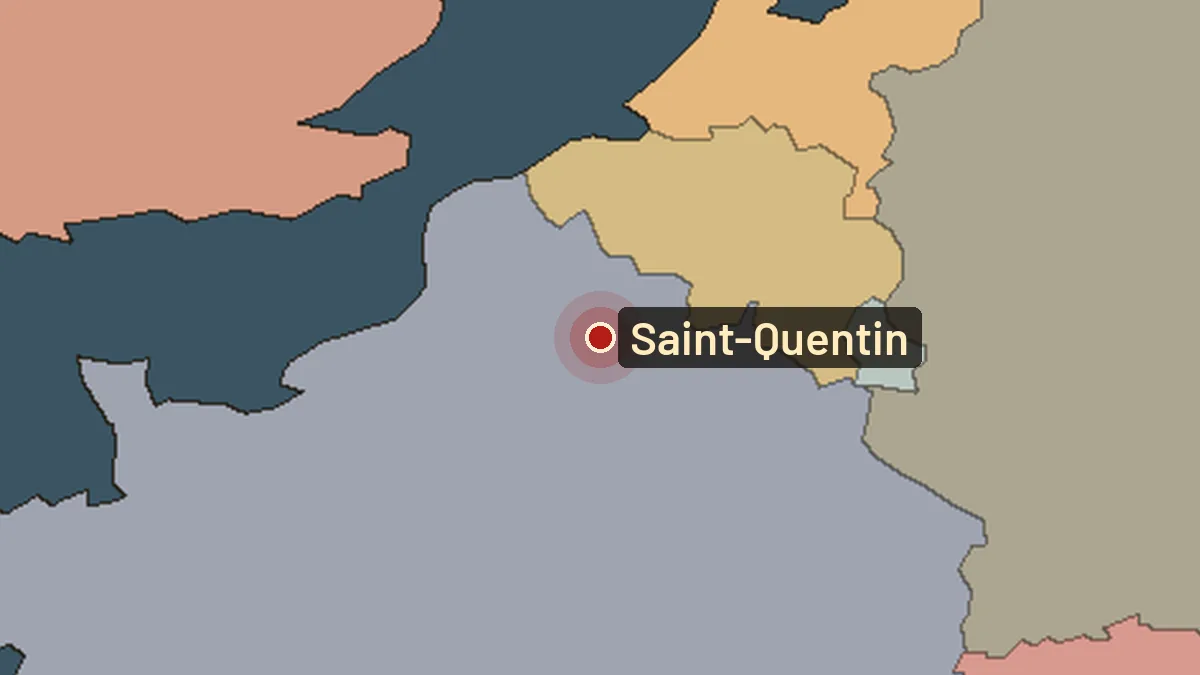
On the foggy morning of 21 March 1918, thousands of German guns opened fire along some 80 kilometres of the British front near Saint-Quentin. Within hours German assault troops were behind the British lines, and within days they had advanced further than any army on the Western Front since 1914. It was the opening of the Kaiserschlacht, the "Kaiser's Battle", Germany's last attempt to win the First World War before American soldiers arrived in overwhelming numbers. Over four months it came closer to success than any offensive since the Marne, and it ended by breaking the German army itself.
A race against time
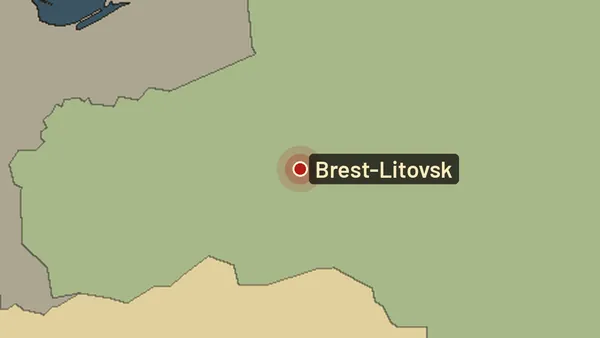
At the start of 1918 the German high command, led in practice by General Erich Ludendorff under Field Marshal Paul von Hindenburg, faced a simple calculation. Russia was out of the war, and the Treaty of Brest-Litovsk allowed dozens of divisions to move west, giving Germany a brief numerical advantage on the Western Front. But the United States had declared war in April 1917, and by the summer of 1918 its troops would be arriving by the hundreds of thousands. At home the British blockade was starving German cities, and Germany's allies were close to exhaustion. If Germany was going to win, it had to do so in the spring.
Ludendorff chose to strike the British first, believing that if they were driven back towards the Channel ports, France would not fight on alone. He trained selected units as stormtroopers: small, heavily armed groups that infiltrated through weak points, bypassed strongpoints and kept moving, leaving those to follow-up waves. The artillery planned by Colonel Georg Bruchmüller fired a short, intense bombardment with large amounts of gas instead of a week-long barrage that would warn the enemy. Ludendorff's approach is summed up in a remark attributed to him: punch a hole, and the rest will follow.
Operation Michael
The first and largest blow, Operation Michael, fell on the British Fifth Army under General Hubert Gough and part of the Third Army. Fog hid the attackers, the British defences in depth were incomplete, and the Fifth Army's front collapsed. Tens of thousands of British soldiers were taken prisoner on the first day alone. In two weeks the Germans advanced up to about 60 kilometres across the old Somme battlefield.
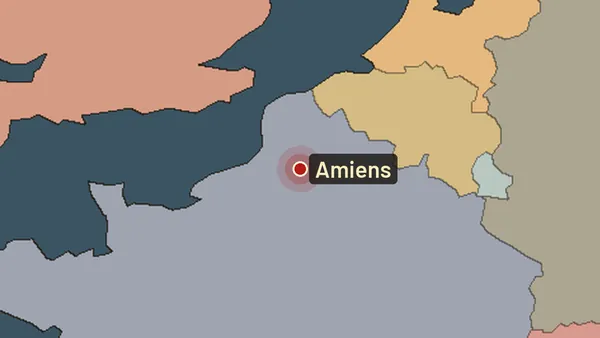
The crisis forced the Allies to do what they had avoided for three and a half years. At a conference at Doullens on 26 March, the French general Ferdinand Foch was given the task of coordinating the Allied armies; within weeks he became supreme commander. British and French reserves held the line in front of Amiens, a vital rail junction, and the German advance slowed as its troops outran their supplies and stopped to loot well-stocked British depots. By early April Michael had run out of strength.
The Lys, the Aisne and the Marne
Ludendorff struck again on 9 April in Flanders, on the river Lys. A Portuguese division holding part of the line was overrun, and the Germans took ground that had cost the Allies months of fighting the year before. On 11 April Field Marshal Douglas Haig issued his famous order telling his men that with "backs to the wall" each of them must fight on to the end. The line held in front of Hazebrouck and the Channel ports.
On 27 May Germany attacked the French on the Chemin des Dames ridge, on the Aisne. The defenders had packed too many men into the front line, and the Germans advanced around 50 kilometres in a few days, reaching the Marne at Château-Thierry, less than 100 kilometres from Paris. American divisions now entered the fighting, at Château-Thierry and in Belleau Wood in June. Meanwhile a giant German railway gun, the "Paris Gun", had been shelling the French capital from more than 100 kilometres away since 23 March.
Two more attacks followed, on the Matz in June and on both sides of Reims from 15 July. The second was met by a French defence that had learned from May, and on 18 July French and American troops counter-attacked on the German flank at Soissons. The Second Battle of the Marne had begun, and the initiative passed to the Allies for the rest of the war.
Why it failed
On the map the Spring Offensive looked like a triumph: Germany had taken more ground than either side had won in the west since 1914. But the gains were bulges in the line that were longer and harder to defend, across devastated land, and none of them contained a strategic objective such as Amiens, the Channel ports or Paris. The stormtroop units that had led every attack had suffered terrible losses and could not be replaced, while American soldiers were landing in France at a rate of more than 200,000 a month by the summer.
The German army was also worn out in spirit. Influenza spread through the ranks, rations were poor, and desertion and straggling rose. When the Allies struck back at Amiens on 8 August, the army that had seemed on the edge of victory in March began a retreat that ended only with the armistice.
Did you know?
- The Paris Gun's shells rose some 40 kilometres into the stratosphere, higher than anything people had ever sent before. On Good Friday, 29 March 1918, one shell hit the church of Saint-Gervais in Paris during a service, killing around 90 people.
- Manfred von Richthofen, the "Red Baron", was shot down and killed over the Somme on 21 April 1918, during the fighting that followed Operation Michael.
The Spring Offensive in World Wars: 1914–20XX
In the Historical (1914) scenario the Spring Offensive opens on 21 March 1918 and runs until July. Germany gains ground on the Western Front, but all three main armies involved, German, British and French, suffer very heavy manpower losses. The Spring Offensive entry unlocks in the in-game encyclopedia.
As in 1918, the setup matters: if Russia has signed the Treaty of Brest-Litovsk, German units freed in the east can be shifted to the Western Front before the blow falls. Playing Germany, can you use that window better than he did and reach Amiens or Paris? Playing Britain or France, can you hold until the Americans arrive?
▶ Play now Free in your browser, no download needed.
Further reading: Wikipedia (English)
 Erich Ludendorff
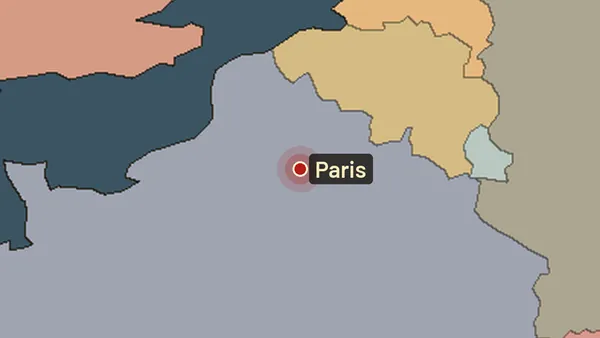 The Paris Gun