World Wars: 1914–20XX
First World War (1914–1918)
Erich Ludendorff (1865–1937): the general who ran Germany's war
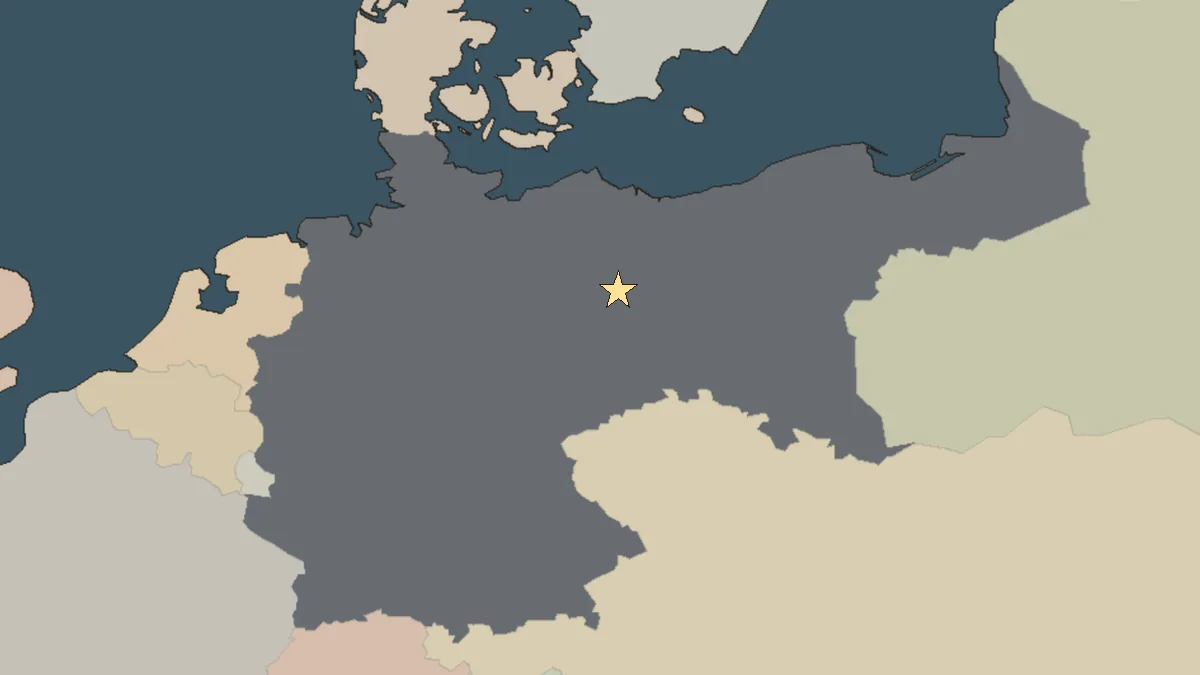
For the last two years of the First World War, the most powerful man in Germany was not the Kaiser or the chancellor but a general with the modest title of First Quartermaster General. Erich Ludendorff planned the victories on the Eastern Front, drove Germany's war economy and foreign policy, and in March 1918 launched the offensive that was meant to win the war before the Americans arrived. When it failed, he was the first to tell the government that the war was lost, and then spent the rest of his life blaming others for it.
A staff officer without a pedigree
Ludendorff was born in 1865 in the Prussian province of Posen, the son of a landowner of modest means. Unlike most senior Prussian officers he had no "von" in his name, and he rose through sheer work and ability. He joined the Great General Staff, where he became head of the deployment section and helped refine the war plan against France. Before 1914 he argued hard for a larger army, which made him enemies in the War Ministry and earned him a posting away from Berlin.
Liège and Tannenberg
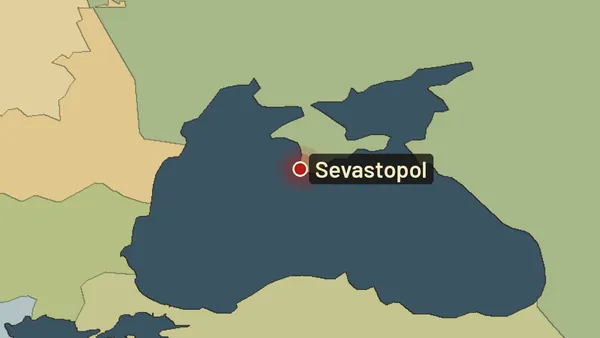
When the war began in August 1914, Ludendorff was a staff officer with the force sent to seize the Belgian fortress city of Liège, the gateway for the German invasion. When the commander of one brigade was killed, Ludendorff took it over, led it into the city and accepted the surrender of the citadel. He was awarded Prussia's highest order, the Pour le Mérite.
Days later he was sent east as chief of staff of the Eighth Army in East Prussia, under the recalled veteran Paul von Hindenburg. Together, and building on plans already drafted by the staff officer Max Hoffmann, they encircled and destroyed the Russian Second Army at Tannenberg between 26 and 30 August 1914, and then pushed the Russian First Army back at the Masurian Lakes. The partnership was set: Hindenburg the calm figurehead, Ludendorff the tireless, nervous planner behind him.
Running Germany's war
In August 1916 Hindenburg became chief of the General Staff, and Ludendorff came with him with the new title of First Quartermaster General. Their Supreme Army Command (OHL) soon pushed far beyond military matters. They organised the economy for total war, supported the resumption of unrestricted submarine warfare in February 1917 despite the risk of bringing the United States into the war, and helped bring down Chancellor Bethmann Hollweg. After the Bolshevik revolution they imposed the harsh Treaty of Brest-Litovsk on Russia in March 1918, which gave Germany control over huge territories in the east.
The last gamble of 1918
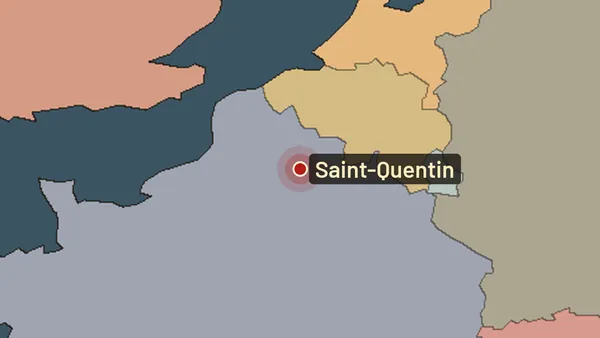
With Russia out of the war, dozens of German divisions could move west. The United States had entered the war in April 1917, and Ludendorff knew that once its army arrived in strength, Germany could not win. He decided to strike first. On 21 March 1918 Operation Michael opened against the British near Saint-Quentin after a short, intense bombardment planned by the artillery expert Georg Bruchmüller. Specially trained storm troops bypassed strongpoints and infiltrated deep into the British positions.
It was the greatest advance on the Western Front since 1914: the Germans gained up to about 60 kilometres in places, and a giant long-range gun shelled Paris from more than 100 kilometres away. Further offensives followed in Flanders in April and on the Aisne in May, which brought German troops back to the Marne. But Ludendorff never fixed a clear strategic goal. The attacks took ground of little value, the exhausted infantry outran its supplies, and Germany lost several hundred thousand of its best soldiers. Both sides suffered very heavy losses, but only the Allies could replace theirs.
In July the French counter-attacked on the Marne, and on 8 August British, Canadian, Australian and French troops struck at Amiens with hundreds of tanks. Ludendorff called it "the black day of the German army". At the end of September, with Bulgaria collapsing and the Hindenburg Line under attack, he told the government that Germany must seek an armistice at once.
Fall and later years
When the government began negotiating with President Wilson, Ludendorff changed his mind and wanted to fight on. He was dismissed on 26 October 1918. After the revolution in November he fled to neutral Sweden for a few months, reportedly in disguise.
Back in Germany he became one of the loudest voices of the "stab-in-the-back" myth, which claimed the army had been betrayed by politicians, socialists and Jews rather than beaten in the field. He backed the failed Kapp Putsch in 1920 and marched beside Adolf Hitler in the Munich Beer Hall Putsch of November 1923, for which he was tried and acquitted. Standing as the Nazi candidate in the 1925 presidential election, he won only about one per cent of the vote, while his old partner Hindenburg won the presidency. He spent his last years writing conspiracy-laden books with his second wife, Mathilde, and in 1935 published "Der totale Krieg" (Total War). He died in 1937.
Did you know?
- Ludendorff is credited with popularising the term "total war", the title of his 1935 book, for a war in which a nation's entire economy and population serve the fighting.
- Unlike most German generals of his rank, he was not born a noble, and he never received a "von".
- The German offensives of spring 1918 were all given code names; the first was Michael, after Germany's patron saint, the second Georgette.
Ludendorff in World Wars: 1914–20XX
In the Historical (1914) scenario Ludendorff's great gamble, the German Spring Offensive, arrives on 21 March 1918. Germany gains ground on the Western Front, but Germany, Britain and France all suffer heavy manpower losses. Ludendorff's entry unlocks in the in-game encyclopedia that day, together with the entries on the Spring Offensive and the Paris Gun.
If you lead Germany, you face his dilemma long before 1918: how to win a two-front war before your enemies' greater resources tell. In the Parallel Fronts scenario, where engines and aircraft matured decades early, a breakthrough like Michael can be exploited with armoured divisions instead of tired infantry on foot. Can you succeed where Ludendorff failed?
▶ Play now Free in your browser, no download needed.
Further reading: Wikipedia (English)
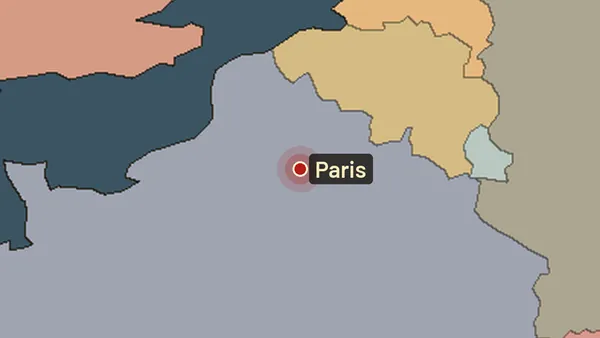 The Paris Gun