World Wars: 1914–20XX
First World War (1914–1918)
The Paris Gun (1918): Germany's giant cannon that shelled Paris from 120 km
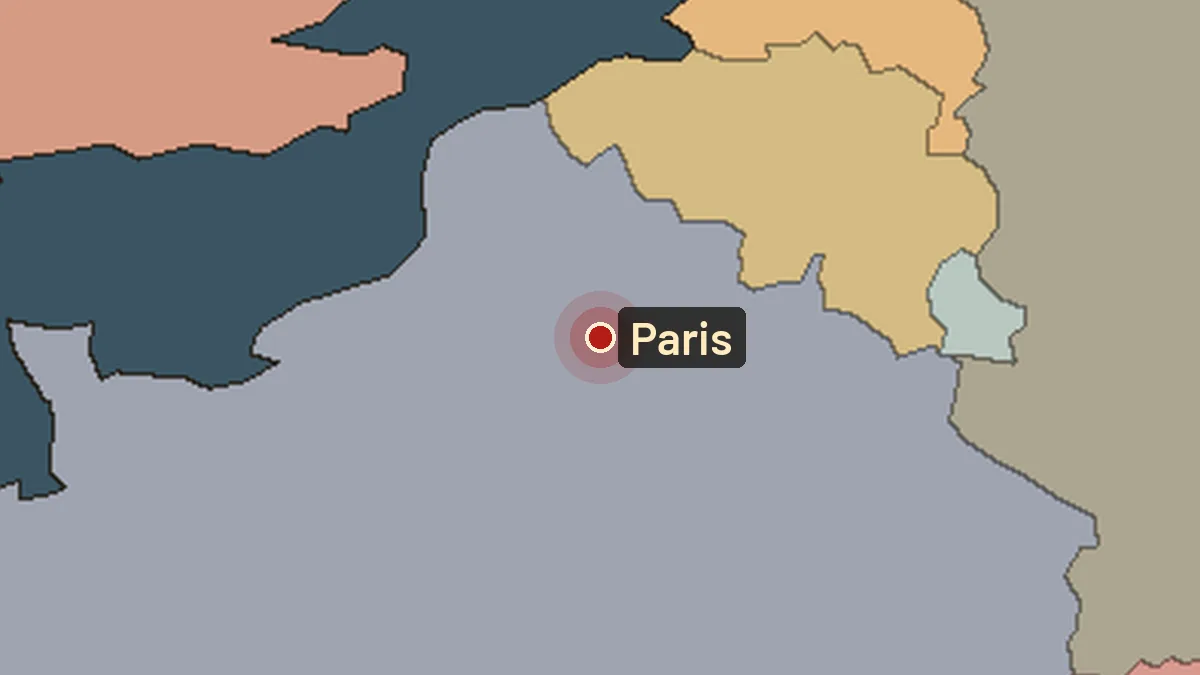
On the morning of 23 March 1918 an explosion shook the Quai de Seine in north-east Paris. Then another, and another, about every quarter of an hour. No aircraft could be seen, and the front was far away. Parisians first suspected bombs from very high-flying aircraft. In fact the shells came from a German gun hidden in a forest more than 120 kilometres away, the longest-range artillery piece of the war. Its military value was small, but it became one of the most remarkable technical feats of the First World War.
Why build such a gun?
By early 1918 Germany had made peace with Soviet Russia and moved dozens of divisions to the west. The Supreme Army Command under Paul von Hindenburg and Erich Ludendorff planned a great Spring Offensive to win the war before American troops arrived in strength. Alongside the attack itself, they wanted to strike at French morale by bringing the war to Paris.
Bombers could reach the city, but the defences were growing stronger. A gun that could fire on Paris from behind the German lines, day and night, beyond the reach of any French counter-battery fire, promised a new kind of pressure. The Krupp company in Essen, Germany's great arms maker, took on the task, with Professor Fritz Rausenberger leading the design.
A gun that fired into the stratosphere
The Paris Gun was really a very long naval gun barrel mounted on a massive fixed carriage. Its barrel was about 34 metres long, so long that it sagged under its own weight and had to be held straight by a system of cables, like a bridge. It fired shells of about 210 millimetres and around 100 kilograms, small for such a giant, pushed by a huge propellant charge.
The trick was altitude. Fired at a steep angle of about 50 degrees, each shell climbed some 40 kilometres into the stratosphere, where the air is so thin that it meets very little resistance. That allowed it to fly about three times further than it could have in thick air. A shell took around three minutes to reach Paris. The gunners had to allow for the rotation of the earth and other effects that ordinary artillery could ignore.
Each shot wore away the inside of the barrel, so the shells were numbered and made slightly wider in sequence, and each needed its own carefully measured charge. After around 60 shots a barrel had to go back to Krupp to be bored out to a larger calibre. The guns were operated by German Navy gunners, experts in long-range firing, under the command of a naval officer.
Shelling Paris
The first gun opened fire on 23 March 1918 from a wooded hill near Crépy, north-west of Laon, just two days after the Spring Offensive began. Over the next months three guns were used from several positions, moving closer as the German front advanced. In all, about 350 shells were fired at Paris between March and August 1918.
The worst single hit came on Good Friday, 29 March 1918, when a shell struck the church of Saint-Gervais during a service. Part of the roof collapsed onto the worshippers, killing some 90 people. Overall the gun killed roughly 250 people and wounded more than 600, almost all civilians.
The shells were too few and too scattered to cause serious military damage, and the gun could not be aimed at any particular target beyond the city as a whole. Some Parisians left the city, especially as the German armies also came close in the spring, but the city did not panic. The last shots were fired in August 1918, as the Allied counteroffensive pushed the Germans back.
What became of it
As the front collapsed, the Germans withdrew the guns to Germany. None was captured, and the guns, their plans and their special equipment seem to have been destroyed before Allied inspectors could find them, so many details are still uncertain. The idea of super-long-range artillery lived on, in Germany's huge railway guns of the Second World War and later experiments in firing shells to great altitudes. But the future of long-range bombardment belonged to aircraft and, after 1944, to rockets.
Did you know?
- The Paris Gun is often confused with "Big Bertha", a much shorter 42-centimetre Krupp howitzer used against Belgian forts in 1914. The two were completely different weapons.
- Because the French at first could not believe a gun could reach so far, early reports blamed the explosions on aircraft flying out of sight.
The Paris Gun in World Wars: 1914–20XX
In the Historical (1914) scenario the Paris Gun is tied to the German Spring Offensive, which opens on 21 March 1918. Germany gains ground on the Western Front, the largest advance there since 1914, but Germany, Britain and France all suffer heavy manpower losses. The Paris Gun entry unlocks in the in-game encyclopedia with this event.
In the Parallel Fronts scenario, where bomber wings have flown since 1914, Paris can be reached from the air long before 1918, and a giant cannon looks like an answer to a problem air power had already solved. Play both scenarios and see how the same war changes when the technology does.
▶ Play now Free in your browser, no download needed.
Further reading: Wikipedia (English)
 Erich Ludendorff