World Wars: 1914–20XX
First World War (1914–1918)
The German Empire in World War I (1914–1918): power, blockade and collapse
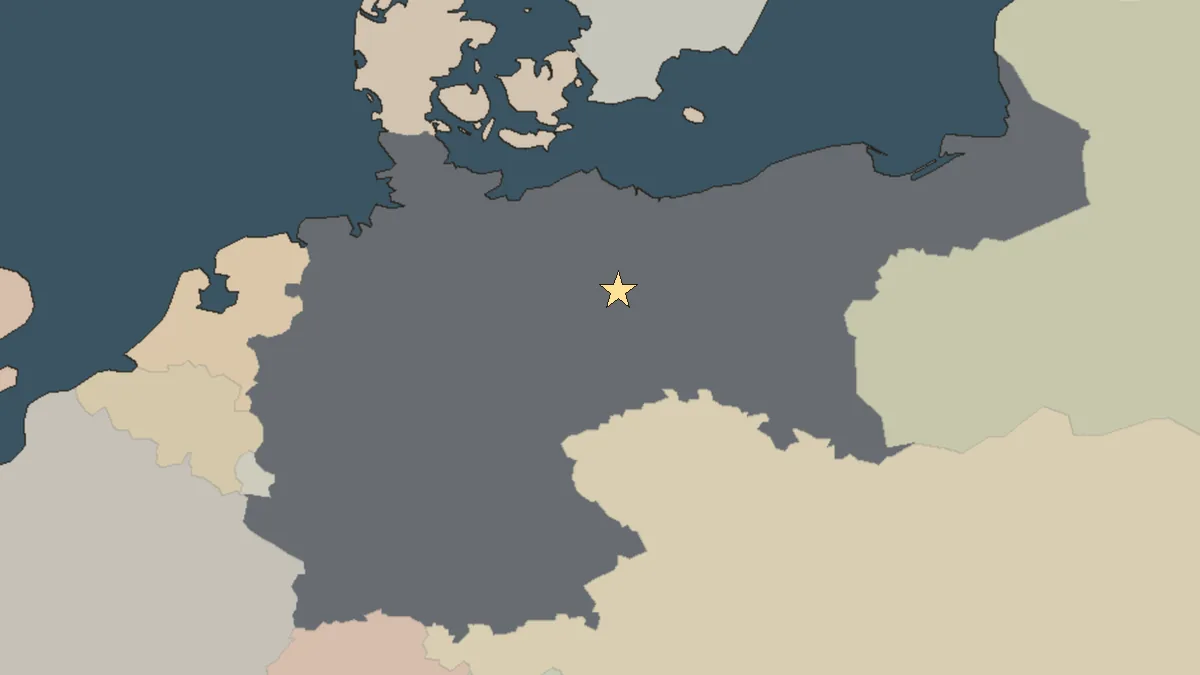
The German Empire was only 43 years old when the First World War began, yet it was already the most powerful state on the European continent. It had the best-trained army in the world, the second-largest navy, and industries that outproduced Britain in steel and led the world in chemicals. For four years it fought enemies on every side and often seemed close to victory. In November 1918 it collapsed from within, and the empire founded in 1871 disappeared with its Kaiser.
A young empire in a hurry
The empire was proclaimed on 18 January 1871 in the Hall of Mirrors at Versailles, at the end of Prussia's victorious war against France. It was a federation of kingdoms, duchies and free cities under the King of Prussia as German Emperor, guided for its first two decades by Chancellor Otto von Bismarck. Its parliament, the Reichstag, was elected by all adult men, but the government answered to the Kaiser, not to parliament, and the army stood largely outside civilian control.
The decades after unification brought an economic transformation. Coal from the Ruhr and Silesia fed steel mills, electrical firms such as Siemens and AEG and chemical giants such as BASF and Bayer. Cities grew rapidly, and the Social Democratic Party, which represented the growing working class, became the largest party in the Reichstag in 1912.
Under Wilhelm II, who came to the throne in 1888, Germany sought a "place in the sun": colonies in Africa and the Pacific and a battle fleet to rival Britain's. The naval race pushed Britain towards France and Russia. By 1914 German leaders felt encircled, with only Austria-Hungary as a reliable ally.
Two fronts
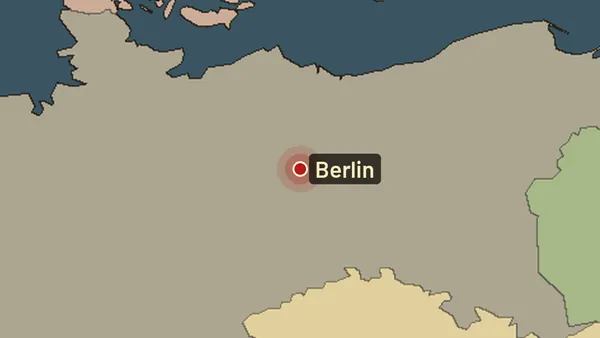
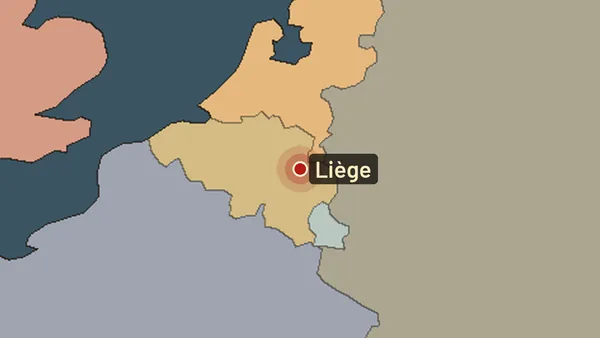
When the July Crisis came, Germany backed Austria-Hungary against Serbia and then declared war on Russia on 1 August 1914 and on France on 3 August. Its war plan required a fast victory in the west through neutral Belgium, which brought Britain into the war. The advance was stopped at the Marne in September 1914, and by the end of the year the Western Front was a line of trenches from the North Sea to Switzerland.
In the east things went better. At Tannenberg in August 1914 Paul von Hindenburg and Erich Ludendorff destroyed a Russian army, and in 1915 German and Austro-Hungarian forces drove the Russians out of Poland. German help kept Austria-Hungary in the war, conquered Serbia and Romania and held the Ottoman Empire's straits at Gallipoli.
In the west, 1916 brought the two great battles of attrition. At Verdun the chief of staff Erich von Falkenhayn tried to bleed the French army white and bled his own as well. On the Somme the British and French attacked for four and a half months. Together the two battles cost Germany well over half a million casualties. In August 1916 Hindenburg and Ludendorff took over the Supreme Army Command and became the real rulers of Germany.
The home front
The war was fought by the whole society. Over the course of the war more than 11 million men served in the German army. Women replaced men in factories, and the economy was reorganised for war production. The chemist Fritz Haber had developed a process to make ammonia from the nitrogen in the air, and its industrial use meant that Germany could keep making explosives and fertiliser despite the loss of imports, and he also led the German poison gas programme, first used on a large scale at Ypres in April 1915.
The British naval blockade struck hardest. Food imports dried up, the harvest of 1916 failed and the winter of 1916–17 became the "turnip winter", when many families lived on turnips. Malnutrition weakened the population, and estimates of civilian deaths linked to the blockade run to hundreds of thousands. To break the blockade, Germany resumed unrestricted submarine warfare in February 1917, which brought the United States into the war.
The last gamble and collapse
The Russian revolution gave Germany a last chance. The Treaty of Brest-Litovsk in March 1918 freed troops in the east, and on 21 March Ludendorff launched a series of great offensives in the west. They gained more ground than any attacks since 1914 but failed to break the Allied line, and they exhausted the army. From August the Allies, now reinforced by the Americans, pushed the Germans back step by step.
At the end of September Ludendorff told the government that the war was lost and an armistice was needed. At the end of October sailors of the High Seas Fleet refused to sail on a last sortie, and from Kiel in early November revolution spread through German cities. On 9 November the Kaiser's abdication was announced and a republic proclaimed in Berlin; two days later Germany signed the armistice. Because the army was still on foreign soil when the fighting stopped, many Germans found the defeat hard to accept, and nationalists spread the myth that the army had been "stabbed in the back" at home. The Treaty of Versailles in 1919 cost Germany territory, its colonies and most of its army.
Did you know?
- The German commander in East Africa, Paul von Lettow-Vorbeck, kept fighting a guerrilla campaign throughout the war and only surrendered on 25 November 1918, two weeks after the armistice.
- The word "ersatz", meaning a substitute, entered other languages from wartime Germany, where shortages led to ersatz coffee, ersatz bread and many other replacements.
The German Empire in World Wars: 1914–20XX
The German Empire is one of the 26 states you can lead from 28 June 1914, and its entry in the in-game encyclopedia is available from the start. In the Historical (1914) scenario you declare war on Russia and France on 1 August 1914, and the invasion of Belgium brings Britain in. The Marne turns the west into trench warfare, Verdun costs both sides huge manpower, Jutland locks in the British blockade, and in 1917 you decide whether to unleash unrestricted submarine warfare. In November 1918 the armistice event lets you sign or fight on.
In the Parallel Fronts scenario, with armoured divisions and air wings, nothing forces you to stop at the Marne. Can you win the short war the German General Staff planned in 1914?
▶ Play now Free in your browser, no download needed.
Further reading: Wikipedia (English)