World Wars: 1914–20XX
First World War (1914–1918)
Heavy artillery in World War I: the greatest killer of the war
Most soldiers who died in the First World War were not killed by bullets. They were killed by shells: blown apart, buried alive in collapsing trenches or cut down by flying steel splinters, often by guns several kilometres away that they never saw. Artillery shaped the landscape of the Western Front into a moonscape of craters, decided whether attacks succeeded or failed, and drove the industries of every warring nation. It is fair to call it the greatest killer of the war.
1914: fortresses fall
Before the war, Europe's strongest defences were rings of concrete and steel forts around cities such as Liège, Namur, Verdun and Przemyśl. Germany and Austria-Hungary had prepared an answer. Krupp had built a few enormous 42-centimetre howitzers, nicknamed "Big Bertha" (Dicke Bertha), which fired shells weighing around 800 kilograms. Škoda in Bohemia had produced a more mobile 30.5-centimetre mortar.
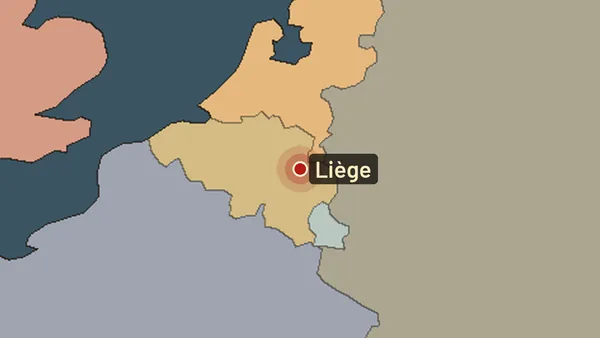
In August 1914 these siege guns were brought up against the forts of Liège, which had been holding up the German advance. Shells pierced the concrete and wrecked the forts one after another; the last fell on 16 August. Namur, Maubeuge and Antwerp followed. The lesson was clear: no fixed fortification could resist modern heavy artillery for long.
A war of guns
When the front froze into trenches, artillery became the main weapon of both attack and defence. The French army had entered the war relying on its excellent quick-firing 75 mm field gun, designed for open battle; it fired fast but its flat trajectory could not reach men in deep trenches. Every army now needed howitzers and mortars that threw heavy shells high into the air to fall steeply onto trenches, dugouts and gun positions.
The demand for shells was beyond anything planned. In 1915 Britain suffered a "shell crisis" that helped bring down the Liberal government and led to a new Ministry of Munitions; Russia's shortage contributed to its Great Retreat. Factories in every country, increasingly staffed by women, turned out shells by the million.
At Verdun in February 1916 the Germans opened their attack with more than a thousand guns firing on a narrow front. Before the Somme offensive in June 1916, British guns fired around one and a half million shells over a week, yet many German machine guns survived in deep dugouts, many shells were duds, and the barbed wire was often left uncut. The terrible first day of the Somme showed that weight of shells alone was not enough.
Learning to fight with guns
Over the following two years gunners transformed their craft. The creeping barrage, a curtain of shellfire that moved forward in timed steps just ahead of the advancing infantry, kept defenders in their shelters until the attackers were upon them. Gunners learned to calculate the effects of weather, barrel wear and ammunition, so they could fire accurately without first registering on the target, which preserved surprise. At Cambrai in November 1917 British guns opened fire without warning, alongside massed tanks.
Counter-battery fire, the destruction of enemy guns, became a science. Gunners located hidden batteries by aerial photography, by observers taking cross bearings on muzzle flashes, and by "sound ranging", which used microphones spread along the line to pinpoint guns from the timing of their reports. On the German side, Colonel Georg Bruchmüller planned short, violent bombardments that mixed gas and high explosive to paralyse defenders, used to great effect in the offensives of 1917 and 1918.
There were also giants. Railway guns of 30 centimetres and more fired from tracks behind the lines, and in March 1918 Germany began shelling Paris with the "Paris Gun", which fired from more than 100 kilometres away. Its military effect was small, but its psychological impact was great.
The legacy of the shell
Artillery's effect on soldiers went beyond physical wounds. Constant bombardment produced the psychological breakdown that British doctors called "shell shock", a term that came into use early in the war. The landscape itself still bears the scars. Parts of northern France around Verdun remain forest or restricted land because of unexploded shells and poison, and every year farmers in France and Belgium turn up tonnes of old munitions, the so-called "iron harvest".
Did you know?
- The German nickname "Dicke Bertha" (Fat Bertha) is generally thought to refer to Bertha Krupp, the heiress who owned the Krupp firm, although the Paris Gun of 1918 is often wrongly called Big Bertha too.
- In 1917 the British set off huge mines under the Messines Ridge, but they also concentrated more than 2,000 guns for the attack, one of the heaviest bombardments the war had yet seen.
Heavy artillery in World Wars: 1914–20XX
The Heavy artillery entry is in the in-game encyclopedia from the start of the Historical (1914) scenario, and it describes what artillery does in the game: it breaks trenches. Once the Western Front turns to trench warfare after the Marne, artillery is what you need to crack infantry that has dug in. The Paris Gun gets its own entry, which unlocks with the German Spring Offensive of 1918.
In the Parallel Fronts scenario guns share the work with bomber wings that can strike the front or the factories behind it. Will you win the gunners' war of 1916, or go over the trenches by air?
▶ Play now Free in your browser, no download needed.
Further reading: Wikipedia (English)