World Wars: 1914–20XX
Second World War (1939–1945)
The Invasion of Poland (1939): how the Second World War began
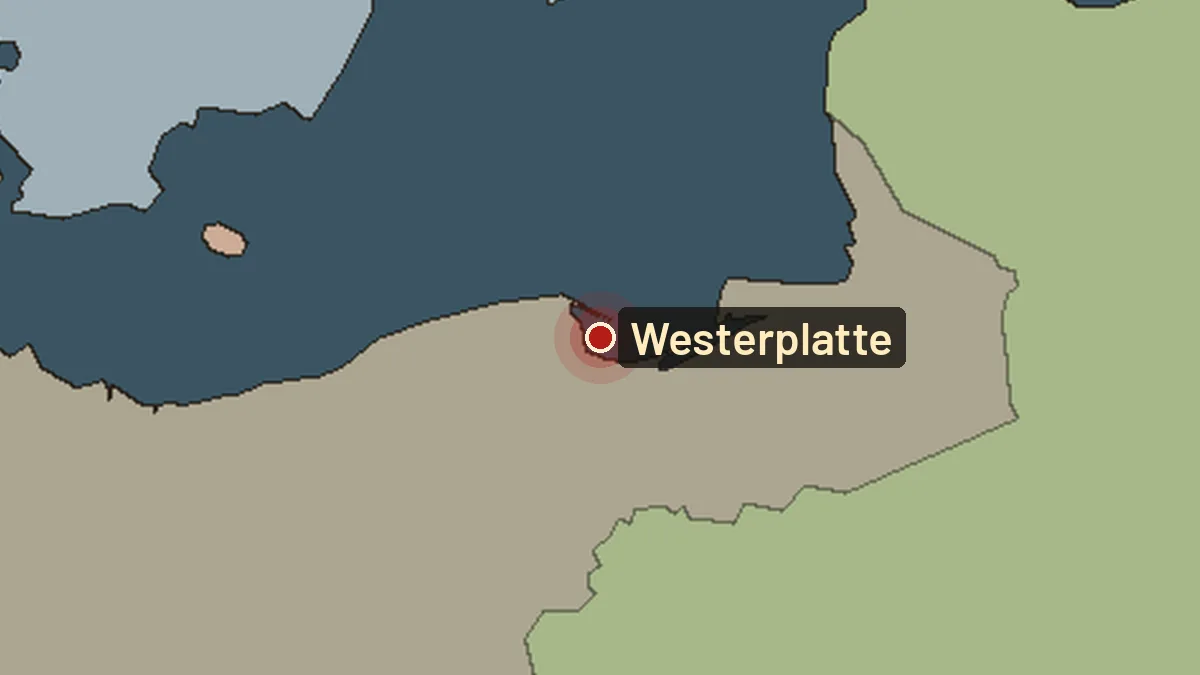
Shortly before five in the morning on 1 September 1939, the old German battleship Schleswig-Holstein opened fire on the small Polish garrison at Westerplatte, at the mouth of the harbour of Danzig. At the same time German armies crossed the Polish border from the west, the north and the south. Two days later Britain and France declared war on Germany. A European crisis had become the Second World War, and Poland, reborn only twenty years earlier, would be partitioned again within five weeks.
A border drawn in 1919
Poland had disappeared from the map in the late eighteenth century, divided between Russia, Prussia and Austria. It returned in 1918, when all three empires collapsed at the end of the First World War. The Treaty of Versailles gave the new state access to the Baltic through the "Polish Corridor", which separated East Prussia from the rest of Germany, and made the mainly German port of Danzig a Free City under League of Nations protection.
Few Germans accepted this settlement. After Hitler absorbed Austria and dismembered Czechoslovakia in 1938 and March 1939, he demanded Danzig and a road and rail link across the corridor. Poland refused. On 31 March 1939 Britain, joined by France, publicly guaranteed Polish independence. Hitler ordered his generals to prepare an attack, and on 23 August his foreign minister Joachim von Ribbentrop signed a non-aggression pact with the Soviet Union in Moscow. A secret protocol divided Eastern Europe into German and Soviet spheres, with a line running through the middle of Poland.
To give the attack a pretext, SS men staged fake "Polish" raids on the night of 31 August, the best known at the radio station of Gleiwitz in German Silesia.
Five weeks of war
Germany attacked with roughly 1.5 million men, organised in Army Group North under Fedor von Bock and Army Group South under Gerd von Rundstedt, together with about 2,000 aircraft and six armoured divisions. The Polish army under Marshal Edward Rydz-Śmigły was large but short of tanks, aircraft and anti-tank weapons, and it was deployed close to a very long border so as not to give up the industrial west without a fight. It was also caught in the middle of mobilisation, partly because Britain and France had urged Warsaw to delay it in order not to provoke Germany.
The Luftwaffe struck airfields, railways and towns from the first day, and German armoured and motorised columns pushed deep between the Polish armies. Within a week German tanks were on the outskirts of Warsaw. The tiny Westerplatte garrison, about 200 men under Major Henryk Sucharski, held out for seven days before surrendering.
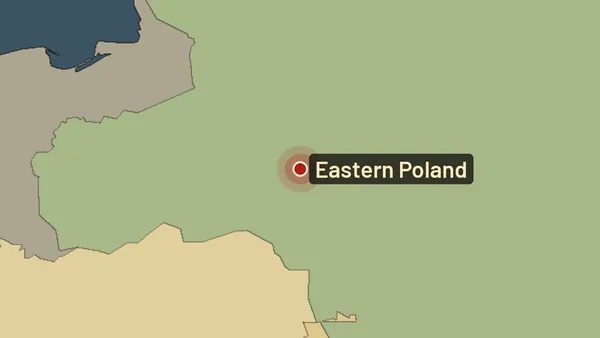
The Poles counter-attacked on the river Bzura, west of Warsaw, from 9 September. It was the largest battle of the campaign and briefly threw the Germans off balance, but by 19 September the Polish armies there had been surrounded and destroyed. On 17 September the Soviet Red Army crossed Poland's undefended eastern frontier, as the secret protocol foresaw. Any hope of holding out in the south-east near the Romanian border was gone, and the Polish government and high command crossed into Romania.
Warsaw, bombed and shelled for weeks, surrendered on 28 September. The fortress of Modlin fell the next day, and the last Polish field force capitulated after the battle of Kock on 6 October.
Partition, occupation and a world war
Germany and the Soviet Union adjusted their line and divided Poland between them. Germany annexed its western regions outright and ruled the centre as the "General Government". In both zones the occupiers set out to destroy Polish society: teachers, priests, officers and officials were arrested, deported or killed, and Poland's large Jewish population was forced into ghettos. Within a few years most of Polish Jewry would be murdered in the Holocaust.
In the west, the war that Britain and France had declared barely began. A cautious French advance into the Saarland in September was soon pulled back, and the months until the spring of 1940 became known as the "Phoney War". Poland, however, never surrendered as a state. A government in exile formed first in France and then in London, and tens of thousands of Polish soldiers, sailors and airmen escaped to fight on, alongside a large underground army at home.
Militarily, the campaign gave the German army a valuable rehearsal. Its losses were real, but the speed of the victory created the image of "Blitzkrieg", a word that German commanders themselves rarely used at the time.
Did you know?
- The famous story of Polish cavalry charging German tanks with lances is a myth. At Krojanty on 1 September Polish uhlans charged German infantry and were then caught by armoured cars; German propaganda and foreign reporters turned the incident into a legend.
- In July 1939 Polish cryptologists, who had been reading German Enigma messages for years, handed their methods and replica machines to the British and French. This work became the foundation of the later codebreaking at Bletchley Park.
The invasion of Poland in World Wars: 1914–20XX
World Wars: 1914–20XX currently covers the First World War; a 1939 scenario is planned, and the invasion of Poland is already part of the game's event database for it. In that scenario the event is designed to open the war: Germany declares war on Poland, Britain and France follow two days later, and the map splits into an Allied and an Axis bloc.
The roots of this war are in the game you can play today. In the 1914 map there is no Poland at all: its lands belong to Germany, Russia and Austria-Hungary, and it was the collapse of those three empires that brought it back. In the Parallel Fronts scenario the armoured divisions and bomber wings that crushed Poland in 1939 already exist in 1914. Start a war on the Eastern Front with them and see how differently history might have run.
▶ Play now Free in your browser, no download needed.
Further reading: Wikipedia (English)