World Wars: 1914–20XX
Second World War (1939–1945)
The Molotov–Ribbentrop Pact (1939): Hitler and Stalin divide Eastern Europe
In the summer of 1939 the world's two great ideological enemies, Nazi Germany and the Soviet Union, suddenly became partners. On 23 August the German foreign minister, Joachim von Ribbentrop, flew to Moscow and signed a non-aggression pact with his Soviet counterpart, Vyacheslav Molotov, while Stalin looked on. The public treaty promised peace between the two states. A secret protocol divided the lands between them. Nine days later Germany invaded Poland, and the Second World War began.
Enemies with shared interests
Throughout the 1930s Hitler had presented himself as the champion of Europe against Bolshevism, and Soviet propaganda attacked fascism as the deadliest enemy of the working class. Yet the two states also had things in common. Both had lost territory after the First World War: Germany in the Treaty of Versailles, Soviet Russia in the Treaty of Brest-Litovsk and the wars of 1918–1921, which created an independent Poland, Finland and Baltic states and gave Bessarabia to Romania. Both wanted to overturn the order of 1919 in Eastern Europe.
In the 1920s the German army and the Red Army had even cooperated secretly, with German officers testing tanks and aircraft on Soviet soil in violation of Versailles. That cooperation ended after Hitler came to power in 1933.
Two negotiations at once
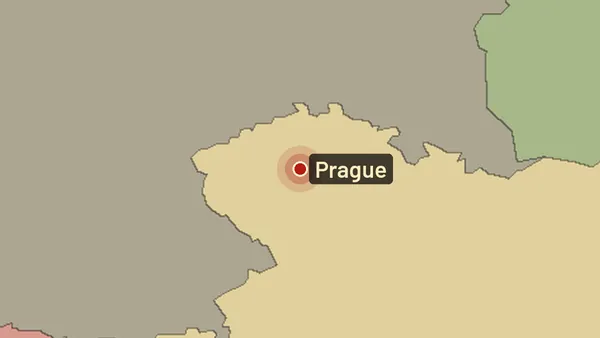
After Germany occupied Prague in March 1939, Britain and France guaranteed Poland and began talks with the Soviet Union about an alliance against further German aggression. The talks went slowly. The British and French were deeply distrustful of Stalin, and Poland and Romania refused to let Soviet troops pass through their territory, fearing they would never leave. The Anglo-French military mission sent to Moscow in August travelled by slow passenger ship and train, and its leaders had limited powers to sign anything.
Stalin, for his part, had been left out of the Munich conference in 1938 and suspected that the Western powers wanted to turn Hitler east against him. In May 1939 he replaced his foreign commissar Maxim Litvinov, a supporter of collective security and a Jew, with his close associate Molotov, a signal that Berlin noticed. Hitler, meanwhile, had decided to attack Poland, but he wanted to avoid a war on two fronts, the nightmare that had haunted Germany since 1914.
In August the pace quickened. A German-Soviet trade agreement was signed on 19 August, and on 20 August Hitler sent Stalin a personal telegram asking him to receive Ribbentrop at once. Stalin agreed.
The pact and the secret protocol
Ribbentrop arrived in Moscow on 23 August, and the agreement was signed that night. The public part was a ten-year non-aggression treaty: each side promised not to attack the other and not to support any third power that did.
The secret additional protocol drew a line through Eastern Europe. Finland, Estonia and Latvia fell into the Soviet sphere, Lithuania into the German one. Poland was to be divided roughly along the rivers Narew, Vistula and San. In the south-east, the Soviet Union stated its interest in Bessarabia, then part of Romania, and Germany declared it had no interest there. A month later, after Poland's defeat, a further treaty moved Lithuania to the Soviet sphere in exchange for more Polish territory for Germany.
The announcement of the pact stunned the world. Communist parties abroad, which had campaigned against fascism for years, were thrown into confusion.
Consequences
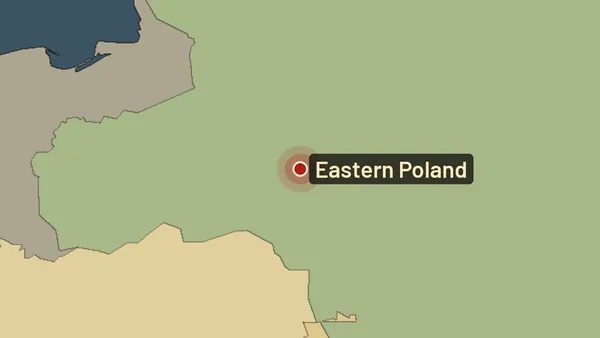
Germany invaded Poland on 1 September 1939. Britain and France declared war on Germany two days later. On 17 September the Red Army invaded eastern Poland, and the two powers met and divided the country between them. Both occupiers carried out mass arrests, deportations and killings; in 1940 the Soviet secret police shot some 22,000 Polish officers and other prisoners, the massacre known by the name of Katyn.
The Soviet Union then used its sphere. It attacked Finland in the Winter War of 1939–1940, annexed Estonia, Latvia and Lithuania in the summer of 1940, and forced Romania to hand over Bessarabia and northern Bukovina. Meanwhile Soviet grain, oil and raw materials flowed to Germany under trade agreements, helping it withstand the British blockade.
The partnership ended on 22 June 1941, when Germany invaded the Soviet Union. For decades afterwards the Soviet Union denied that the secret protocol existed, although a copy had been published in the West after the war. Only in December 1989 did the Soviet parliament officially condemn it. On the pact's fiftieth anniversary, 23 August 1989, around two million people in Estonia, Latvia and Lithuania joined hands in a human chain, the Baltic Way, to protest against the annexations that had followed it.
Did you know?
- The pact is named after the two foreign ministers who signed it, but Stalin took part in the negotiations himself and was present at the signing.
- The Soviet Union had broken off its own alliance talks with Britain and France only after the deal with Germany was certain; the Western military mission was still in Moscow when Ribbentrop arrived.
The Molotov–Ribbentrop Pact in World Wars: 1914–20XX
The game currently covers the First World War, and a 1939 scenario is planned. The Molotov–Ribbentrop Pact is part of the game's event database for that scenario: Germany and the Soviet Union sign a non-aggression treaty, and eastern Poland, the Baltic states, Bessarabia and Finland fall into the Soviet sphere of influence.
The pact grew directly out of the war you can play today: the two-front war that Germany fought from 1914, the collapse of the Russian Empire in 1917 and the Treaty of Brest-Litovsk. Lead Germany or Russia in the Historical (1914) scenario and see whether you can avoid the trap that both fell into, or try the Parallel Fronts scenario and fight the same rivalry with tanks and aircraft from the first day.
▶ Play now Free in your browser, no download needed.
Further reading: Wikipedia (English)