World Wars: 1914–20XX
First World War (1914–1918)
Kaiser Wilhelm II (1859–1941): Germany's last emperor and the First World War
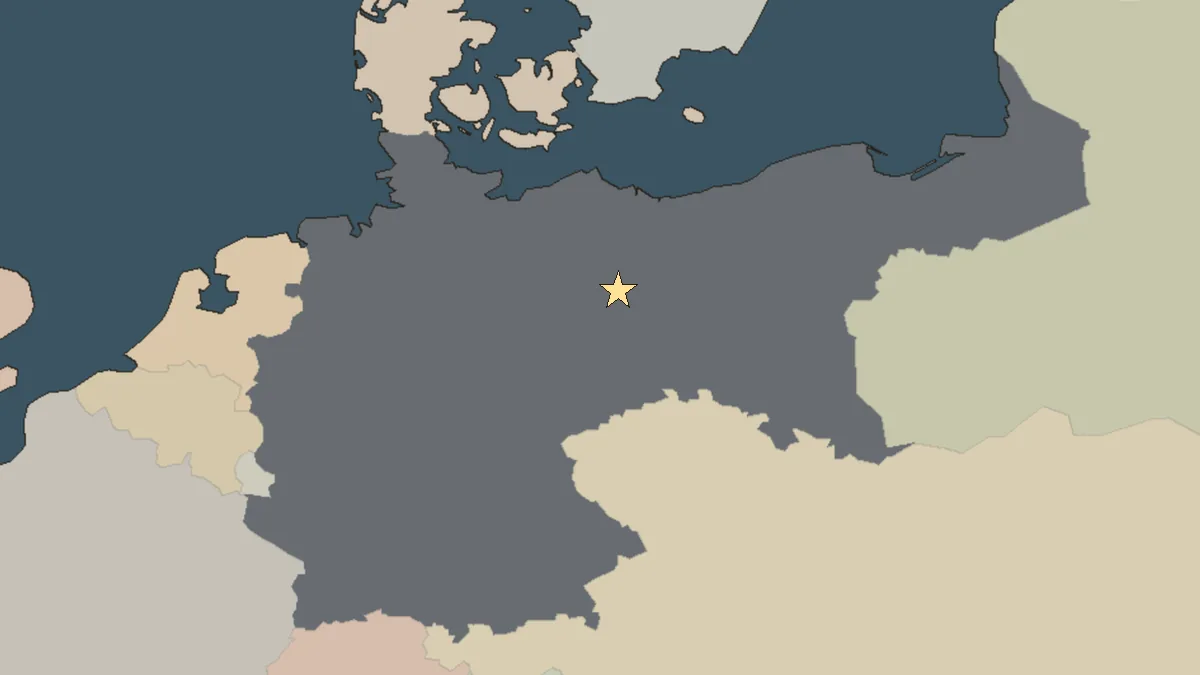
Few rulers have been as closely identified with the First World War as Kaiser Wilhelm II. With his upturned moustache, spiked helmet and theatrical speeches, he became the face of German militarism in Allied cartoons and posters. Yet the real story is more complicated. Wilhelm did much to create the tensions that led to war, but once the fighting began, real power slipped steadily from him to his generals, and in November 1918 he lost his throne without a fight.
A difficult prince
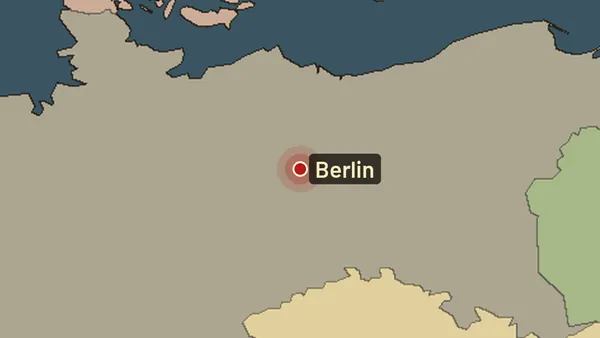
Wilhelm was born in Berlin in 1859, the eldest son of Crown Prince Frederick of Prussia and Victoria, the eldest daughter of Britain's Queen Victoria. A difficult breech birth left his left arm weak and noticeably shorter than the right, a disability he tried hard to hide all his life. He grew up torn between admiration for his mother's Britain, especially its navy, and the Prussian military culture of his grandfather's court.
1888 became known as the Year of the Three Emperors. Wilhelm I died in March at the age of 90; his son, the liberal-minded Frederick III, was already dying of throat cancer and reigned only 99 days. On 15 June 1888, at the age of 29, Wilhelm II became German Emperor and King of Prussia.
Personal rule and a new course
The young Kaiser was energetic, intelligent and impulsive. He wanted to rule himself, not through the founder of the empire, Chancellor Otto von Bismarck. In March 1890 he forced Bismarck to resign. Soon afterwards his government let the Reinsurance Treaty with Russia lapse. Russia drifted towards France, and by 1894 the two had concluded an alliance: exactly the two-front danger Bismarck had spent his career trying to avoid.
Under the banner of "world policy" (Weltpolitik), Wilhelm wanted Germany to be a global power with colonies and a fleet to match. From 1898 Admiral Alfred von Tirpitz built a battle fleet under a series of Navy Laws, aimed squarely at Britain. The result was a naval arms race that Germany could not win and that pushed Britain closer to France and Russia.
Wilhelm also had a gift for causing diplomatic damage with words. His telegram congratulating the Boer president Paul Kruger in 1896 outraged Britain. His landing at Tangier in 1905 to challenge French influence in Morocco backfired, and an interview published in Britain's Daily Telegraph in 1908, full of careless remarks, caused a storm both in Britain and at home in Germany.
July 1914
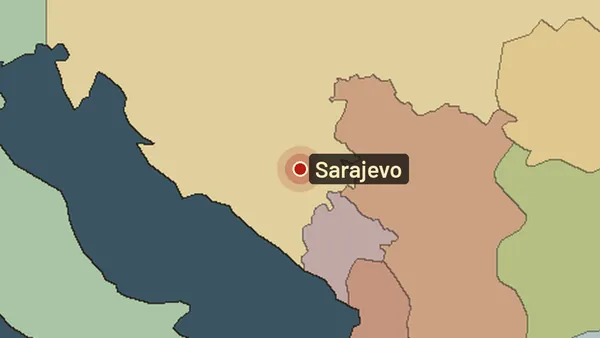
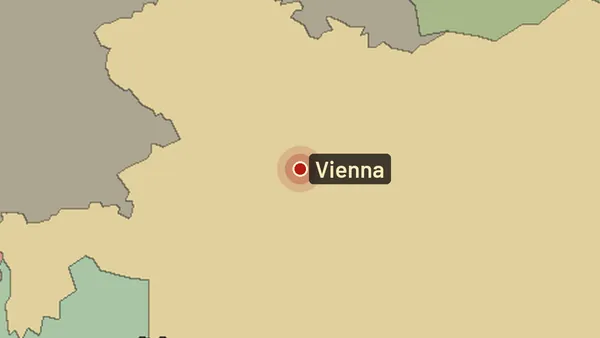
When Archduke Franz Ferdinand was assassinated in Sarajevo on 28 June 1914, Wilhelm was outraged at the murder of a man he counted as a friend. On 5 July he assured the Austro-Hungarian envoy that Germany would stand behind Vienna in any action against Serbia, a promise known as the "blank cheque". He then left for his annual summer cruise in Norwegian waters.
When he returned and read Serbia's conciliatory reply to the Austrian ultimatum, he wrote that it removed every reason for war. But events were already moving faster than he was. In the last days of July he exchanged telegrams with his cousin Tsar Nicholas II, signed "Willy" and "Nicky", in a last attempt to stop Russian mobilisation. It failed. On 1 August 1914 Germany declared war on Russia, and two days later on France.
The shadow emperor
Officially, the Kaiser was Supreme Warlord. In practice he had neither the temperament nor the knowledge to direct a modern industrial war, and his generals increasingly kept him out of decisions. From August 1916, when Paul von Hindenburg and Erich Ludendorff took over the Supreme Army Command, the two field marshals effectively ran Germany's war effort and much of its domestic policy. Wilhelm approved the decisions that mattered, including the return to unrestricted submarine warfare in early 1917, which brought the United States into the war.
After the failure of the great offensives of spring 1918 and the Allied advance from August, Ludendorff himself demanded an armistice. In early November sailors mutinied at Kiel and revolution spread across Germany. On 9 November 1918 Chancellor Prince Max of Baden announced the Kaiser's abdication without his consent, and a republic was proclaimed in Berlin. The next day Wilhelm crossed the border into the neutral Netherlands. He signed his formal abdication on 28 November.
Exile at Doorn
The Treaty of Versailles called for the former Kaiser to be tried before an international tribunal, but the Netherlands refused to hand him over. He spent the rest of his life at a manor house in Doorn, writing memoirs, receiving visitors and, famously, chopping wood. He hoped for a restoration that never came. He died on 4 June 1941, at a time when German troops occupied the Netherlands, and was buried at Doorn rather than in Germany.
Did you know?
- Wilhelm, George V and Nicholas II were all grandchildren or grandchildren-in-law of Queen Victoria, and Wilhelm was present at her deathbed in 1901.
- He was so passionate about the navy that he was delighted when his grandmother made him an honorary admiral of the British Royal Navy in 1889.
Wilhelm II in World Wars: 1914–20XX
Wilhelm II has an entry in the in-game encyclopedia that is available from the start, alongside the entry on the German Empire, a country you can lead. In the Historical (1914) scenario Germany declares war on Russia and France on 1 August 1914, exactly as Wilhelm's government did, and the alliances lock into place.
The Kaiser's hardest choices come later. In February 1917 the game asks whether to unleash unrestricted submarine warfare and risk American entry, or to keep the U-boats restrained while the blockade hurts your people. In November 1918 the Kiel mutiny shakes German stability, and the armistice event lets you sign or refuse; signing ends the war and turns Germany into the Weimar Republic. Can you keep Wilhelm on his throne?
▶ Play now Free in your browser, no download needed.
Further reading: Wikipedia (English)