World Wars: 1914–20XX
First World War (1914–1918)
Parallel Fronts: what if engines, radio and flight had come 25 years early?
In August 1914 the armies of Europe went to war much as Napoleon's had: on foot, with horses pulling the guns and wagons, while railways carried men to the frontier and then stopped. Aircraft were flimsy scouts, radio sets were rare and heavy, and the first tank was still two years away. Parallel Fronts begins with a single change to that picture. In this world the internal combustion engine, radio and powered flight matured in the late 1880s, about a quarter of a century early. The kingdoms, alliances and crises of 1914 are exactly the same. The weapons they fight with are not.
How it really happened
The inventions behind the scenario were all born within a few years of each other. Karl Benz built his motor car in 1885 and patented it in January 1886; Gottlieb Daimler and Wilhelm Maybach were building their own high-speed petrol engines at the same time. In the late 1880s the German physicist Heinrich Hertz proved that electromagnetic waves existed, and in the 1890s Guglielmo Marconi turned them into a practical wireless telegraph, sending a signal across the Atlantic in December 1901. Otto Lilienthal flew his gliders in Germany in the early 1890s, and on 17 December 1903 the Wright brothers made the first controlled, powered aeroplane flights at Kitty Hawk.
What took time was not the idea but the maturity: reliable engines with enough power for their weight, radios small enough to carry, factories able to build all of it in thousands. In our history that process was still under way when the First World War began.
The real war's first steps
The armies of 1914 used the new technology, but only at the edges. On 1 November 1911, during the Italian invasion of Ottoman Libya, Lieutenant Giulio Gavotti dropped small bombs from his aircraft on Ottoman positions, usually counted as the first air raid in history. In August 1914 the Russian armies invading East Prussia sent radio orders without proper coding, and German listeners used them to prepare their victory at Tannenberg. In September French reconnaissance aircraft spotted the German turn that led to the Battle of the Marne.
The rest arrived slowly and at great cost. Machine guns synchronised to fire through the propeller made true fighter aircraft possible in 1915. The first tanks went into action on the Somme on 15 September 1916; Germany built only about 20 of its own A7V tanks by the end of the war. On 13 June 1917 German Gotha bombers attacked London in daylight. Britain created the Royal Air Force, the first independent air force, on 1 April 1918, and on 19 July 1918 aircraft from HMS Furious attacked the Zeppelin sheds at Tondern, one of the first air strikes ever launched from a ship.
By 1918, in other words, all the pieces existed. They were simply too few, too slow and too new to change the nature of the war, which remained a struggle of infantry, artillery and trenches.
The men who imagined the next war
Some officers saw where the pieces were leading. In 1918 the British tank officer J. F. C. Fuller drew up "Plan 1919", a scheme for thousands of tanks supported by aircraft to break through the German front and paralyse its headquarters. The war ended before it could be tried. In 1921 the Italian general Giulio Douhet argued in "The Command of the Air" that bombers would decide future wars. Between the wars, these ideas grew into the armoured divisions, tactical air forces and carrier fleets of 1939. Parallel Fronts simply hands them to the generals of 1914.
What changes, and what does not
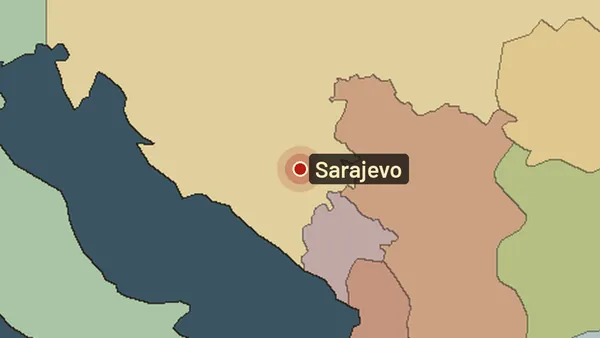
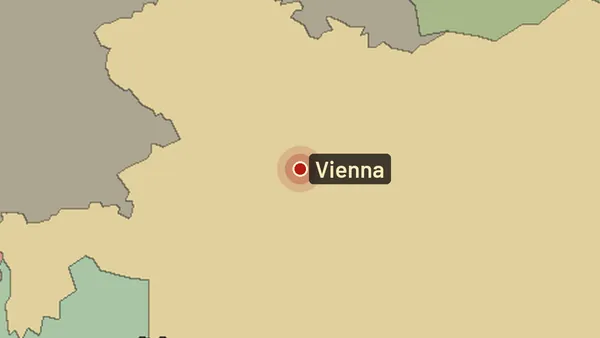
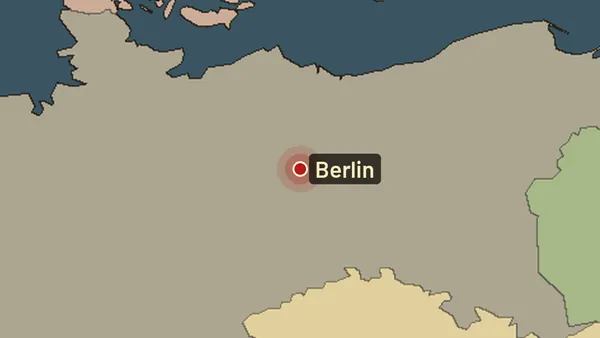
The scenario's starting point is deliberately narrow. Nothing in the politics of 1914 is altered: Franz Joseph still rules in Vienna, the Kaiser in Berlin and the Tsar in St Petersburg, the Ottoman Empire still has to choose a side, and the assassination in Sarajevo still sets everything in motion. What changes is what armies can do once the war begins.
An army of tanks moves far faster than marching infantry. Fighters fight for control of the sky, while bombers support the front or strike at factories behind it. At sea, aircraft carriers give fleets eyes far beyond the horizon and give landings the air cover the Allies lacked at Gallipoli. The fixed trench lines of 1914–1918 are no longer the obvious outcome: a German armoured thrust might reach Paris in days, and a well-supported landing might take the Dardanelles.
That makes Parallel Fronts a thought experiment as much as a game. Was the stalemate of the Western Front a product of politics and generalship, or of the technology of its time? The scenario lets you test the question directly.
Did you know?
- The first air raid in history fell on Ottoman troops: Gavotti's bombs in Libya in 1911, three years before the First World War.
- The first battle between tanks took place at Villers-Bretonneux in northern France on 24 April 1918, when British Mark IV tanks met German A7Vs.
Parallel Fronts in World Wars: 1914–20XX
Parallel Fronts is the second of the game's two scenarios, beside Historical (1914). You start on the same date, 28 June 1914, with the same 26 states on the map, but your forces include armoured divisions, fighter and bomber wings and aircraft carriers. The scenario's own entries in the in-game encyclopedia, on the parallel world, the armoured division, air wings and the aircraft carrier, explain how each works and compare it with what really existed at the time. The notes on key events point out where this world differs: nothing forces the Germans to stop at the Marne, carriers can cover a landing at Gallipoli, and at Jutland aircraft fly above the fleets.
When your war breaks away from history, for example when a capital falls, the game shows what really happened in 1914–1918. Same crisis, same alliances, a very different war: how will yours unfold?
▶ Play now Free in your browser, no download needed.